
Pre-Shipment Inspection (PSI) & AQL Sampling Audit Quiz
Check whether your pre-shipment quality control checklist meets international ISO 2859-1 standards before your container leaves the factory.
1. What sampling protocol do you require before authorizing container loading?
Table of Contents: Pre-Shipment Inspection Checklist: Essential Quality Control & Product Inspection Requirements for Buyers
- The Final Quality Check Before Your Tile Shipment Leaves the Factory
- Start With the Approved Order and Tile Sample Before Inspecting the Shipment
- Check the Tile Product, Appearance, Size and Shape During Pre-Shipment Inspection
- Check Tile Colour, Shade and Batch Consistency Before Shipment
- Verify Tile Quantity and Packaging Before the Goods Are Loaded
- Understand Sampling and AQL to Know How Many Tiles Should Be Inspected
- Check Tile Performance Tests That Cannot Be Confirmed by Visual Inspection Alone
- Check the Container, Loading Process and Shipment Documents Before Final Approval
- Prepare an Inspection Report That Records the Actual Condition of the Shipment
- Avoid These Common Buyer Mistakes During Pre-Shipment Quality Inspection
- Final Thoughts — Complete the Quality Inspection Before the Tile Container Leaves the Factory
- Frequently Asked Questions About Pre-Shipment Inspection and Tile Quality Control
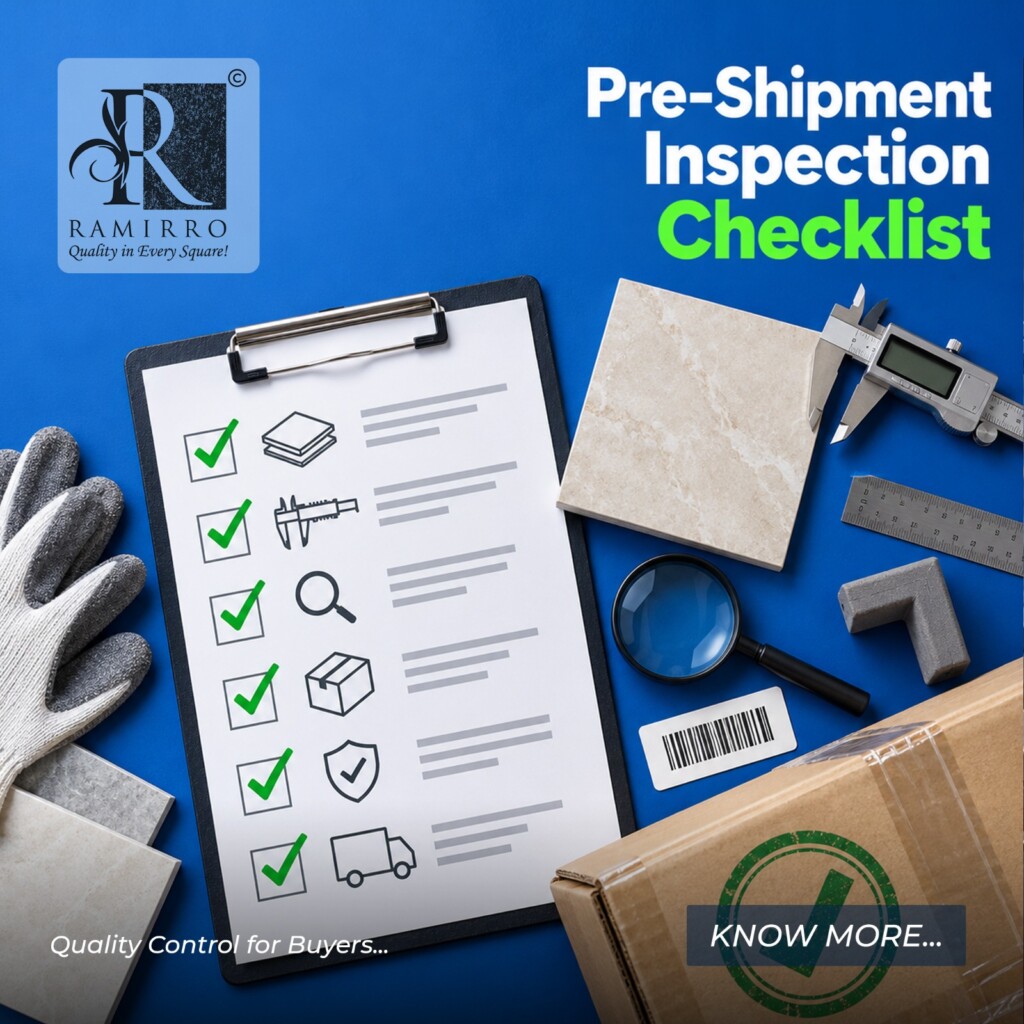
Before your tile shipment leaves the factory, check the product quality, size, colour, quantity, packaging, labelling, and loading against your approved order and sample.
These checks form the foundation of a pre-shipment inspection. They help buyers identify defects, incorrect quantities, damaged packaging, or product mismatches while there is still time to correct them.
For tile importers, this final quality check can help prevent costly problems after delivery. A clear pre-shipment inspection checklist makes it easier to know what to inspect and what to confirm before approving the shipment.
The Final Quality Check Before Your Tile Shipment Leaves the Factory
Before approving a tile shipment, buyers should check the product quality, size, colour, quantity, packaging, labelling, and loading against the agreed order and approved sample. This final check is known as pre-shipment inspection (PSI).
For tile importers, PSI helps find problems while the goods are still at the supplier’s factory. Once the container arrives with incorrect, damaged, or poor quality tiles, fixing the issue can become costly and difficult.
A proper inspection is not simply about asking whether the supplier’s production is ready. The real question is whether the actual shipment matches what the buyer ordered and approved. This includes checking both the tiles and the way they are packed and prepared for transport.
Start With the Approved Order and Tile Sample Before Inspecting the Shipment
Before checking the tiles, make sure you have a clear reference for what was actually ordered. The purchase order and approved tile sample should be your main reference during the inspection. This prevents confusion between what was discussed with the supplier and what was finally agreed.
Check the agreed tile size, thickness, colour, surface finish, product code, quantity, and [packaging requirements](/tile-import-checklist-for-buyers-and-importers-how-to-source-verify-and-import-porcelain-and-ceramic-tiles-successfully/). These details help you compare the finished shipment with the buyer’s exact requirements.
For example, if the approved sample is a matte 600×1200 mm [porcelain tile](/fabulous-ways-glossy-and-matt-porcelain-tiles-can-make-your-living-space-look-like-a-million-bucks/), the shipment should be checked against that specification. The sample is not just a design reference; it helps confirm that the finished product matches what the buyer approved.
It is also useful to keep the agreed specifications in one place before the inspection begins. This gives the inspector and supplier the same reference and makes it easier to identify any difference before the shipment is approved.
Check the Tile Product, Appearance, Size and Shape During Pre-Shipment Inspection
Once the order and approved sample are ready, the next step is to inspect the actual tiles. Do not check only one piece from the top of a carton. Select samples from different cartons so you get a more useful view of the shipment.
Confirm That the Shipment Contains the Correct Tile
First, make sure the supplier has produced and packed the exact product you ordered. Check the tile type, size, thickness, colour, surface finish, design, and product code against the approved specifications.
For example, if you ordered a 600 × 1200 mm matte porcelain tile, the inspected product should match those details. A similar looking tile is not necessarily the same product.
Look for Visible Defects on the Tile Surface
Next, examine the tile surface under suitable lighting. Look for cracks, chips, scratches, spots, surface marks, printing problems, pattern differences, or noticeable colour variation.
Check both the face of the tile and its edges and corners. A tile may look fine inside a closed carton but show damage when it is removed and inspected. Record the defects found during sampling rather than relying only on a general visual impression.
Check Tile Dimensions, Edges and Shape
Measure selected tiles for length, width, and thickness, and check their edges, shape, and flatness. Consistent dimensions help installers create cleaner lines and more even joints. Poorly shaped or damaged tiles can increase cutting, fitting problems, and material waste.
The acceptable measurement limits should come from the agreed product specification or applicable standard. This gives both the buyer and supplier a clear basis for deciding whether the inspected tiles meet the required quality.
Check Tile Colour, Shade and Batch Consistency Before Shipment
Request Technical Consultation & Factory Specifications
Contact our senior ceramic engineers for certified technical test reports, compliance files, and project guidance from Ramirro Ceramica.
Colour is an important part of tile quality, especially when a large area will be covered with the same product. Shade simply means the colour appearance of a particular production batch. Two batches may have the same product name but can look slightly different.
During inspection, compare the tiles with the approved physical sample and check tiles from different cartons. Look for noticeable differences in colour, tone, or printed pattern. Also check the shade or batch markings on the cartons where they are provided.
This check is especially important for marble look, stone look, and other printed tiles, where small changes in pattern or colour can become visible across a large installation.
Practical tip: Do not approve tile colour based only on supplier photographs, phone screens, or computer images. Lighting and screen settings can change how the colour appears.
Verify Tile Quantity and Packaging Before the Goods Are Loaded
Before the tiles are loaded into the container, confirm that the quantity and packaging match the agreed order. A shipment can have good quality tiles but still create problems if cartons are missing or the goods are not packed well enough for transportation.
Quantity Check: Make Sure the Shipment Matches the Order
Compare the purchase order, packing list, and actual goods. Count the cartons and verify the pieces per carton and total quantity. If the shipment contains different tile sizes, colours, or designs, check the quantity of each product separately.
This simple comparison can help catch issues such as missing cartons, incorrect product quantities, or differences between the packing list and the actual shipment.
Packaging Check: Make Sure the Tiles Are Protected During Transport
Inspect the cartons, internal protection, pallets, stack stability, and product labels. Cartons should be in suitable condition, and the tiles should be packed and arranged securely to reduce the risk of movement, breakage, or damage during handling and transportation.
Good packaging is especially important for tile exports because the products may be handled several times before reaching the buyer. The goal is not only to ship the correct tiles, but to help ensure they arrive in the same condition in which they left the factory.
Understand Sampling and AQL to Know How Many Tiles Should Be Inspected
A large tile shipment can contain thousands of pieces, so checking every tile is usually not practical. Sampling means selecting a certain number of cartons and tiles to represent the shipment and checking them for agreed quality requirements.
AQL (Acceptable Quality Limit) is a sampling method that helps determine the sample size and acceptable defect level for an inspection. It does not mean that every tile will be defect free.
Before inspection, the buyer and supplier should agree on the sampling method, sample size, defect categories, and acceptance criteria.
Check Tile Performance Tests That Cannot Be Confirmed by Visual Inspection Alone
A tile can look perfect and still fail to meet certain performance requirements. Visual inspection can identify visible defects, but it cannot confirm properties such as water absorption, strength, slip related performance, frost resistance, or chemical resistance.
For these properties, buyers may need laboratory test reports or testing from an appropriate facility. The required tests depend on the tile type, where it will be used, the destination market, and the quality standards agreed with the supplier.
Remember: A visual inspection checks what you can see; [laboratory testing](/quality-control/) checks how the tile performs.
Check the Container, Loading Process and Shipment Documents Before Final Approval
The final inspection should also cover the container, loading process, and shipment documents. These checks help confirm that the inspected goods are the same goods being sent to the buyer.
Container and Loading Check: Confirm That the Correct Goods Are Being Shipped
Check the container condition, correct products, carton and pallet arrangement, and any visible damage before loading is completed. Take loading photographs and record the final container seal for shipment records.
Document Check: Make Sure the Shipment Paperwork Matches the Goods
Order Physical Architectural Sample Box
Inspect calibrated porcelain finishes, surface textures, and edge rectifications with an official Ramirro Ceramica sample kit.
Compare the shipment with the [commercial invoice](/basic-logistics-for-tile-importers-incoterms-freight-packaging-hs-code-guide/) and packing list. Also verify any required certificates, test reports, certificate of origin, and inspection report, depending on the destination and buyer requirements. The product details and quantities in the documents should match the actual shipment.
Prepare an Inspection Report That Records the Actual Condition of the Shipment
A pre-shipment inspection report should do more than simply state “Pass” or “Fail.” It should record what was checked and provide clear evidence of the shipment’s condition at the time of inspection.
The report should include the order details, products inspected, sample size, defects found, measurements, photographs, packaging condition, and document checks. It should also clearly state the final inspection result.
A detailed report gives the buyer a useful record and can help resolve questions with the supplier if a quality or quantity issue is discovered later.
Avoid These Common Buyer Mistakes During Pre-Shipment Quality Inspection
Even a careful buyer can miss important checks during a pre-shipment inspection. Avoiding a few common mistakes can make the process much more reliable.
Do not approve tiles from photos alone or inspect only one carton. Always use an approved sample and check products from different parts of the shipment. Do not focus only on appearance; dimensions, quantity, packaging, and loading also need attention.
It is equally important to agree on quality and acceptance criteria before inspection. Finally, remember that AQL is not a zero defect guarantee. It is a sampling method with agreed acceptance limits, not a promise that every tile will be perfect.
Final Thoughts — Complete the Quality Inspection Before the Tile Container Leaves the Factory
A proper pre shipment inspection is more than a final look at the tiles. It is an important part of the [quality control](/quality-control/) process, helping buyers confirm the quality of goods, quantity, packaging, and quality expectations before container loading. Using a clear quality control checklist and agreed inspection criteria can make the inspection process easier and more reliable.
For different product types and product categories, buyers may choose a general inspection, detailed inspection, or third-party inspection based on their needs. A during-production inspection can also help identify quality issues earlier in the supply chain, while professional quality control supports consistent quality, quality assurance, and quality and safety.
Whether you purchase tiles online or offline, you can review the right collection and speak with Ramirro Ceramica for suitable products and guidance.
The best time to find a tile problem is before the container leaves, not after it reaches your warehouse.
Frequently Asked Questions About Pre-Shipment Inspection and Tile Quality Control
What is a pre-shipment inspection for tiles?
A pre-shipment inspection is a quality check carried out before tiles leave the supplier’s factory. It verifies the product, quality, quantity, packaging, and other agreed requirements.
What should buyers check during tile inspection?
Buyers should check the tile type, size, thickness, colour, finish, surface, edges, quantity, packaging, labels, loading, and required documents against the approved order and sample.
What is AQL in pre-shipment inspection?
AQL (Acceptable Quality Limit) is a sampling method used to determine how many products should be inspected and what level of defects can be accepted under an agreed inspection plan. It does not mean zero defects.
Should every tile be inspected before shipment?
Usually, inspecting every tile is not practical for a large shipment. Sampling allows selected cartons and tiles to be checked according to an agreed inspection method.
What happens if a shipment fails inspection?
The buyer and supplier can follow the agreed corrective process. This may include rework, replacement, additional inspection, or reinspection before shipment approval.
Get Factory-Direct B2B Container Quote
Receive fast FOB or CIF quotations for export-grade porcelain and ceramic tiles shipped directly from Morbi, India.
Shop Now | Chat With Expert | View Catalogue

Here’s what you get out of our article. Our team have various Ceramic Experts with experience of more than 25 Years, researches on problems our customer faces in tiling industry.
Ramirro Ceramica, – One of The Leading Tiles Manufacturer and Supplier globally, helps you people gain knowledgeable insight before making your purchase decision for products related to the floor and wall tiles.
So, we have closely monitored all kinds of trends in the ceramic tiles manufacturing world, from the old days of clay and plain color to modern digital, realistic-looking designs printed on ceramics with high-depth effects.
Our tiling Experts have seen thousands of different tiles patterns, sizes, materials, pricing, and installation techniques throughout their career.
Their expertise shared with you in simplified and organised way, helps you choose and make better decision before purchasing any flooring option available in market.
Brief about Company:
Ramirro is one of the finest Tiles manufacturers in India manufacturing porcelain and ceramic tiles. Our products have a variety of sizes and types of tiles ranging from Ceramics, porcelain, Full body etc. This helps you choose the perfect fit for your project. Plus, our collection will help you get inspiration from the architect’s design.
Here’s some more helpful links that showcase our users trust on Ramirro Ceramica Brand:
– Growth in International Market
– Trusted and Licensed Exporter
– Manufacturing Plant in India
Here’s our social proof by LinkedIn competing with top known global tiling brands: