
Are You Ready to Import Tiles?
Assess your sourcing gaps before placing your container order.
1. Do you keep a physical “Golden Sample” to compare with the production batch?
A tile buyer finds a supplier, approves the sample, and places an order. Everything looks perfect until the shipment arrives. The tile color is slightly different, some cartons are damaged, and the project timeline is suddenly at risk.
This is why successful tile import is about much more than finding a good price. Buyers must verify suppliers, check tile quality, confirm shade consistency, review packaging, and understand shipping requirements before placing an order.
This practical checklist will help buyers and importers source, verify, and import porcelain and ceramic tiles more confidently while avoiding costly mistakes.
Table of Contents
- Part 1: Start With the Market, Not the Tile
- Part 2: Supplier Verification Checklist
- Part 3: Product Verification Checklist
- Part 4: Sample Approval Checklist
- Part 5: Production & Quality Control Checklist
- Part 6: Packaging Checklist
- Part 7: Shipping & Container Checklist
- Part 8: Sustainability & Environmental Impact Checklist
- Common Tile Import Mistakes Experienced Buyers Avoid
Part 1: Start With the Market, Not the Tile
What Are You Buying For?
Before contacting suppliers, identify your target market. Are the tiles for homes, apartments, villas, hotels, resorts, commercial projects, retail stores, or government projects? A tile that works well in a luxury hotel may be too expensive for an affordable housing project. The right tile depends on the project, budget, and customer expectations.
Understand Local Market Preferences
Tile preferences are different in every market. Large format tiles are common in luxury projects. Wood look tiles are popular in many European countries. Marble look designs are widely used in the Middle East. Anti skid tiles are often preferred in rainy regions. Before importing, spend time understanding what local customers are actually buying. Rule: Import what your market wants, not what you personally like.
📥 Download the Tile Importer Checklist PDF
Make sure you have checked every step before your container is shipped. Enter your email below to receive the printable checklist and import guide.
Part 2: Supplier Verification Checklist

Can You Trust the Supplier?
A good catalog and low prices do not always mean a reliable supplier. Verify the company registration, export experience, factory address, website, certifications, customer references, years in business, and export markets before placing an order.
Trader, Distributor, or Manufacturer?
Not every supplier produces tiles. A manufacturer makes tiles in its own factory. A trader buys from factories and resells. A distributor supplies products within a specific region. Buying directly from a manufacturer can often provide better pricing, quality control, communication, and long term supply consistency.
Factory Capacity Check
Many buyers approve samples but forget to check production capacity. Ask how many square meters are produced daily, whether the factory can handle your order volume, how long production takes, and whether repeat orders can be supplied consistently. Always verify production capacity before placing large orders.
Part 3: Product Verification Checklist
Know Exactly What Type of Tile You Are Importing
Ceramic tiles are generally used for walls, bathrooms, kitchens, and light traffic areas. They are usually more affordable and suitable for many residential projects.
Porcelain tiles are denser, stronger, and more water resistant. They are commonly used for floors, commercial spaces, outdoor areas, and premium projects. This is one reason many importers prefer porcelain tiles.
Know Your HS Code Before Importing
Always verify the correct HS code before shipping. Common tile HS codes include 6907 (ceramic and porcelain tiles), 690721 (porcelain tiles with water absorption ≤ 0.5%), 690722 (water absorption between 0.5% and 10%), and 690723 (water absorption above 10%). The correct HS code affects customs duties and taxes.
Tile Size Verification
Tile size affects both appearance and project cost. Common sizes include 600×600 mm, 600×1200 mm, 800×1600 mm, and large slabs up to 1600×3200 mm. Confirm whether the size is popular in your market and if special packaging is required.

Shade Variation & Color Verification
Shade variation means tiles from different production batches may look slightly different even though they have the same design name. Always confirm the shade number before shipment. Make sure all cartons carry the same shade marking. Never rely only on product photos; always approve a physical sample.
Surface Finish Verification
The same design may be available in different finishes: matte (modern interior), glossy (reflective walls), satin (smooth), sugar finish, carving, rustic, or anti-skid. Confirm that the finish matches the application.
Part 4: Sample Approval Checklist
Never Skip Sample Approval
Many import problems begin when buyers approve samples too quickly. Before production starts, verify the color, size, surface finish, packaging, carton design, barcode details, and technical specifications.
Create a “Golden Sample”
Experienced importers often keep one approved sample as a reference, sometimes called a “golden sample”. Once production begins, future shipments can be compared with this sample to check consistency. It helps reduce misunderstandings and creates a clear quality benchmark.
🧪 Request your Physical Sourcing Samples
Verify our tile quality firsthand. Complete the form below to receive physical samples for color, texture, and technical test evaluations.
Part 5: Production & Quality Control Checklist
What Happens After You Place the Order?
After order confirmation, the factory schedules production, manufactures the tiles, performs quality checks, packs the products, and prepares them for shipment. This stage is important because many issues can be identified before the container is loaded. Stay in contact and ask for production photos and quality inspection reports.
Should You Use Third Party Inspection?
A third party inspection is performed by an independent company that checks the products before shipment. This can be useful for large orders, first time suppliers, or high value projects. The cost of an inspection is often much lower than the cost of receiving damaged containers.
Part 6: Packaging Checklist
Packaging Is Not Just About Appearance
Many buyers focus on the tile itself and overlook packaging. Good packaging helps reduce breakage during transport, protects tiles from moisture, improves container safety, and ensures products reach customers in good condition.
Tile Packaging Verification
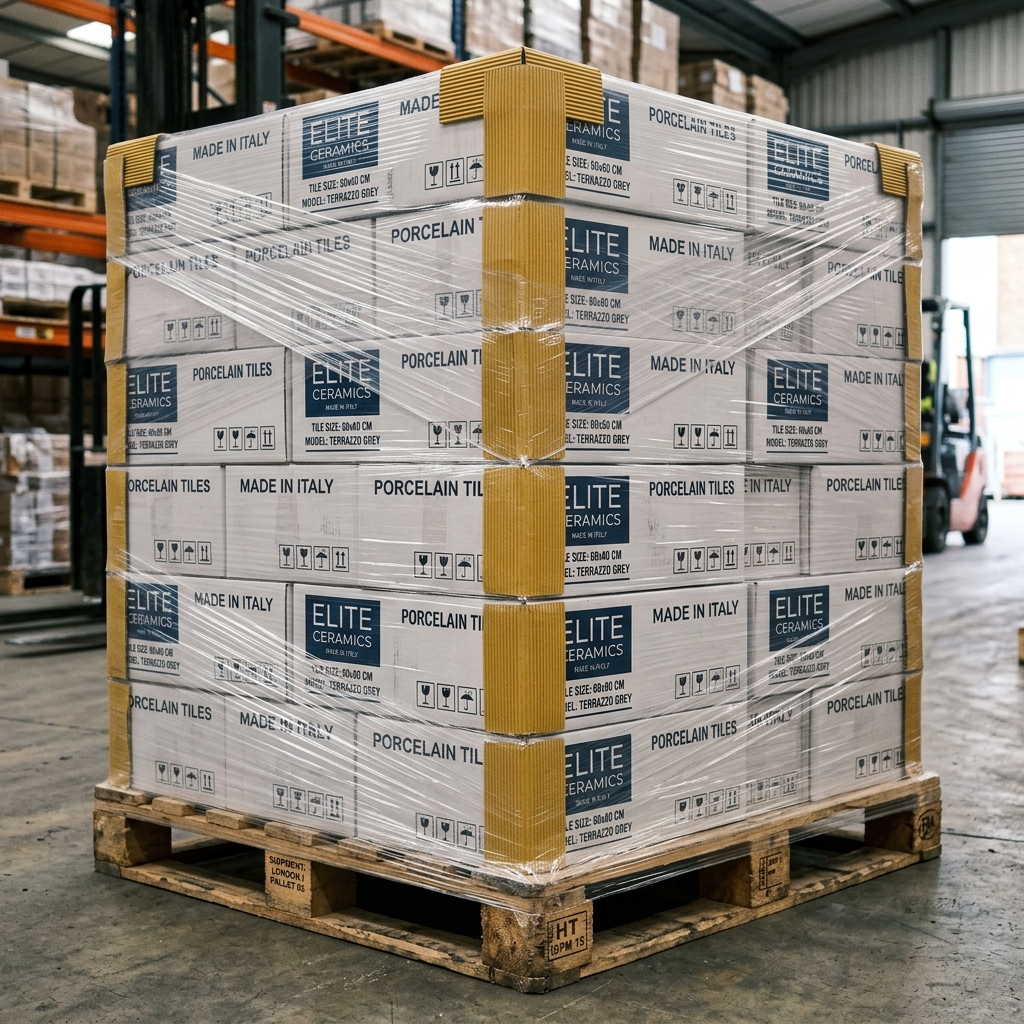
Before shipment, check the carton strength and make sure product labels are accurate. Verify shade markings, caliber markings, and batch numbers on the cartons. Inspect pallet quality, stretch wrapping, and corner protection. Proper palletization significantly reduces damage.
Part 7: Shipping & Container Checklist
Before the Container Door Closes
A quality shipment can still become a problem if the container is not checked properly. Before loading, confirm that the container is dry, free from water leaks, has no unusual odor, and has a clean floor. Check that tiles are loaded securely to minimize movement.

Documentation Checklist
Proper documents are just as important as the tiles themselves. Double check all documents: Commercial Invoice, Packing List, Bill of Lading, Certificate of Origin, and Insurance Documents.

Part 8: Sustainability & Environmental Impact Checklist
How Eco-Friendly Are These Tiles?
Sustainability is becoming an important consideration for buyers in many markets. Some customers, developers, and architects now actively look for products with a lower environmental impact. Ask whether the factory uses water recycling, waste reduction programs, and eco-friendly packaging.
Why Environmental Impact Can Affect Sales
In some markets, sustainability is no longer optional. Green buildings, hospitality projects, and government tenders may require products that meet specific environmental standards. Eco-friendly products help you stay competitive.
Common Tile Import Mistakes Experienced Buyers Avoid
Choosing only by price: A lower tile price does not always mean a lower overall import cost.
Skipping sample approval: Often leads to disputes about color, finish, size, or quality.
Ignoring shade variation: Can create visible color differences during installation.
Not checking production capacity: May result in shipping delays for large orders.
Trusting edited product photos: Lead to unrealistic expectations about color and appearance.
Skipping shipment inspections: Increases risk of receiving products that do not match specs.
Ordering without market research: Leaves you with inventory that customers do not want.
Forgetting hidden import costs: Freight, duties, storage, and trucking eat into profit margins.
💼 Get container pricing and wholesale support
Speak to our wholesale division for Morbi container rates, custom slab designs, and direct container logistics coordination.
Major Tile Exporting and Importing Countries
Understanding global trade can help buyers make better sourcing decisions. Major tile exporting countries include India, China, Spain, Italy, Turkey, and Brazil. Major importing markets include the United States, Saudi Arabia, the UAE, Germany, France, and the UK. Tracking trends in these international markets helps importers identify opportunities.
Final Thoughts: Successful Tile Importing Starts Long Before the Shipment Arrives
Successful tile importing is not about finding the cheapest supplier. It is about working with reputable suppliers, understanding your market, checking water absorption, glaze quality, shade consistency, production capacity, and planning every import shipment carefully. Long-term importers build relationships based on consistency and quality.
Whether you are importing high-quality ceramic wall tiles, porcelain tiles, or other tile products, success comes from proper verification. Explore the collection, verify export experience, and ask questions. If you need help choosing the right collection for your market, feel free to contact the team at Ramirro Ceramica.
Watch our Video:
Shop Now | Chat With Expert | View Catalogue

Here’s what you get out of our article. Our team have various Ceramic Experts with experience of more than 25 Years, researches on problems our customer faces in tiling industry.
Ramirro Ceramica, – One of The Leading Tiles Manufacturer and Supplier globally, helps you people gain knowledgeable insight before making your purchase decision for products related to the floor and wall tiles.
So, we have closely monitored all kinds of trends in the ceramic tiles manufacturing world, from the old days of clay and plain color to modern digital, realistic-looking designs printed on ceramics with high-depth effects.
Our tiling Experts have seen thousands of different tiles patterns, sizes, materials, pricing, and installation techniques throughout their career.
Their expertise shared with you in simplified and organised way, helps you choose and make better decision before purchasing any flooring option available in market.
Brief about Company:
Ramirro is one of the finest Tiles manufacturers in India manufacturing porcelain and ceramic tiles. Our products have a variety of sizes and types of tiles ranging from Ceramics, porcelain, Full body etc. This helps you choose the perfect fit for your project. Plus, our collection will help you get inspiration from the architect’s design.
Here’s some more helpful links that showcase our users trust on Ramirro Ceramica Brand:
– Growth in International Market
– Trusted and Licensed Exporter
– Manufacturing Plant in India
Here’s our social proof by LinkedIn competing with top known global tiling brands: