
AI Tile Quality Inspection & Computer Vision Readiness Quiz
Determine whether your ceramic tile production line or importing quality protocol is ready for automated defect detection.
1. How does your facility currently detect hairline surface cracks and pinholes at full line speed?
Table of Contents: AI in Tile Quality Inspection: How Computer Vision Automates Defect Detection in Tile Manufacturing
- Before AI: How Is Tile Quality Checked?
- What Is Computer Vision in Tile Inspection?
- How Does AI Inspect a Tile? From Camera to Quality Decision
- What Tile Defects Can AI Detect?
- Why Tile Inspection Is More Difficult Than It Looks
- How Does AI Learn What a Good Tile Looks Like?
- AI vs Human QC: Is AI Really Replacing People?
- What Does AI Inspection Mean for Tile Buyers?
- What Should You Check When Buying Tiles?
- The Bigger Change: From Rejecting Bad Tiles to Preventing Defects
- What Could the Future of AI Tile Inspection Look Like?
- Ramirro Ceramica and the Changing Role of Quality Control
- FAQs
- Final Takeaway — A Better Tile Factory Is Not Just About Making More Tiles
AI is not replacing human quality control in tile manufacturing; it is helping people inspect tiles faster, more consistently, and with fewer missed defects.
Imagine thousands of tiles moving through a factory every day. Checking each one for scratches, spots, cracks, color changes, and other defects can be difficult when production speeds are high.
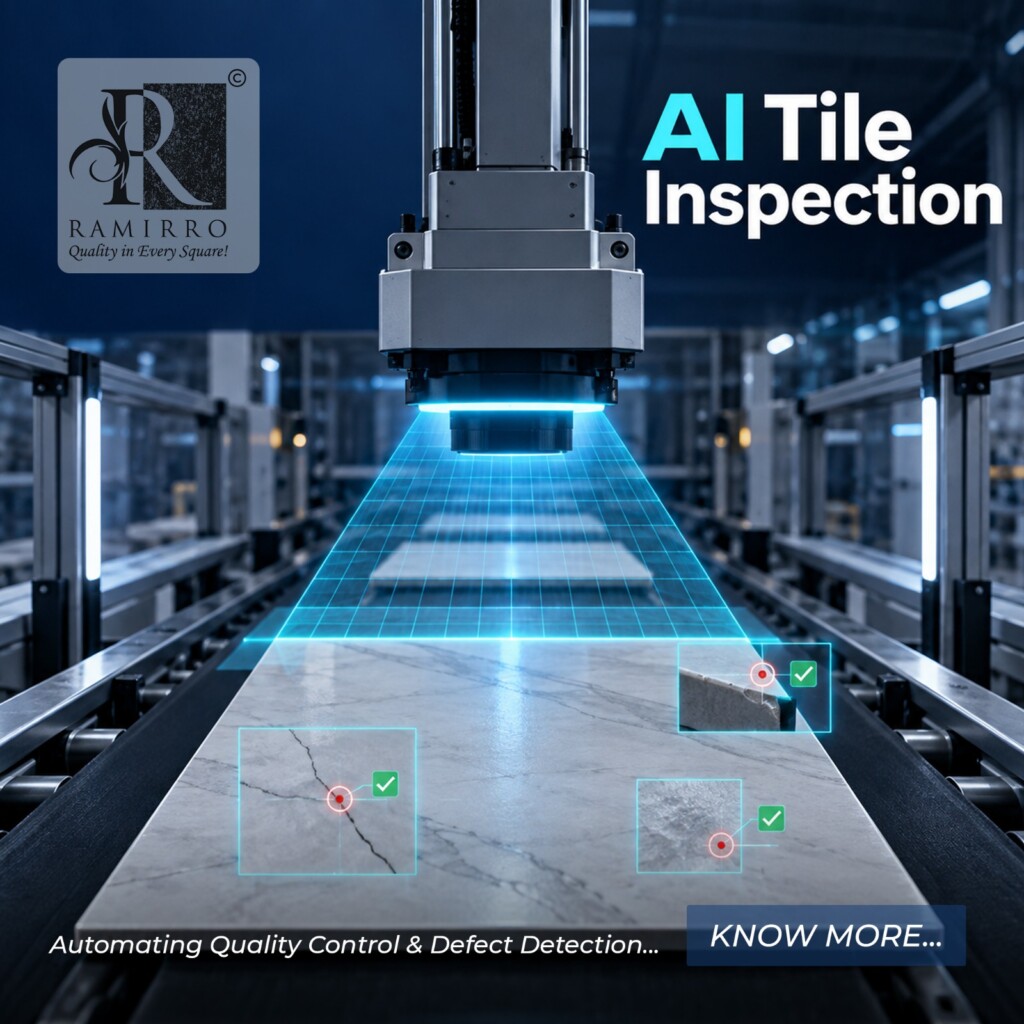
This is where cameras and computer vision help. AI systems can inspect tiles as they move through production, detect possible defects, and flag tiles that need closer human attention.
The result is a more consistent tile quality inspection process, where AI handles repetitive visual checks while people focus on judgment and quality decisions.
Before AI: How Is Tile Quality Checked?
Before AI, tile quality inspection mainly depended on human workers. They would visually check tiles and look for problems before the tiles moved to the next stage or reached customers.
What Does Quality Control Mean?
Quality control (QC) means checking whether a tile meets the required quality. Workers may check its:
- Size and shape
- Thickness
- Surface
- Edges and corners
- Color and shade
How Human Inspection Works
Workers use their experience to spot scratches, cracks, spots, uneven edges, and other problems. They can also use judgment when a defect is unusual or difficult to classify.
The challenge comes with high production volumes. Long hours, repetitive work, and fast moving production can make small defects easier to miss.
Human inspection works, but maintaining the same level of consistency across thousands of tiles is difficult.
What Is Computer Vision in Tile Inspection?
Computer vision is technology that helps a computer study images captured by cameras. In tile inspection, cameras capture the tile surface, while the system looks for signs that something may be wrong.
A simple way to understand it is: The camera takes the picture. Computer vision studies the [picture](/7-types-of-tiles-textures-surface-finishes-porcelain-ceramic-tiles/). AI helps identify whether something looks like a defect.
A Simple Example
Think of teaching a new worker to spot defective tiles. You would show them many examples of good tiles, scratched tiles, cracked tiles, and tiles with spots.
AI works in a similar way. It learns from many examples so it can recognize [different tile](/7-types-of-tiles-textures-surface-finishes-porcelain-ceramic-tiles/) designs, surfaces, and defects more accurately.
How Does AI Inspect a Tile? From Camera to Quality Decision
The process may sound complicated, but it is quite simple when you follow one tile from the production line to the final quality decision.
Step 1: The Tile Enters the Inspection Area
After the tile reaches the inspection stage, it moves along the [production line](/inside-a-morbi-tile-factory-how-premium-tiles-for-different-countries-are-manufactured/) at a controlled speed. The inspection system is placed so the tile can be checked while it is moving, without stopping the entire production process.
Step 2: Cameras Capture the Tile
Special cameras take clear images of the tile as it passes. Depending on the inspection system, cameras can check the main surface and may also inspect edges and corners.
This gives the system a detailed view of the tile that can be studied for possible defects.
Step 3: Controlled Lighting Reveals Defects
Good lighting is just as important as a good camera. A tiny scratch or surface mark may be difficult to notice under ordinary factory lighting.
Controlled lights are placed around the inspection area to make certain defects easier for the camera to capture.
Step 4: Software Studies the Image
Once the image is captured, the software examines it for unusual areas, patterns, or changes on the tile.
For example, a small dark spot on an otherwise uniform surface may be identified as something that needs further checking.
Step 5: AI Identifies Possible Defects
This is where AI becomes useful. The system compares what it sees with patterns learned from examples of good and defective tiles.
It may identify issues such as scratches, spots, cracks, printing problems, or other surface defects. The system does not simply look for anything different, it needs to understand what is normal for that particular tile design.
Step 6: The Tile Is Passed, Rejected, or Flagged
After inspection, the tile can be treated according to the factory’s quality rules.
A tile that meets the required standard continues through production. A tile with a possible defect may be removed or flagged for human inspection.
This is one reason AI does not necessarily eliminate human QC. People can review cases where the system is unsure.
Step 7: Inspection Data Is Recorded
Request Technical Consultation & Factory Specifications
Contact our senior ceramic engineers for certified technical test reports, compliance files, and project guidance from Ramirro Ceramica.
The system can also keep a record of the defects it finds. For example, a factory may notice that a certain type of surface defect is appearing more often than usual.
This information can help the quality team investigate the production process and take action before the same problem affects a larger number of tiles.
In simple terms: the camera sees the tile, the software studies it, AI looks for possible defects, and the quality team decides what to do next.
What Tile Defects Can AI Detect?
AI inspection can identify many [visible problems](/quality-check-services-for-tiles-reliable-tile-quality-control-inspection-testing-services/) on a tile. The exact defects depend on the cameras, lighting, and inspection system being used.
Surface Defects
These are problems that appear on the visible face of the tile.
- Scratches: Unwanted lines or marks on the tile surface.
- Spots: Small marks or areas that look different from the surrounding surface.
- Pinholes: Very tiny holes or points that can appear on the surface.
- Pits: Small dips or depressions in the tile surface.
- [Glaze problems](/types-of-ceramic-glazes-and-the-finishing-effects-they-bring-to-tiles-and-ceramics/): Uneven or damaged areas in the tile’s surface coating.
Glaze is the glass like coating applied to many tiles to give them their color, finish, and surface protection.
Color and Design Problems
AI can also help identify unwanted changes in a tile’s appearance.
- Shade variation: A difference in color or tone between tiles that should look the same.
- Printing problems: Missing, blurred, or incorrectly placed printed designs.
- Pattern inconsistencies: Parts of a design that do not appear as expected.
Shade means the particular color or tone of a tile. Differences between batches can become noticeable when tiles are installed together.
Edge and Shape Problems
Inspection systems can also identify visible issues around the tile’s edges and shape.
- Chipped edges: Small pieces missing from the edge.
- Damaged corners: Broken or damaged corners.
- Uneven edges: Edges that do not have the expected shape.
- Size variation: Tiles that differ from the required dimensions.
These problems can affect installation by making tile joints uneven, alignment more difficult, and the finished surface less consistent.
Why Tile Inspection Is More Difficult Than It Looks
Finding a defect is not always as easy as it sounds. Some defects are tiny, while others can blend into the tile’s normal design.
A [glossy tile](/fabulous-ways-glossy-and-matt-porcelain-tiles-can-make-your-living-space-look-like-a-million-bucks/) may reflect light and make a scratch difficult to see. A textured tile already has an uneven surface, which can make small defects harder to identify. On a marble look tile, a natural design line may look almost the same as a scratch.
The Important Problem
AI cannot simply mark anything different as a defect. It needs to understand what is normal for that particular tile and what is not.
This is why good cameras, proper lighting, accurate training examples, and the right inspection setup all matter. The better the system understands a tile’s normal appearance, the more accurately it can spot real defects.
How Does AI Learn What a Good Tile Looks Like?
AI learns by studying images of both good and defective tiles. These examples may include scratches, cracks, spots, shade differences, and damaged edges.
The system studies these images to learn what a normal tile should look like and what may indicate a defect. But simply adding more [images does](/7-types-of-tiles-textures-surface-finishes-porcelain-ceramic-tiles/) not guarantee better results. The examples must be clear, accurate, and relevant.
Why Different Tile Designs Matter
Tile designs can make inspection more challenging. Marble look, wood look, glossy, textured, and printed tiles all have different surfaces and patterns.
AI therefore needs suitable examples of each type. Otherwise, it may mistake a normal design feature for a defect.
AI vs Human QC: Is AI Really Replacing People?
AI can make tile inspection faster and more consistent, but human quality control is still important.
| AI Inspection | Human QC |
| — | — |
| Inspects large numbers of tiles quickly | Handles unusual or unexpected problems |
| Repeats the same checks consistently | Uses experience and judgment |
| Can identify small or repeated defects | Decides whether a borderline tile is acceptable |
| Works continuously during production | Understands the wider production process |
| Records inspection results and defect patterns | Investigates why quality problems may be happening |
The Better Approach: The most practical approach is AI for continuous inspection + humans for judgment and problem solving. AI handles repetitive visual checks, while people make decisions that require experience and understanding.
What Does AI Inspection Mean for Tile Buyers?
Order Physical Architectural Sample Box
Inspect calibrated porcelain finishes, surface textures, and edge rectifications with an official Ramirro Ceramica sample kit.
If a tile factory uses AI inspection, it can help catch defects before tiles leave the production line. This may mean fewer visible defects, more consistent appearance, and earlier detection of production problems.
But AI does not make every tile perfect. A tile can still be affected by transport, installation, shade variation, or problems outside the inspection system.
So, when buying tiles, AI inspection can be a positive sign of stronger quality control, but it should not be the only thing you consider. The tile’s quality, testing, manufacturing standards, and suitability for your project still matter.
What Should You Check When Buying Tiles?
Even when a factory uses AI inspection, always check the tiles before installation. Compare tiles from different boxes for color, shade, pattern, and finish. In good lighting, look for cracks, scratches, spots, chips, or damaged edges.
Also ask about the tile’s specifications, testing, and quality standards. AI inspection is a useful quality control tool, but consistent manufacturing and proper testing matter just as much.
The Bigger Change: From Rejecting Bad Tiles to Preventing Defects
Traditional quality control often follows a simple process: find the bad tile and remove it. AI can take this a step further by helping factories notice patterns in defects.
For example, one defective tile may be an isolated problem. But if hundreds of tiles suddenly show the same surface mark, inspection data can reveal that something in production needs attention.
This means AI is not only useful for finding defective tiles. Its bigger value is helping manufacturers understand repeated quality problems and take action before they affect even more tiles.
What Could the Future of AI Tile Inspection Look Like?
AI inspection is likely to become more accurate and useful as the technology improves. Future systems may detect smaller defects, handle complex [tile designs](/product/super-statuario/) better, and provide faster alerts when quality problems appear.
Inspection data may also become more closely connected with the manufacturing process, helping teams respond to problems sooner.
But the future is unlikely to be simply “AI replaces humans.” A more practical direction is “humans use AI to inspect better and make better quality decisions.”
Ramirro Ceramica and the Changing Role of Quality Control
For a tile manufacturer such as Ramirro Ceramica, consistent quality is important across every stage of production. Modern inspection technology can support this by making quality checks more consistent and helping identify problems earlier.
However, quality control is not limited to the final inspection. The goal is to maintain consistency throughout manufacturing so that the tiles reaching customers meet the expected standard.
FAQs
What is AI tile quality inspection?
AI uses cameras and software to check tiles for defects and quality problems.
How does computer vision inspect tiles?
Cameras capture tile images, and computer vision analyzes them for unusual patterns or defects.
What defects can AI detect on tiles?
It can detect scratches, cracks, spots, chips, surface marks, and some color or printing problems.
Can AI detect tile surface defects?
Yes. AI can identify many visible surface defects from detailed tile images.
Does AI replace human quality control?
No. AI handles repetitive checks, while humans handle judgment and unusual problems.
Can AI detect tile color or shade variation?
Yes, AI can compare tile images to identify noticeable color and shade differences.
Does AI inspection guarantee defect free tiles?
No. AI reduces missed defects but cannot guarantee every tile will be perfect.
How can AI improve tile manufacturing?
It makes inspection more consistent and helps manufacturers detect repeated quality problems earlier.
Should buyers choose tiles made using AI inspection?
It can be a positive sign, but buyers should also consider quality, testing, standards, and supplier reliability.
Final Takeaway — A Better Tile Factory Is Not Just About Making More Tiles
Artificial intelligence is bringing automation to tile production through ai-based and automated inspection. A machine vision system can use image analysis and machine learning to detect defects, support defect classification, and strengthen quality assurance.
Unlike manual visual inspection and other traditional quality inspection methods, these ai tools can make quality control faster and more consistent. Still, human judgment remains important.
For buyers, this can mean greater confidence in product quality, whether purchasing online or offline. Explore Ramirro Ceramica’s collection, and contact the team if you need help choosing the right tiles for your project.
The future of quality is not AI replacing people, it is smarter technology helping people deliver better tiles.
Get Factory-Direct B2B Container Quote
Receive fast FOB or CIF quotations for export-grade porcelain and ceramic tiles shipped directly from Morbi, India.
Shop Now | Chat With Expert | View Catalogue

Here’s what you get out of our article. Our team have various Ceramic Experts with experience of more than 25 Years, researches on problems our customer faces in tiling industry.
Ramirro Ceramica, – One of The Leading Tiles Manufacturer and Supplier globally, helps you people gain knowledgeable insight before making your purchase decision for products related to the floor and wall tiles.
So, we have closely monitored all kinds of trends in the ceramic tiles manufacturing world, from the old days of clay and plain color to modern digital, realistic-looking designs printed on ceramics with high-depth effects.
Our tiling Experts have seen thousands of different tiles patterns, sizes, materials, pricing, and installation techniques throughout their career.
Their expertise shared with you in simplified and organised way, helps you choose and make better decision before purchasing any flooring option available in market.
Brief about Company:
Ramirro is one of the finest Tiles manufacturers in India manufacturing porcelain and ceramic tiles. Our products have a variety of sizes and types of tiles ranging from Ceramics, porcelain, Full body etc. This helps you choose the perfect fit for your project. Plus, our collection will help you get inspiration from the architect’s design.
Here’s some more helpful links that showcase our users trust on Ramirro Ceramica Brand:
– Growth in International Market
– Trusted and Licensed Exporter
– Manufacturing Plant in India
Here’s our social proof by LinkedIn competing with top known global tiling brands: