

Imagine visiting a construction site where every task is planned, materials arrive on time, workers know exactly what to do, and project updates appear instantly on a phone. Just a few years ago, this level of efficiency was difficult to achieve. Today, AI is making it possible.
Construction companies are using AI, construction software, and smart tools to plan projects better, reduce mistakes, improve safety, and complete work faster. From small contractors to large builders, AI is helping teams make smarter decisions instead of relying on guesswork.
In this guide, you’ll learn what AI in construction means, how construction companies use AI, the best AI tools and construction software, and practical ways to improve construction management. You’ll also discover how building material businesses can benefit from AI in their daily operations.
Table of Contents
- What Does AI in Construction Really Mean?
- Why the Construction Industry Needed AI in the First Place
- Where AI Is Used During a Construction Project
- Construction Software vs AI Tools: What Is the Difference?
- Practical Ways Construction Companies Use AI Every Day
- How AI Helps Building Material Businesses Grow
- AI Tools That Different Construction Teams Can Use
- How to Start Using AI in Construction (Step-by-Step Roadmap)
- Will AI Replace Construction Workers?
What Does AI in Construction Really Mean?
AI in construction simply means using smart technology to make construction work easier, faster, and more accurate. It helps construction companies plan projects, reduce mistakes, manage costs, and make better decisions using data.
AI vs. Automation vs. Construction Software
- AI: Thinks, learns, and gives smart suggestions.
- Automation: Repeats the same task automatically.
- Construction software: Stores and manages project information.
For example, a site manager can use AI to create a daily progress report in minutes instead of writing it from scratch. The best part? You don’t need to be a large company to use AI. Many affordable AI tools are designed for small contractors and builders too. Despite what many people think, AI is not here to replace construction workers. It simply helps people work smarter, while important decisions still depend on human experience.

Why the Construction Industry Needed AI in the First Place
Construction has always been a challenging industry. Even well planned projects can face delays, rising costs, and unexpected problems. AI is becoming popular because it helps solve many of these everyday challenges:
- Late Projects: AI tracks project progress and warns teams about possible delays before they become serious.
- Budget Overruns: AI analyzes costs and helps companies stay within budget by spotting unnecessary expenses.
- Material Wastage: AI estimates material needs more accurately, reducing waste and extra purchases.
- Wrong Quantity Estimation: AI uses project data to calculate the right amount of materials, lowering the risk of shortages or excess stock.
- Safety Risks: AI can monitor construction sites, identify unsafe conditions, and send alerts before accidents happen.
- Too Much Paperwork: AI quickly creates reports, summarizes meetings, and organizes project documents, saving valuable time.
Where AI Is Used During a Construction Project
Before Construction Starts
Before any work begins, AI helps teams make better plans. AI analyzes maps, weather patterns, and local conditions, identifies land risks like flooding or unstable ground, and predicts project costs more accurately. It also generates optimal project timelines and recommends design changes to prevent future issues.
During Construction
Once construction starts, AI helps keep the project running smoothly. It automates daily progress tracking, schedules workers based on availability and skill level, tracks inventory levels to prevent waste, monitors equipment health to prevent breakdowns, and ensures site safety through automated monitoring.
After Construction
AI continues to add value even after the project is finished by predicting building maintenance schedules, monitoring energy use to improve efficiency, identifying structure defects early (like cracks or leaks), and helping facility managers manage operations.
Construction Software vs AI Tools: What Is the Difference?
Many people think construction software and AI tools are the same, but they have different roles. Construction software helps you organize and manage projects, while AI tools analyze data and provide smart recommendations.
| Construction Software | AI Tools |
|---|---|
| Stores project information | Learns from project information |
| Helps manage daily work | Helps make smarter decisions |
| Needs manual updates | Gives automatic suggestions |
| Tracks project progress | Predicts delays and risks |
Practical Ways Construction Companies Use AI Every Day
AI for Project Planning: AI reviews project data and helps teams create better timelines and resource plans. For example, it suggests a realistic project schedule based on similar completed projects.
AI for Construction Scheduling: AI adjusts schedules when delays happen. For example, if heavy rain is expected, it automatically recommends moving indoor work to keep the project on track.
AI for Budget Forecasting: AI analyzes spending patterns and warns managers before costs exceed the budget.
AI for Material Quantity Calculation: AI estimates how much material is needed, reducing waste. It calculates the exact number of tiles or cement bags required for a project.
AI for Worker Productivity: AI tracks completed tasks and identifies areas where work slows down so managers can allocate resources dynamically.
AI for Site Safety Monitoring: AI detects unsafe conditions using cameras and sensors. For example, it sends an alert if a worker enters a restricted area without safety equipment.
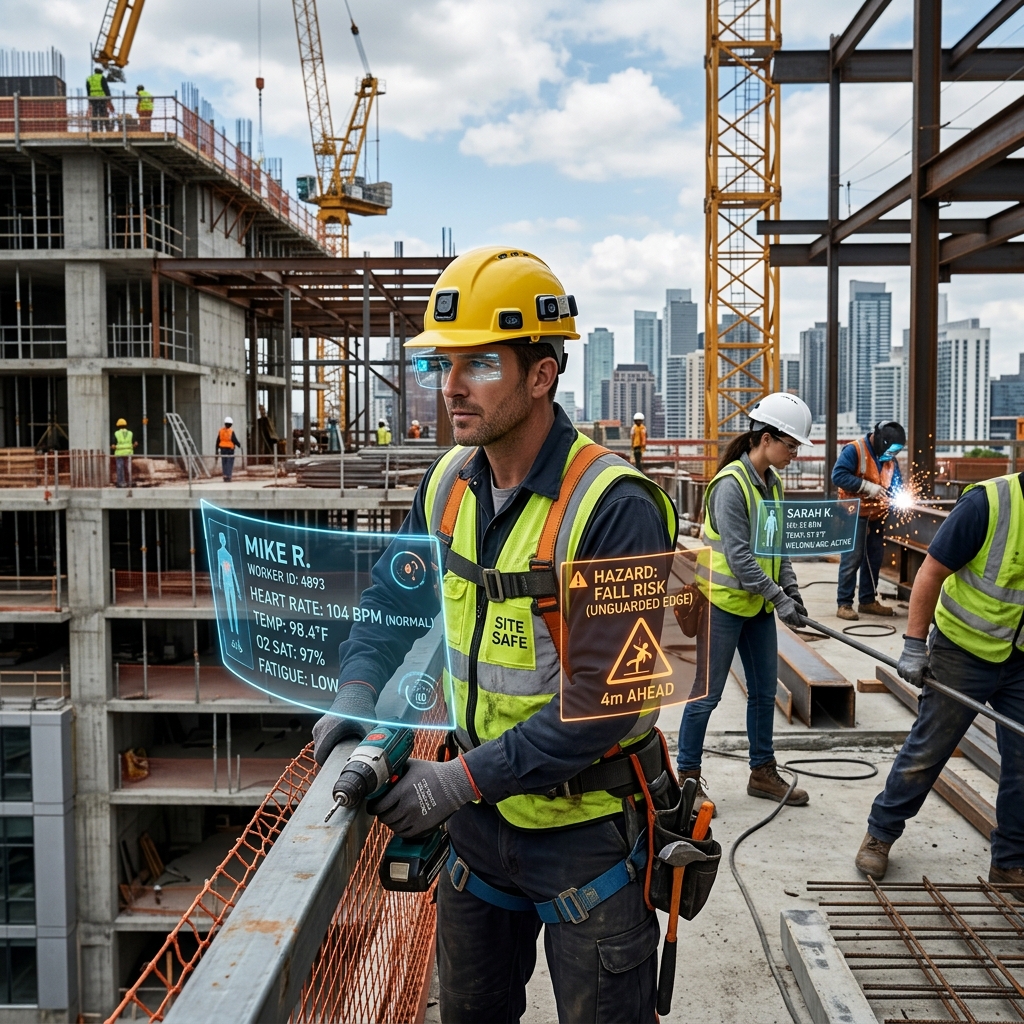
AI for Equipment Maintenance: AI monitors machine performance and predicts maintenance needs before critical breakdowns occur.
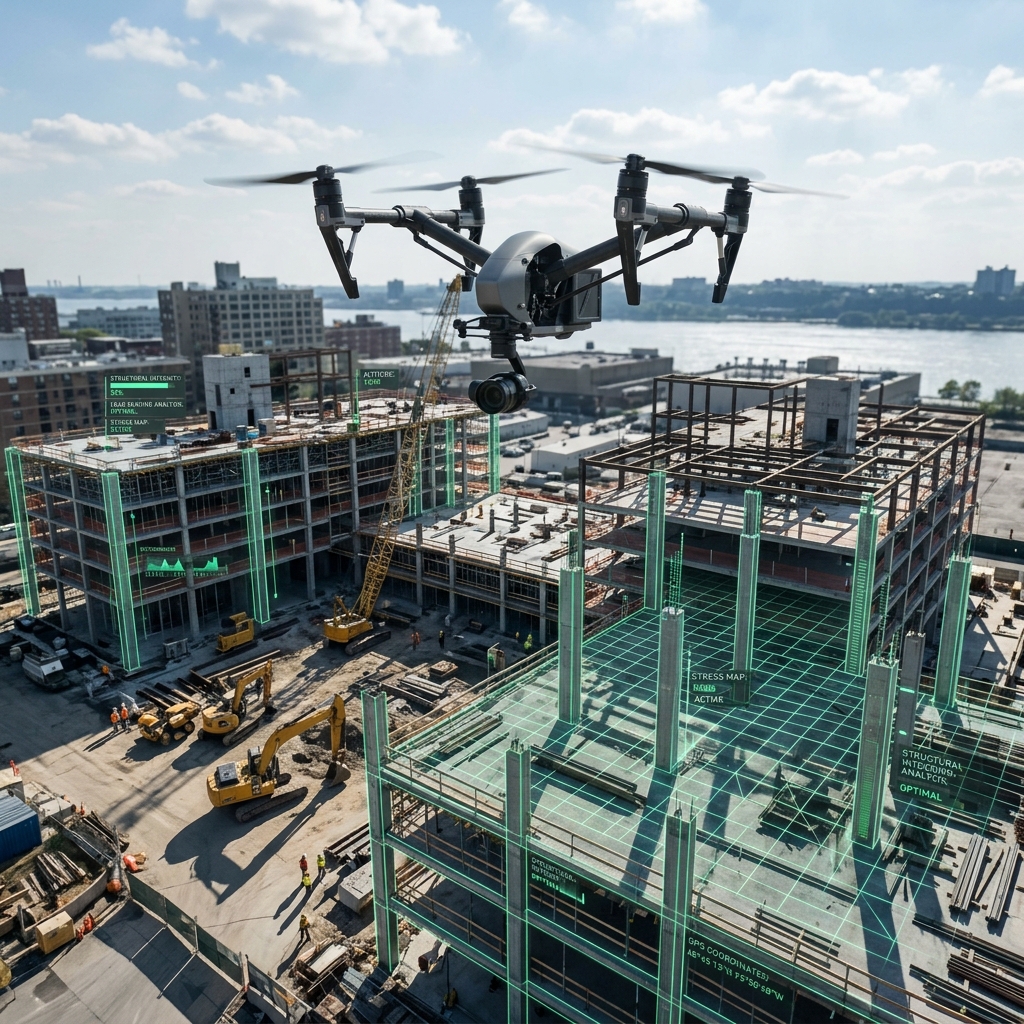
AI for Drone Inspections: AI analyzes drone images to inspect large construction sites, identifying cracks or damaged structures automatically.
AI for Progress Reports: AI creates daily and weekly reports automatically. A site manager uploads photos, and AI prepares a complete progress summary.
AI for Blueprint Checking: AI reviews drawings to find design conflicts, such as overlapping utility runs, before site work starts.
AI for Quality Inspection: AI compares completed work with project standards, spotting alignment errors or uneven tiles.
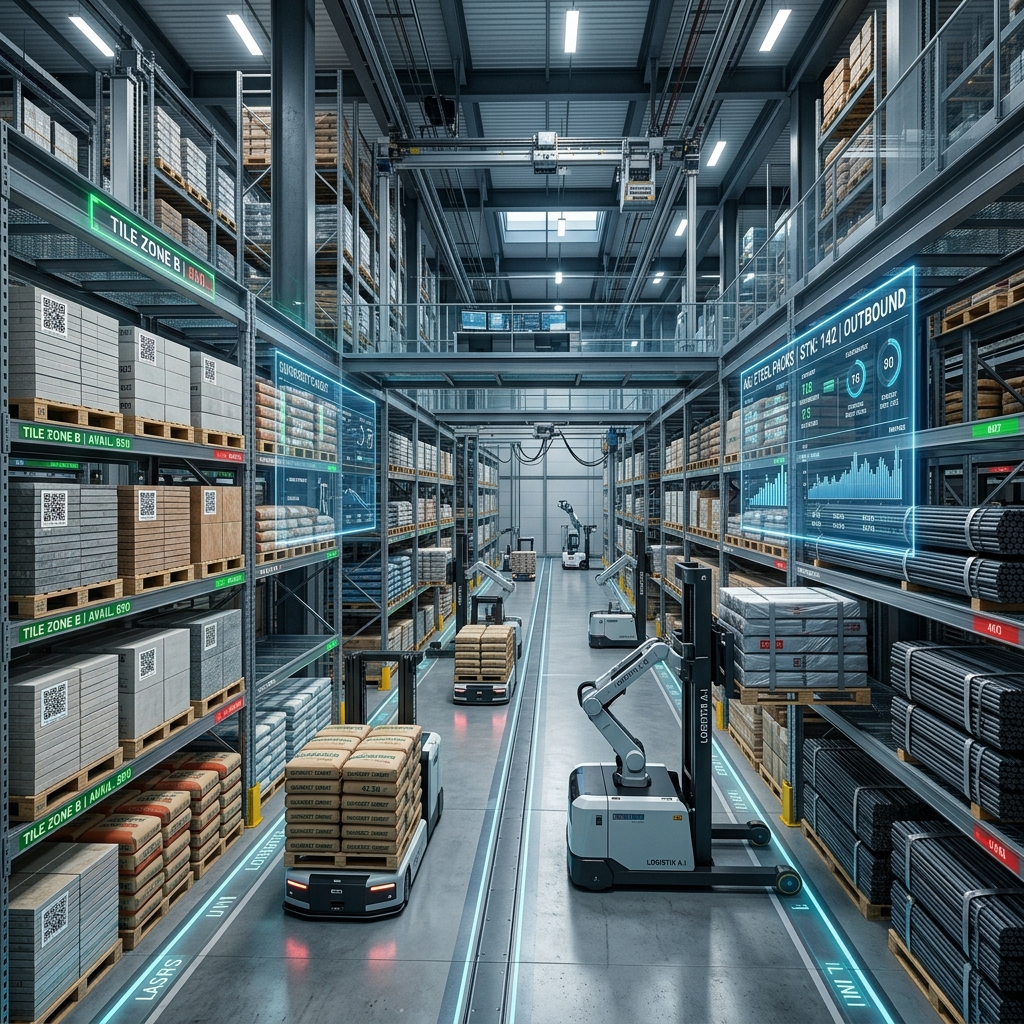
AI for Inventory Tracking: AI keeps track of available materials in real time, automatically reminding managers to reorder.
AI for Customer Communication: AI chatbots answer common client queries and share schedule updates automatically.
AI for Document Management: AI organizes contracts, invoices, and drawings, making retrieval instant and effortless.
AI for Predictive Maintenance: AI predicts future building maintenance needs, such as HVAC or elevator servicing requirements, long after project completion.
How AI Helps Building Material Businesses Grow
AI is not only changing construction sites. It is also helping building material businesses work more efficiently and serve customers better. Whether you manufacture tiles, cement, steel, paint, sanitaryware, hardware, or natural stone, AI can improve many everyday operations:
- Demand Forecasting: AI studies sales trends and seasonal demand to help businesses produce the right products at the right time.
- Production Planning: Manufacturers can plan production schedules more efficiently, reducing downtime and improving output.
- Quality Inspection: AI-powered cameras can identify product defects before items are packed and shipped.
- Inventory Control: AI tracks stock levels in real time and helps prevent overstocking or running out of popular products.
- Customer Service: AI chatbots answer common questions, share product information, and provide support around the clock.
- Product Recommendations: AI suggests suitable products based on customer needs, making it easier to choose the right materials.
- Marketing: AI helps create content, analyze customer behavior, and improve digital marketing campaigns.
- Export Planning: AI can predict demand in different markets, optimize shipping schedules, and support better inventory planning for international orders.
AI Tools That Different Construction Teams Can Use
For Builders
Challenge: Managing daily work, labor, and materials.
AI Tools: Project management, scheduling, and reporting tools.
Result: Better coordination, fewer delays, and smoother site operations.
For Architects
Challenge: Creating designs while reducing errors and revisions.
AI Tools: AI design assistants and 3D visualization software.
Result: Faster design development and improved design accuracy.

For Engineers
Challenge: Reviewing technical drawings and solving design conflicts.
AI Tools: AI-powered design review and structural analysis tools.
Result: Early problem detection and fewer construction errors.
For Contractors
Challenge: Keeping projects on schedule and within budget.
AI Tools: Cost estimation, scheduling, and document management tools.
Result: Better planning, improved productivity, and controlled costs.
For Interior Designers
Challenge: Helping clients choose materials and visualize spaces.
AI Tools: AI design generators, room planners, and visualization tools.
Result: Faster design approvals and a better customer experience.
For Building Material Suppliers
Challenge: Managing inventory and responding to customer inquiries.
AI Tools: Inventory management, demand forecasting, and AI chatbots.
Result: Better stock control, quicker customer support, and improved sales planning.
For Project Managers
Challenge: Monitoring progress, budgets, and team performance.
AI Tools: AI dashboards, reporting tools, and risk prediction software.
Result: Faster decision-making, fewer project delays, and improved construction management.
How to Start Using AI in Construction (Step-by-Step Roadmap)
Step 1: Find Repetitive Work
Look for tasks that take too much time, such as preparing reports, scheduling work, tracking materials, or answering common customer questions. These are usually the easiest tasks to improve with AI.
Step 2: Choose One AI Tool
Don’t try to use multiple AI tools at once. Pick one that solves your biggest problem and test it on a single project before using it across the business.
Step 3: Train Your Team
Show employees how the AI tool works and explain how it will help them. A short training session can improve confidence and encourage adoption.
Step 4: Measure the Results
Track improvements such as time saved, fewer mistakes, lower costs, or faster project completion. This helps you understand whether the AI tool is delivering real value.
Step 5: Expand Gradually
Once you see positive results, introduce AI to other areas like budgeting, inventory management, customer support, or site safety.
Will AI Replace Construction Workers?
AI is changing how construction work is done, but it is not replacing the people who build, supervise, and manage projects. Instead, it is taking over repetitive tasks so workers can focus on more important responsibilities.
Jobs AI Is Changing: AI can automate tasks such as preparing reports, tracking project progress, estimating costs, scheduling work, and organizing documents. This reduces manual work and saves time.
Jobs AI Supports: Builders, engineers, architects, contractors, project managers, and site supervisors can all use AI to make faster and more informed decisions. AI acts as a tool that improves productivity rather than replacing these roles.
New Jobs AI Is Creating: As AI adoption grows, companies also need professionals who can manage AI software, analyze project data, maintain digital systems, and train teams to use new technologies.
What AI Cannot Replace: AI cannot replace human judgment, leadership, creativity, problem solving, or hands-on construction skills. Workers are still needed to manage teams, handle unexpected situations, communicate with clients, and ensure quality on site.
Final Thoughts: AI Works Best When It Solves Real Construction Problems
The best use of artificial intelligence is solving everyday challenges—not replacing people. Modern AI-powered tools, AI systems, and management software help construction firms streamline the construction process, improve construction project management, support construction estimating, strengthen workforce management, and make informed decisions using real-time data and AI insights.
As the future of AI in construction continues to grow, companies that adopt AI can better manage construction plans, project timelines, construction equipment, and building systems. Many AI features, AI solutions, and new tools can predict risks, improve commercial construction, and help teams work more efficiently.
Building material manufacturers can also benefit. For example, Ramirro Ceramica can use AI to help with inventory planning, customer support, and product recommendations. Explore the latest collection, available for online and offline purchase, or contact the team to find the right solution for your next project.
Watch our Video:
Shop Now | Chat With Expert | View Catalogue

Here’s what you get out of our article. Our team have various Ceramic Experts with experience of more than 25 Years, researches on problems our customer faces in tiling industry.
Ramirro Ceramica, – One of The Leading Tiles Manufacturer and Supplier globally, helps you people gain knowledgeable insight before making your purchase decision for products related to the floor and wall tiles.
So, we have closely monitored all kinds of trends in the ceramic tiles manufacturing world, from the old days of clay and plain color to modern digital, realistic-looking designs printed on ceramics with high-depth effects.
Our tiling Experts have seen thousands of different tiles patterns, sizes, materials, pricing, and installation techniques throughout their career.
Their expertise shared with you in simplified and organised way, helps you choose and make better decision before purchasing any flooring option available in market.
Brief about Company:
Ramirro is one of the finest Tiles manufacturers in India manufacturing porcelain and ceramic tiles. Our products have a variety of sizes and types of tiles ranging from Ceramics, porcelain, Full body etc. This helps you choose the perfect fit for your project. Plus, our collection will help you get inspiration from the architect’s design.
Here’s some more helpful links that showcase our users trust on Ramirro Ceramica Brand:
– Growth in International Market
– Trusted and Licensed Exporter
– Manufacturing Plant in India
Here’s our social proof by LinkedIn competing with top known global tiling brands: