

Imagine receiving a shipment of tiles that looks perfect from the outside. But after opening the boxes, you notice broken edges, different shades, and uneven sizes. These small problems can delay installation, increase costs, and create unnecessary stress.
A simple tiles quality control checklist helps prevent these issues. By carrying out proper quality inspections and following good quality assurance practices, you can identify defects early and make sure the tiles meet the required quality before they are installed or shipped.
In this guide, you’ll learn how to use a practical quality inspection checklist, what to inspect, the common defects to look for, and how to ensure consistent tile quality with confidence.
Table of Contents
- What Is a Tiles Quality Control Checklist?
- Why Skipping Tile Quality Checks Can Become Expensive
- When Should Tiles Be Inspected?
- Complete Tiles Quality Control Checklist
- Tile Quality Standards You Should Know
- Simple Tools Used During Tile Quality Inspection
- Common Tile Problems and What They Usually Mean
- Questions Every Buyer Should Ask the Supplier Before Ordering Tiles
- Supplier Quality Checklist Before You Place an Order
- Mistakes Buyers Make During Tile Inspection
What Is a Tiles Quality Control Checklist?
What Does “Quality Control” Mean?
Quality control (QC) means checking finished tiles for defects like cracks, uneven sizes, or color differences before they reach customers.
What Is a Quality Inspection?
A quality inspection is the process of examining tiles to ensure they meet the required quality. Inspections are usually done during production, before packing, and before shipment.
What Is Quality Assurance?
Quality assurance (QA) focuses on preventing defects by following the right production process. For example, checking raw materials before manufacturing helps reduce quality problems later.
Quality Control vs Quality Assurance
| Quality Control (QC) | Quality Assurance (QA) |
|---|---|
| Finds defects | Prevents defects |
| Done during or after production | Done before and during production |
| Performed by inspectors | Followed by the production team |
| Ensures finished tile quality | Ensures a consistent production process |
Why Skipping Tile Quality Checks Can Become Expensive
Skipping tile quality checks may save a little time at first, but it can lead to bigger problems later. Imagine opening tile boxes and finding broken pieces or noticing different shades after installation. Replacing those tiles costs both time and money. If tile sizes are uneven, installers may struggle to keep straight lines and even gaps. Using slippery tiles in bathrooms can also increase the risk of accidents. Tiles that absorb too much water may stain, weaken, or crack over time. For builders and suppliers, poor quality tiles can result in customer returns, construction delays, extra labor costs, and a loss of trust. A simple quality inspection before installation or shipment can help avoid these expensive problems.
When Should Tiles Be Inspected?
Tile inspections should be done at every stage, not just before delivery. This helps find problems early and ensures better quality.
- Before production starts: Check raw materials and production settings.
- During manufacturing: Identify defects before more tiles are made.
- After firing and polishing: Inspect the tile’s size, finish, color, and strength.
- Before packing: Remove damaged or defective tiles.
- Before shipment: Make sure the correct tiles, quantity, and packaging are ready for delivery.
- After delivery at the project site: Check for damage during transport before installation begins.
📥 Download the Printable PDF Checklist
Take this 11-point inspection checklist to the factory floor or construction site. Use the form below to receive the print-ready PDF template and our wholesale importing guide.
Complete Tiles Quality Control Checklist
Visual Inspection Checklist
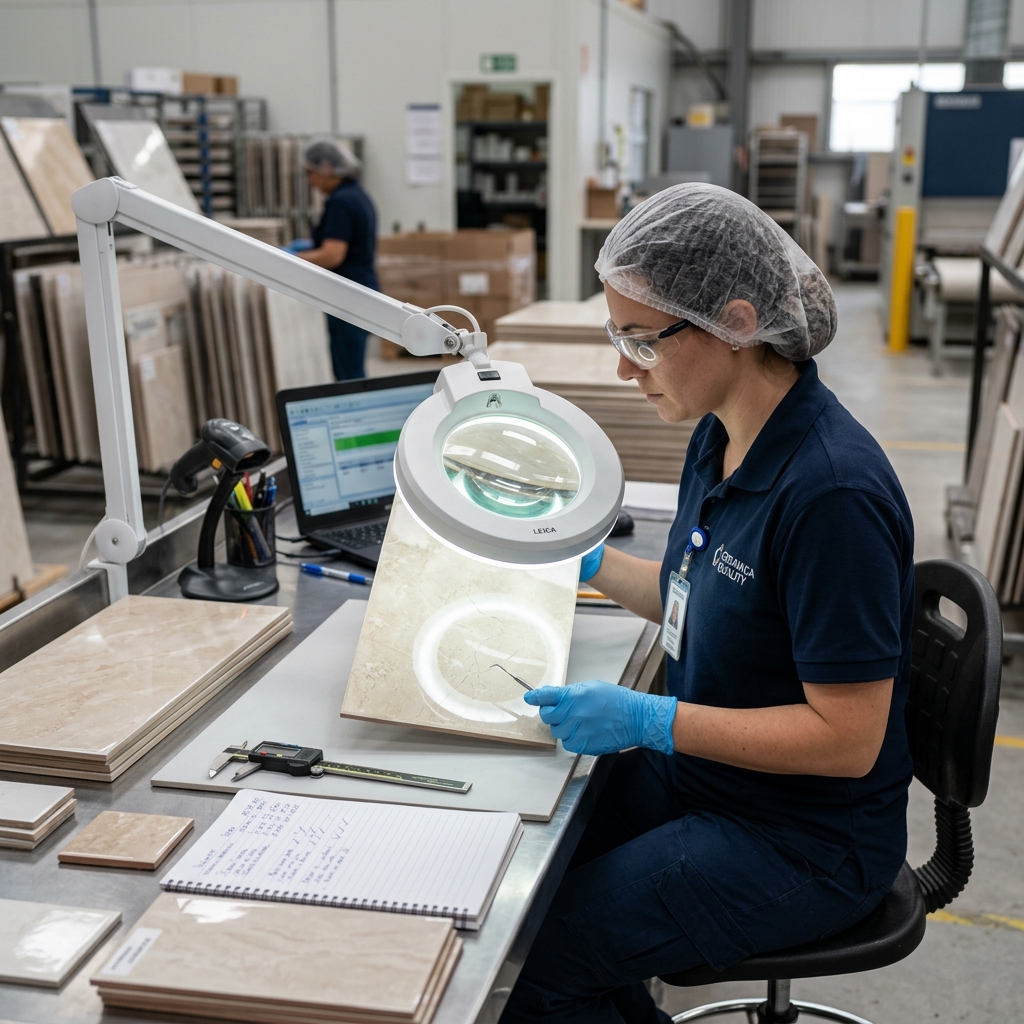
The first step is to carefully look at every tile. Check for surface scratches, chips, broken corners, pinholes, cracks, black spots, dirt marks, uneven glaze, printing defects, poor polish, and damaged edges. Even small defects can affect the final appearance after installation. Quick Tip: Always inspect tiles in natural light if possible, as it makes defects easier to spot.
Size and Dimension Checklist
Every tile should have the same length, width, and thickness. The edges should be straight, and the corners should form a perfect square. Even a difference of a few millimeters can create uneven grout lines and make installation more difficult.

Flatness Checklist
Tiles should be completely flat without any warping, bending, or curved surfaces. A simple way to check this is by placing two tiles face to face. If you notice large gaps between them, the tiles may not be flat.
Shade and Color Consistency Checklist
Tiles from different production batches may have slight color differences. Compare the shade, check the batch number, and make sure the pattern and print alignment are consistent across all boxes. Buying Tip: Purchase enough tiles from the same batch to maintain a uniform appearance.
Water Absorption Inspection
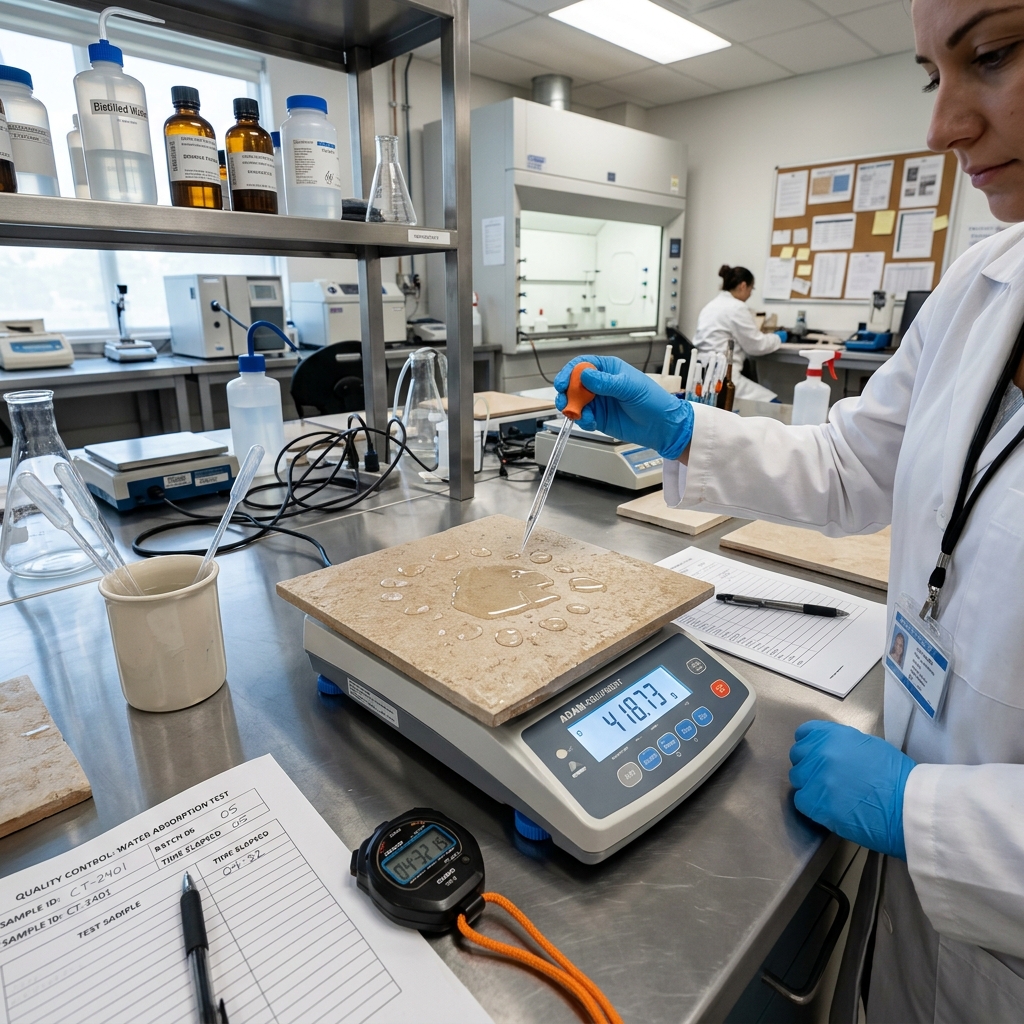
Water absorption affects how well a tile performs in different areas. Tiles with low water absorption are better for bathrooms, kitchens, and outdoor spaces because they resist moisture. Tiles with higher water absorption are more suitable for dry indoor areas.
🧪 Request a Free Sample Box for Quality Testing
Want to check our tile strength, water absorption, and finishes yourself? Architects, builders, and importers can request a free sample box using our product enquiry form below.
Strength and Durability Checks
A quality tile should be strong enough for its intended use. It should resist breaking, support heavy loads, and withstand impacts. Stronger tiles are recommended for kitchens, commercial spaces, and parking areas where foot traffic or weight is higher.
Slip Resistance Inspection
A shiny tile may look attractive, but it is not always the safest choice. Check whether the tile provides enough grip, especially for wet areas. Anti slip tiles are ideal for bathrooms, swimming pools, balconies, stairs, and outdoor spaces.
Glaze Quality Checklist
The glaze should be smooth, even, and free from defects. Look for consistent gloss, no bubbles, no peeling, and no dull patches. A good glaze also makes the tile easier to clean and maintain.
Surface Finish Inspection
Each finish should have a consistent appearance. Glossy tiles should have an even shine, matte tiles should have a uniform texture, satin tiles should feel smooth, carving and sugar finish tiles should show clear patterns, rustic tiles should have a natural look, and anti skid tiles should provide consistent grip across the surface.
Packing Inspection Checklist
Good packaging protects tiles during transport. Check that the cartons are strong and properly sealed. The labels should show the correct batch number, tile size, quantity, manufacturing details, and handling instructions. Avoid accepting boxes that are damaged or wet.

Loading and Shipping Inspection
Even high quality tiles can be damaged during transportation if they are not loaded correctly. Make sure the container is clean, the tiles are stacked securely on wooden pallets, the corners are protected, moisture protection is provided, and the container is properly sealed. Taking photographs before shipment also helps if any transport damage needs to be reported later.
Tile Quality Standards You Should Know
Tile quality standards are guidelines that help manufacturers produce safe, reliable, and consistent tiles. They ensure important factors like size, strength, water absorption, and durability meet accepted quality levels. As a buyer, it is always a good idea to ask whether the tiles follow recognized quality standards. This gives you greater confidence that the products have been tested and are suitable for their intended use. Some of the most common standards include ISO standards, which are recognized internationally, EN standards, which are widely used across Europe, ASTM standards, commonly followed in the United States, and BIS standards, which apply to tiles manufactured and sold in India.
Simple Tools Used During Tile Quality Inspection
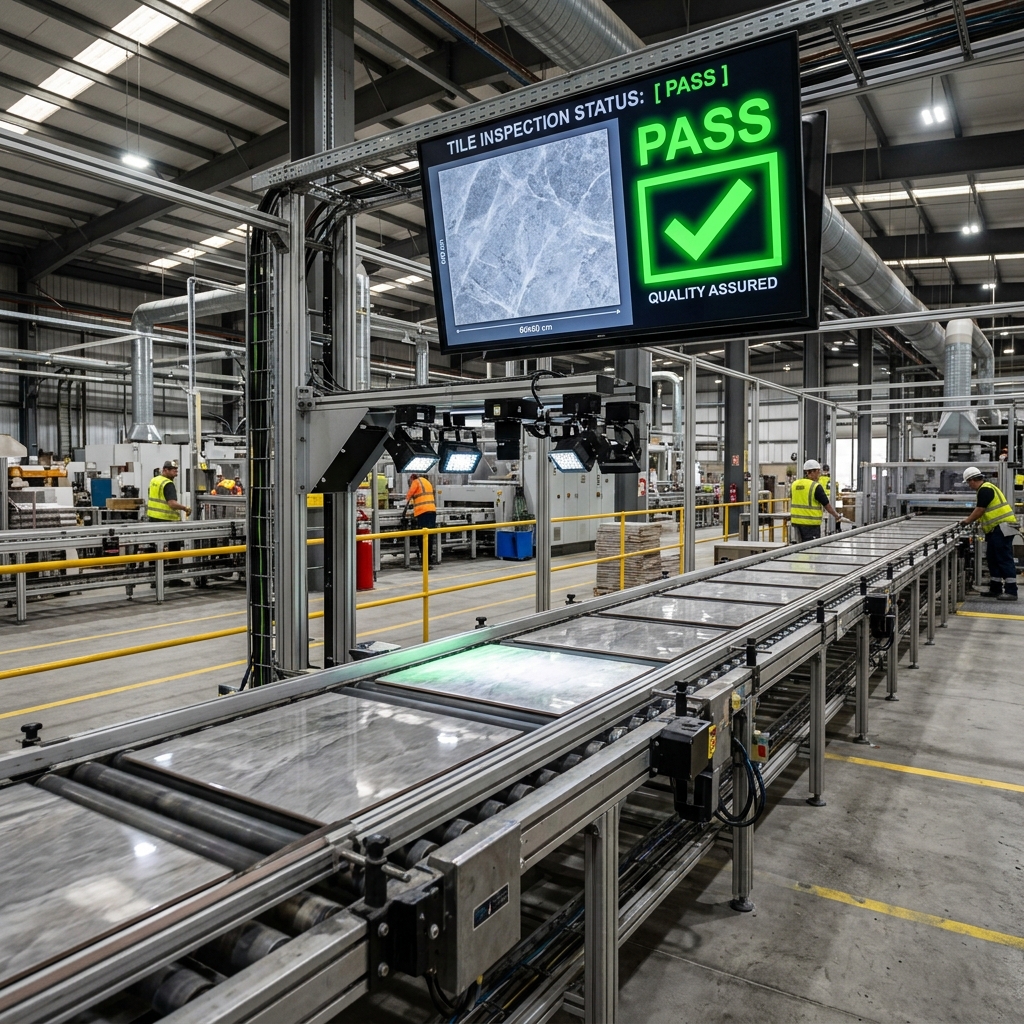
You don’t always need expensive equipment to inspect tiles. A few simple tools can help you check their quality. A measuring tape is used to check the tile’s length and width. A vernier caliper measures thickness more accurately, while a steel ruler helps check small dimensions and straight edges. A spirit level and a straight edge are used to see if a tile is flat or has any bending or warping. A water container helps perform a basic water absorption test by observing how quickly a tile absorbs moisture. A color reference sample makes it easier to compare shades and ensure all tiles have a consistent color. A rubber hammer is sometimes used to gently tap installed tiles to detect hollow sounds, which may indicate poor installation. Finally, an inspection checklist sheet helps record all observations and ensures that no important quality check is missed.
Common Tile Problems and What They Usually Mean
| Problem | Possible Reason | Should You Accept It? |
|---|---|---|
| Cracks | Poor handling, impact, or manufacturing defects | No. Cracked tiles should always be rejected. |
| Broken edges | Damage during packing or transportation | No. They affect installation and appearance. |
| Different shades | Tiles from different production batches | Usually No. Accept only if shade variation is expected and approved. |
| Uneven sizes | Poor manufacturing control | No. It can lead to uneven grout lines and difficult installation. |
| Bowed tiles | Warping during the firing process | No. Excessive bowing can cause lippage after installation. |
| High water absorption | Tile is not suitable for wet areas | Depends. Accept only if it matches the intended application. |
| Weak packaging | Poor packing or handling | No. It increases the risk of damage during transport. |
| Surface scratches | Improper handling or polishing | No. Scratches reduce the tile’s appearance and value. |
| Glaze defects | Uneven glazing or manufacturing issues | No. Defects can affect both appearance and durability. |
Questions Every Buyer Should Ask the Supplier Before Ordering Tiles
Before placing your order, don’t focus only on the price. Asking the right questions can help you avoid quality problems, delivery delays, and unexpected costs. Here are some important questions every buyer should ask:
- Can I see the quality inspection report?
- Which quality standards do your tiles follow?
- Can you provide the batch number for all the tiles?
- What is the water absorption level of these tiles?
- Do you perform a final quality inspection before shipment?
- What is your policy if damaged tiles arrive?
- Can you share packing and loading photos before shipment?
💼 Looking for a Reliable Export Partner?
Talk directly to our export division. Request container pricing, custom manufacturing requirements, or get a wholesale quote via the enquiry form below.
Supplier Quality Checklist Before You Place an Order
Inspecting the tiles is important, but inspecting the supplier is just as important. A reliable supplier is more likely to deliver consistent quality and provide better support if any issues arise. Before placing an order, check the supplier’s factory experience, production capacity, quality certifications, and inspection process. Also, review their packaging quality, export experience, customer reviews, response time, after-sales support, and ability to supply the same quality consistently for future orders.
Reliable manufacturers like Ramirro Ceramica follow structured quality inspection and quality assurance processes to maintain consistent product quality for both domestic and export customers. Choosing a trusted supplier can reduce risks and help ensure a smoother buying experience.
Mistakes Buyers Make During Tile Inspection
Here are the most common mistakes buyers make during tile inspection:
- Checking only one tile instead of several boxes.
- Ignoring batch numbers, which can cause shade differences.
- Not measuring tile size and thickness.
- Forgetting to inspect edges for chips and cracks.
- Skipping the packaging inspection.
- Choosing the lowest price over product quality.
- Not asking for quality inspection reports before purchase.
Frequently Asked Questions
What is the difference between quality control and quality assurance?
Quality control finds defects in finished tiles, while quality assurance focuses on preventing defects during production.
Why is a tile inspection important before installation?
It helps identify defects early, reducing installation problems, extra costs, and future repairs.
How do I know if tiles are from the same batch?
Check the batch number printed on each box. Matching batch numbers usually indicate consistent color and finish.
Can I inspect tiles without special tools?
Yes. Most visible defects, size differences, and color variations can be checked with simple tools and careful observation.
What should I do if damaged tiles are delivered?
Take photos immediately, avoid installing the damaged tiles, and contact the supplier for a replacement or claim.
How many tiles should be inspected from a shipment?
Inspect tiles from several boxes instead of just one to get a better idea of the overall quality.
Why do some tiles have slight color variation?
Tiles from different production batches can have slight shade differences, so it’s best to use tiles from the same batch.
Final Thoughts: Better Tile Quality Starts with Better Inspection
A QC checklist is a well-structured document that helps streamline quality control, identify potential defects, and ensure every item meets the required specification and quality requirements. Using a quality checklist supports effective quality control, quality management, regulatory compliance, and better customer satisfaction.
Whether you are a homeowner, contractor, or importer, following best practices and the right inspection criteria helps you avoid quality issues and receive products that meet or exceed customer expectations.
Explore the latest Ramirro Ceramica collection online or visit our showroom for an offline purchase. If you have questions about product quality or inspections, contact our team—we’re happy to help you choose the right tiles.
Watch our Video:
Shop Now | Chat With Expert | View Catalogue

Here’s what you get out of our article. Our team have various Ceramic Experts with experience of more than 25 Years, researches on problems our customer faces in tiling industry.
Ramirro Ceramica, – One of The Leading Tiles Manufacturer and Supplier globally, helps you people gain knowledgeable insight before making your purchase decision for products related to the floor and wall tiles.
So, we have closely monitored all kinds of trends in the ceramic tiles manufacturing world, from the old days of clay and plain color to modern digital, realistic-looking designs printed on ceramics with high-depth effects.
Our tiling Experts have seen thousands of different tiles patterns, sizes, materials, pricing, and installation techniques throughout their career.
Their expertise shared with you in simplified and organised way, helps you choose and make better decision before purchasing any flooring option available in market.
Brief about Company:
Ramirro is one of the finest Tiles manufacturers in India manufacturing porcelain and ceramic tiles. Our products have a variety of sizes and types of tiles ranging from Ceramics, porcelain, Full body etc. This helps you choose the perfect fit for your project. Plus, our collection will help you get inspiration from the architect’s design.
Here’s some more helpful links that showcase our users trust on Ramirro Ceramica Brand:
– Growth in International Market
– Trusted and Licensed Exporter
– Manufacturing Plant in India
Here’s our social proof by LinkedIn competing with top known global tiling brands: