
In global trade, choosing the optimal export tile size is a critical commercial decision that directly affects freight logistics, container loading efficiency, installation speed, and dealer profitability. 600×600 mm is often one of the most preferred tile sizes in export markets because it is practical, easier to install, and suitable for many residential and commercial projects. Its manageable size also helps with handling, cutting, transport, and replacement.
800×800 mm is another widely used size, while demand for larger tiles is growing in modern homes, hotels, offices, and commercial spaces. Larger formats offer fewer grout lines and can create a cleaner, more continuous look. However, export tile size preferences vary by market and project. Room size, local building styles, installer experience, transport, breakage risk, and buyer demand can all influence which tile size works best.
Export Tile Size & Container Mix Estimator
Calculate the ideal export tile size ratios, pallet packaging, and container utilization for your target market.
1. What is your primary customer segment and project category?
Table of Contents
- What Does “Tile Size” Actually Mean?
- Quick Tile Size Comparison Table
- Why 600×600 mm Remains a Strong Export Tile Size
- 600×600 vs 800×800: Two Popular Sizes, Two Different Buying Reasons
- Why Export Tile Size Preferences Change From One Market to Another
- The Hidden Export Factor: How Tile Size Changes Packing and Shipping
- Why the Largest Tile Is Not Always the Best Container Choice
- One Container, Different Sizes: How Importers Can Plan Their Tile Mix
- Floor, Wall and Facade: The Same Tile Size Does Not Work Everywhere
- Facade Tile Size Should Follow the Building, Not a Trend
- “This Size Is Popular” Is Not Enough: Questions to Ask Before Ordering
- A Simple Way to Estimate the Right Export Tile Size
- Common Export Tile Size Mistakes That Cost Buyers Money
- Build an Export Collection Around Use: Ramirro Ceramica Solutions
What Does “Tile Size” Actually Mean?
Tile size simply means the length and width of a tile. For example, 600×600 mm means 60 cm wide × 60 cm long. An 800×800 mm tile is 80 cm × 80 cm, while 600×1200 mm means 60 cm × 120 cm.
Tiles come in different shapes and formats. Square tiles have equal sides, such as 600×600 mm and 800×800 mm. Rectangular tiles have one longer side, such as 600×1200 mm. Large format tiles cover more area with fewer joints, while slabs are extra large pieces often used for large floors, walls, and other broad surfaces.
Tile thickness is different from tile size. Size refers to length and width, while thickness tells you how thick the tile is (typically 8.5 mm to 9.5 mm for standard tiles, up to 12 mm or 20 mm for outdoor slabs). Also, a bigger tile does not automatically mean better quality. The right export tile size depends on the space, application, installation, and design you want.

Quick Tile Size Comparison Table
| Tile Size | Shape | Common Use | Why Buyers Consider It |
|---|---|---|---|
| 600×600 mm | Square | Homes, shops, offices, apartments | Practical, economical freight, and easy to install |
| 800×800 mm | Square | Modern homes, commercial spaces | Creates a larger, open visual look with fewer joints |
| 600×1200 mm | Rectangle | Floors and walls, bathrooms, corridors | Fewer visible joints and elegant vertical or horizontal flow |
| Large Formats / Slabs | Varies (e.g. 1200×2400 mm) | Luxury interiors, hotel lobbies, facades | Seamless, continuous luxury look with minimal grout lines |
📥 Download Ramirro Ceramica Export Tile Packaging & Sizing Specs
Get full details on tiles per box, square meters per pallet, container weight calculations, and custom branding options across all export tile sizes.
Why 600×600 mm Remains a Strong Export Tile Size
600×600 mm tiles remain a preferred choice in many export markets because they offer a practical balance of size, handling, installation, and design. They work well in apartments, houses, offices, shops, hotels, and residential projects, giving importers one versatile size for different customers.
Easy and Practical to Install
Compared with very large tiles and slabs, 600×600 mm tiles are easier to handle, cut, and position. Many installers are already familiar with this size, making it a practical option for normal sized rooms without requiring specialized handling equipment or suction rigs.
Less Cutting and Waste
When 600×600 mm tiles fit the room layout well, fewer cuts may be needed around walls and corners. This can reduce tile waste. However, the actual waste always depends on the room size, shape, and chosen layout.
Easier to Replace
If a tile gets damaged later, a common 600×600 mm size may be easier to replace than an unusual format. Still, keeping a few extra tiles from the original batch is recommended because the same color or design may not always be available later.
600×600 vs 800×800: Two Popular Sizes, Two Different Buying Reasons
600×600 mm
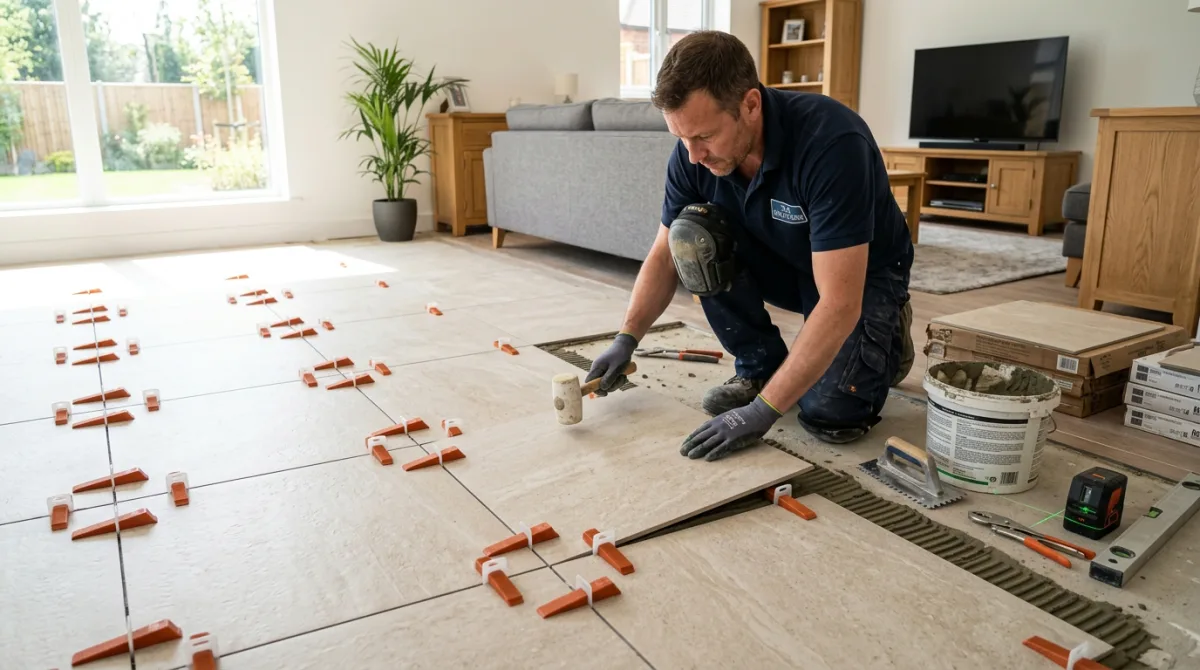
600×600 mm tiles are practical for medium sized rooms, homes, apartments, and budget focused projects. They are easier to handle and install, while their wide use makes them a flexible choice for importers serving different customer groups.
800×800 mm
800×800 mm tiles are often chosen for larger rooms, modern interiors, and open plan spaces. Their bigger surface means fewer grout lines, helping floors look cleaner, more open, and visually premium.
Which One Should an Importer Choose?
Choose 600×600 mm when easy installation, flexibility, and broad usability are important. Choose 800×800 mm when customers prefer larger tiles and a more spacious floor appearance. For importers, the best choice should always match actual local market demand rather than size trends alone.
Why Export Tile Size Preferences Change From One Market to Another
Room Size and Project Type
Smaller apartments in urban centers may benefit from practical sizes such as 600×600 mm, while villas, hotels, commercial buildings, retail stores, and other large spaces have more room for larger formats like 800×800 mm and 600×1200 mm.
Installation Skills and Local Trends
Some export markets have skilled installers who regularly handle large tiles, while other developing markets prefer familiar, easier to install sizes. Modern minimalist, marble look, and seamless designs can also increase demand for larger formats with fewer visible joints.
Renovation vs New Construction
Renovation projects must work around existing walls, doors, room dimensions, and floor levels, which can limit tile size choices. New construction offers more flexibility because the architectural layout can sometimes be planned around the selected tile size.
🧪 Request Physical Tile Sizing & Surface Samples
Evaluate exact surface finishes, rectifications, and body thickness across our export tile size range before placing container orders.
The Hidden Export Factor: How Tile Size Changes Packing and Shipping
For an importer, choosing an export tile size is not only about design. Tiles must travel thousands of kilometers safely from the factory to a warehouse, dealer, project site, and finally the customer. Tile size directly impacts:
- Tiles Per Box: 600×600 mm tiles usually come 4 pieces per box (approx. 1.44 sq.m), while 800×800 mm tiles come 3 pieces (approx. 1.92 sq.m), and 600×1200 mm comes 2 pieces (approx. 1.44 sq.m).
- Box Weight: Boxes must remain within manual lifting limits (typically 28 to 32 kg per box).
- Pallet Arrangement & Container Loading: Standard 20ft containers have weight limits (approx. 27 to 28 metric tons). Packing smaller sizes allows tighter, denser stacking compared to oversized slabs.
- Breakage Risk: Larger tiles have greater surface area, making them more vulnerable to torsional flex during rough ocean freight or multi-leg overland trucking.
Why the Largest Tile Is Not Always the Best Container Choice
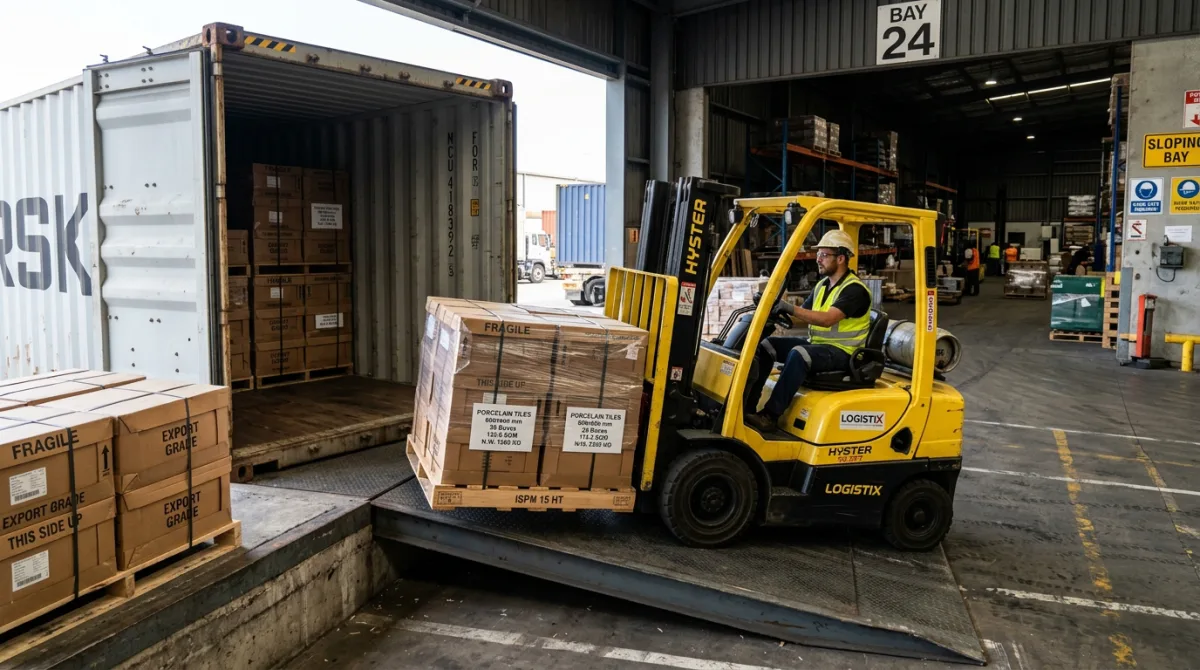
A large tile may look impressive, but importers should consider the complete journey before ordering. Packing efficiency, handling, storage, installation, and breakage risk can be just as important as appearance. The most practical export tile size is one that works smoothly from the factory kiln all the way to the final floor installation.
One Container, Different Sizes: How Importers Can Plan Their Tile Mix
Importers do not always need to depend on one single tile size. A balanced collection can serve different customers and projects while reducing the risk of holding dead stock in a slow selling format.
A practical container mix may include 600×600 mm as a high-velocity core size (40–50%), 800×800 mm for modern residential buyers (25–35%), and 600×1200 mm for contemporary feature floors and walls (15–25%). Good stock planning should follow real market demand: a popular size that sells regularly deserves consistent inventory.

Floor, Wall and Facade: The Same Tile Size Does Not Work Everywhere
Different surfaces demand different structural and aesthetic considerations:
- Interior Floors: Square sizes like 600×600 mm and 800×800 mm provide balanced grid layouts, while rectangular 600×1200 mm tiles stretch perceived room length.
- Interior Walls: Wall width, ceiling height, and fixture cutouts determine the size choice. 600×1200 mm tiles installed vertically eliminate horizontal joints in standard 2.4 m to 2.7 m residential bathrooms.
- Exterior Facades: Large format matte tiles provide modern, monolithic building exteriors with minimal joints, but require specialized mechanical anchorage.
Facade Tile Size Should Follow the Building, Not a Trend
For a building facade, the most popular tile size is not always the right choice. The size should match the building itself. Factors such as building height, structural framing, wind load exposure, tile weight, required cuts, joint layout, and the fixing system (ventilated facade clips vs. adhesive bonding) all need careful engineering.
Architects may request custom or project specific tile dimensions instead of standard floor sizes. This is why export tile size preferences for facades are always project specific.

“This Size Is Popular” Is Not Enough: Questions to Ask Before Ordering
A popular tile size is not automatically the right choice for every market or project. Before placing an order, importers, distributors, architects, and project buyers should ask these essential questions:
- Where will the tile be installed?
- What are the room or wall dimensions?
- Is it for a residential development or a high-traffic commercial space?
- Can local installers easily handle this size without high breakage rates?
- How much cutting and waste may occur based on the layout?
- Which surface finish (glossy, matte, anti-slip) suits the application?
- How will the tiles be packed, palletized, and transported?
- How much extra buffer stock is needed for cuts and future repairs?
- Is this tile size regularly available for repeat orders?
- Do customers in the target market actively prefer this format?
A Simple Way to Estimate the Right Export Tile Size
Follow these 4 practical steps to estimate the ideal format for your project:
- Measure the Area: Calculate the exact length, width, and net surface area of the floor or wall.
- Check the Layout & Centerline: Identify where cuts will occur around columns, doors, and borders to avoid sliver cuts narrower than 50 mm.
- Compare Standard Sizes: Model the layout in 600×600 mm, 800×800 mm, and 600×1200 mm to see which format minimizes cutting waste.
- Think Beyond Appearance: Account for container freight density, site handling, and installer experience before signing off on the final purchase order.
Common Export Tile Size Mistakes That Cost Buyers Money
- Choosing from catalogue photos only: A tile format can feel overwhelmingly large or crowded once installed in a real room.
- Thinking bigger means better quality: Tile size alone does not determine technical vitrification, water absorption, or durability.
- Ignoring installer experience: Specifying oversized formats in markets lacking suction gear and leveling tools leads to lippage and client disputes.
- Ignoring room dimensions: Installing 800×800 mm tiles in narrow hallways often creates more cut waste than 600×600 mm tiles.
- Ordering the exact calculated quantity: Failing to include a 10–15% buffer for cuts and future replacements leaves projects stalled.
- Overlooking packaging and handling: Weak pallet strapping on long ocean journeys causes costly transit claims.
- Blindly copying another market’s trend: What sells in Europe or the US may not match the room layouts or purchasing habits in your region.
💼 Direct Factory Container Sourcing & Export Consulting
Source export-grade 600×600 mm, 800×800 mm, and 600×1200 mm porcelain tiles directly from Ramirro Ceramica’s manufacturing hub in Morbi, India. We offer flexible container mixes, custom branding, and door-to-port freight logistics.
Build an Export Collection Around Use: Ramirro Ceramica Solutions
A successful export tile collection offers sizes engineered for real project needs rather than hype. 600×600 mm provides reliable, high-volume turnover; 800×800 mm elevates modern living spaces; and 600×1200 mm captures the demand for elegant seamless walls and floors.
Ramirro Ceramica works closely with international importers, distributors, and contractors worldwide to supply precision-engineered porcelain tiles across all major export tile sizes. Explore our complete collection through online or offline purchase options. Importers, distributors, architects, and project buyers can contact Ramirro Ceramica to discuss tile sizes, finishes, quantities, packaging, and custom project requirements.
Watch our Video:
Shop Now | Chat With Expert | View Catalogue

Here’s what you get out of our article. Our team have various Ceramic Experts with experience of more than 25 Years, researches on problems our customer faces in tiling industry.
Ramirro Ceramica, – One of The Leading Tiles Manufacturer and Supplier globally, helps you people gain knowledgeable insight before making your purchase decision for products related to the floor and wall tiles.
So, we have closely monitored all kinds of trends in the ceramic tiles manufacturing world, from the old days of clay and plain color to modern digital, realistic-looking designs printed on ceramics with high-depth effects.
Our tiling Experts have seen thousands of different tiles patterns, sizes, materials, pricing, and installation techniques throughout their career.
Their expertise shared with you in simplified and organised way, helps you choose and make better decision before purchasing any flooring option available in market.
Brief about Company:
Ramirro is one of the finest Tiles manufacturers in India manufacturing porcelain and ceramic tiles. Our products have a variety of sizes and types of tiles ranging from Ceramics, porcelain, Full body etc. This helps you choose the perfect fit for your project. Plus, our collection will help you get inspiration from the architect’s design.
Here’s some more helpful links that showcase our users trust on Ramirro Ceramica Brand:
– Growth in International Market
– Trusted and Licensed Exporter
– Manufacturing Plant in India
Here’s our social proof by LinkedIn competing with top known global tiling brands: