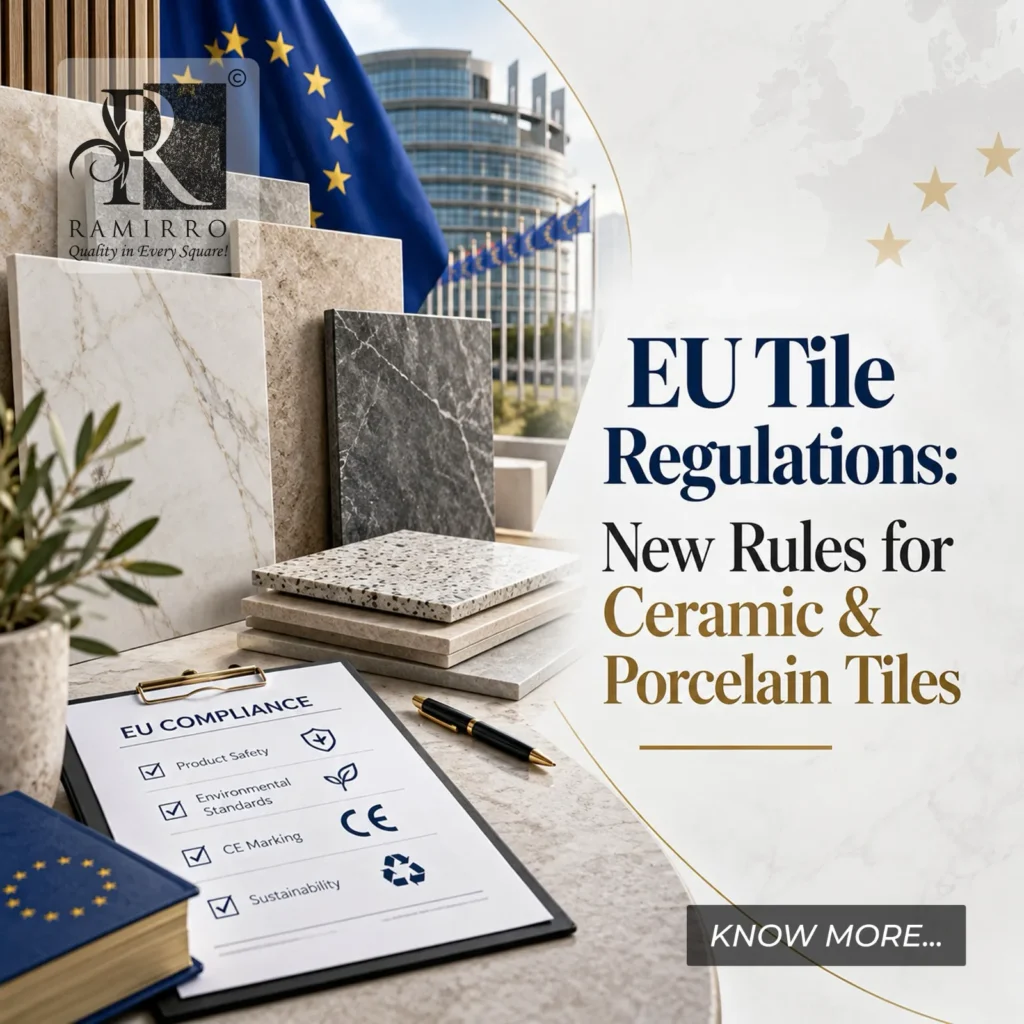
EU Tile Compliance Readiness Checker
Verify your documentation framework under CPR 2024, CE marking, and PPWR packaging requirements.
1. Which declaration framework currently backs your tile export shipment?
The Construction Products Regulation (CPR 2024) became generally applicable on 8 January 2026, but not every ceramic or porcelain tile moved to the new system on the same date. The transition depends on the applicable product framework and technical specification.
For tile manufacturers and exporters, this means the key question is not simply “What are the new EU rules?” but “Which requirements apply to this tile, and when?” This guide explains the important EU tile regulations in simple, practical terms.
Table of Contents
- What Are the Main EU Rules That Affect Ceramic & Porcelain Tiles?
- CPR 2024 and Tiles — What Actually Changes in 2026?
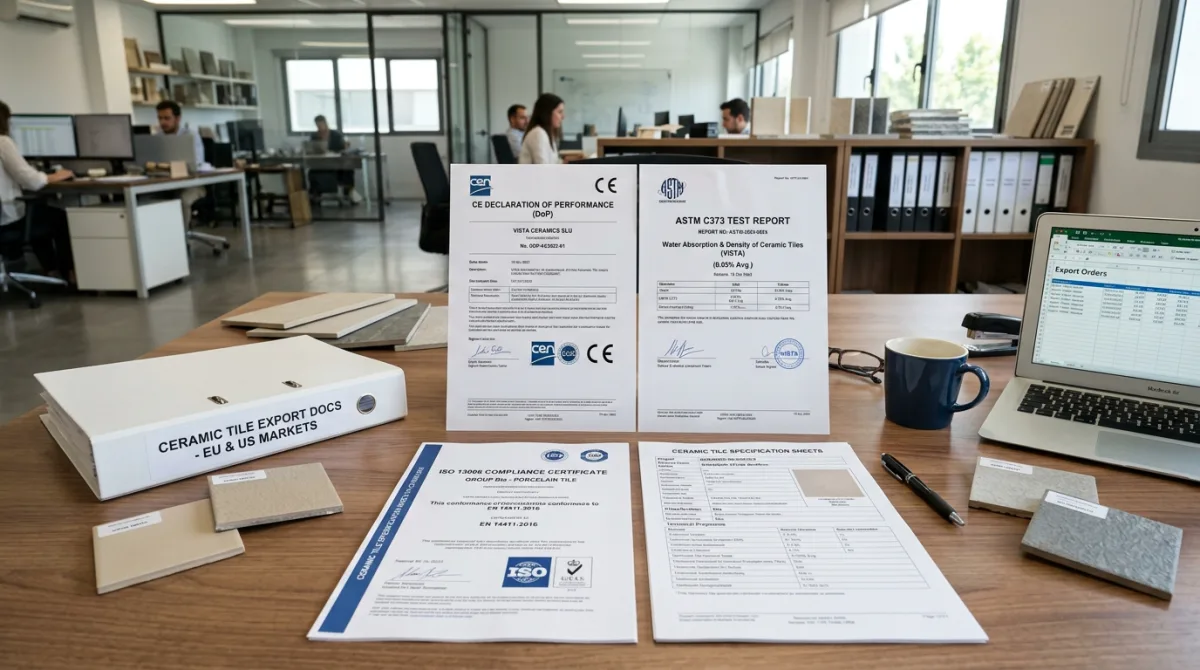
- CE Marking and DoP/DoPC — What Should Be on the Tile Documentation?
- What Should an Indian Tile Manufacturer Prepare Before Exporting to the EU?
- What Do EU Importers, Suppliers and Buyers Need to Check?
- Environmental Information and Digital Product Passports
- New EU Packaging Rules: Why Tile Boxes and Pallets Matter (PPWR)
- What About REACH and SCIP for Ceramic Tiles?
- 7 Common EU Tile Compliance Mistakes Exporters Should Avoid
- EU Tile Compliance Checklist for 2026
- Final Thoughts — European Tile Compliance Starts Before the Container Leaves the Factory
- Frequently Asked Questions About EU Tile Regulations
What Are the Main EU Rules That Affect Ceramic & Porcelain Tiles?
There is no single “EU tile law.” Ceramic and porcelain tiles can be affected by several EU rules, depending on the product, its intended use and how it enters the European market.
The main areas to understand are CPR 2024 for construction product requirements, CE marking where legally required, and DoP or DoPC for declaring product performance and conformity under the applicable CPR framework. Newer requirements also place more focus on environmental information and digital product data.
Tile exporters should also look beyond the tile itself. The Packaging and Packaging Waste Regulation (PPWR) can affect tile cartons and other packaging, while REACH and SCIP requirements may apply when the relevant chemical conditions are met.
The important point is simple: not every rule applies to every tile in the same way or at the same time. The first step is always to identify the product and determine which requirements apply to it.
CPR 2024 and Tiles — What Actually Changes in 2026?
The Construction Products Regulation (EU) 2024/3110, known as CPR 2024, became generally applicable on 8 January 2026. It replaces the earlier CPR framework, but the change is not an overnight switch for every construction product. The EU has a transition period in which the old and new frameworks can both be relevant.
For ceramic and porcelain tiles, the important point is that not every product automatically follows all CPR 2024 requirements from January 2026. The move to the new system depends on the applicable technical framework and when the relevant new technical specification becomes applicable. This means a manufacturer must check the status of its specific product instead of applying one rule to every tile.
Before asking, “What certificate does Europe require?” ask, “Which EU technical framework applies to this tile?” That simple check can prevent manufacturers and exporters from using the wrong documents or treating future requirements as if they are already mandatory.
CE Marking and DoP/DoPC — What Should Be on the Tile Documentation?
CE Marking: More Than a Logo
CE marking is not a general quality badge. For construction products, it is used when the applicable EU harmonised technical specification or European Technical Assessment route requires it. For a tile buyer, CE marking means the product has followed the relevant EU conformity and performance requirements for that route.
Remember: CE marking does not mean the tile is the “best quality” or suitable for every application.
DoP or DoPC: Which Document Applies?
The document depends on the CPR framework applicable to the product:
- DoP — Declaration of Performance: used under the applicable CPR-2011 framework.
- DoPC — Declaration of Performance and Conformity: used under CPR-2024.
Because the two CPR frameworks are in transition, manufacturers should first confirm which framework applies to their specific product.
What Should a Tile Buyer Check?
- Product identification — Can the exact tile/product be identified?
- Declared performance — What performance is the manufacturer declaring?
- Applicable technical framework — Which rules or specification apply?
- Manufacturer details — Is the manufacturer clearly identified?
- Supporting documents — Are the relevant test and technical records available?
The Simple Rule: Don’t ask only, “Does this tile have CE marking?” Ask: “Is the CE marking legally applicable to this tile, and does the supporting documentation match the actual product?”
What Should an Indian Tile Manufacturer Prepare Before Exporting to the EU?
Identify the Exact Tile
Know the tile type, product family, intended use and product identification before checking compliance requirements.
Find the Rules That Apply
Check the applicable technical specification and CPR framework for that particular product. Do not copy the documents of another tile simply because it looks similar.
Complete the Required Testing
Carry out the testing and assessment required for the applicable product requirements. The exact tests can differ between products and intended uses.
Prepare the Correct Declaration
Use the declaration that matches the applicable framework: DoP under the relevant CPR-2011 framework, or DoPC under CPR-2024.
Keep the Supporting Records
Maintain relevant test reports, technical documents, production information and assessment records in an organised system.
Match Every Product Detail
Make sure the product code, tile description, batch information and compliance documents refer to the same product. Small mismatches can create unnecessary problems.
Give the EU Importer the Required Information
Before shipment, provide the importer with the applicable declarations, product information and other required compliance documents.

What Do EU Importers, Suppliers and Buyers Need to Check?
The responsibilities change depending on where you sit in the supply chain. An importer brings the tile into the EU market and has specific legal duties. A distributor or supplier makes the product available further along the supply chain. A buyer needs enough reliable information to confirm that the tile is suitable and properly documented.
Before Placing a Tile Order, Check These 8 Things
- What is the tile intended for? Confirm whether it is designed for the planned floor, wall, indoor, outdoor or other application.
- Which technical framework applies? Don’t assume every ceramic or porcelain tile follows the same requirements.
- Is CE marking applicable? Check whether the applicable EU route requires CE marking for that product.
- Which declaration is available? Check whether the relevant product is supported by a DoP or DoPC, depending on the applicable CPR framework.
- What performance information is provided? Look beyond the product image. Check the declared performance relevant to the tile’s intended use.
- Can the product be traced? Product identification and batch information should be consistent with the supporting documents.
- Are there project specific requirements? A project may have additional requirements beyond the basic EU market rules.
- What about the packaging? Check whether the tile cartons and other packaging meet the applicable EU packaging requirements.
A Simple Buying Rule: Don’t choose an imported tile based only on its appearance, price or CE logo. Check whether the product, documentation and intended use all match.
Environmental Information and Digital Product Passports — What Tile Companies Should Prepare For
CPR 2024 gives greater importance to environmental performance and product information, including life-cycle-related data. However, this does not mean every tile automatically needs a full LCA or EPD in 2026.
Digital Product Passport: Prepare, Don’t Assume
CPR 2024 establishes a framework for Digital Product Passports (DPPs), but manufacturers should not assume that every tile already needs a QR-code DPP today. Keep reliable digital records for product identification, technical data, declarations, production information, and environmental data.
New EU Packaging Rules: Why Tile Boxes and Pallets Matter (PPWR)
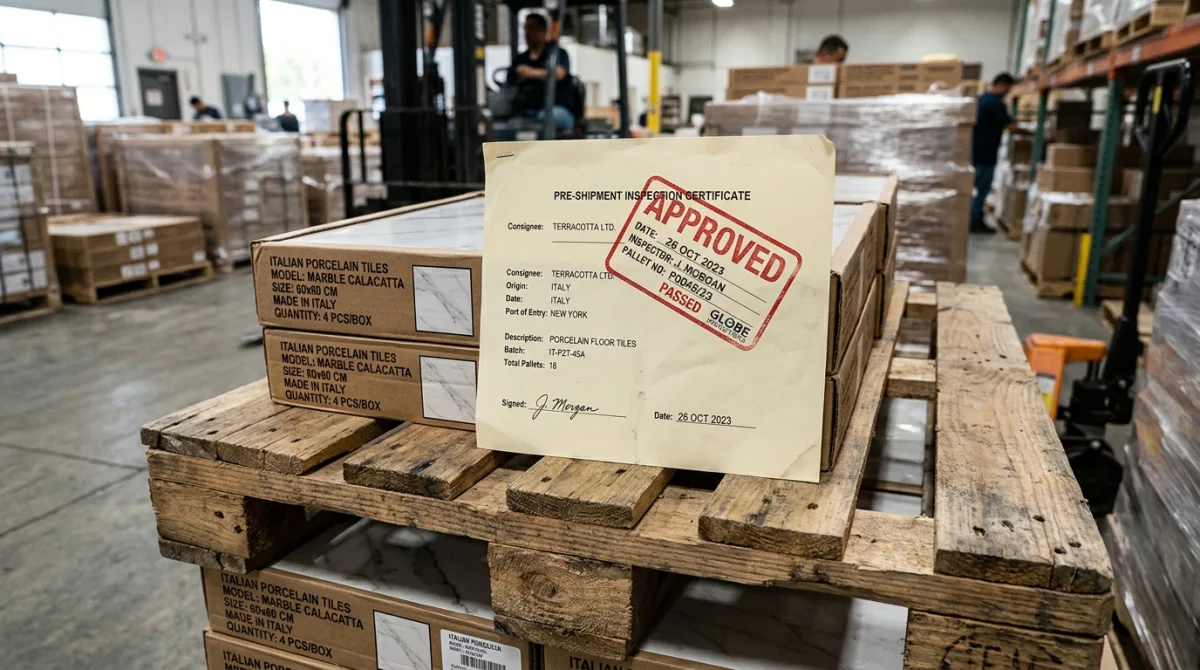
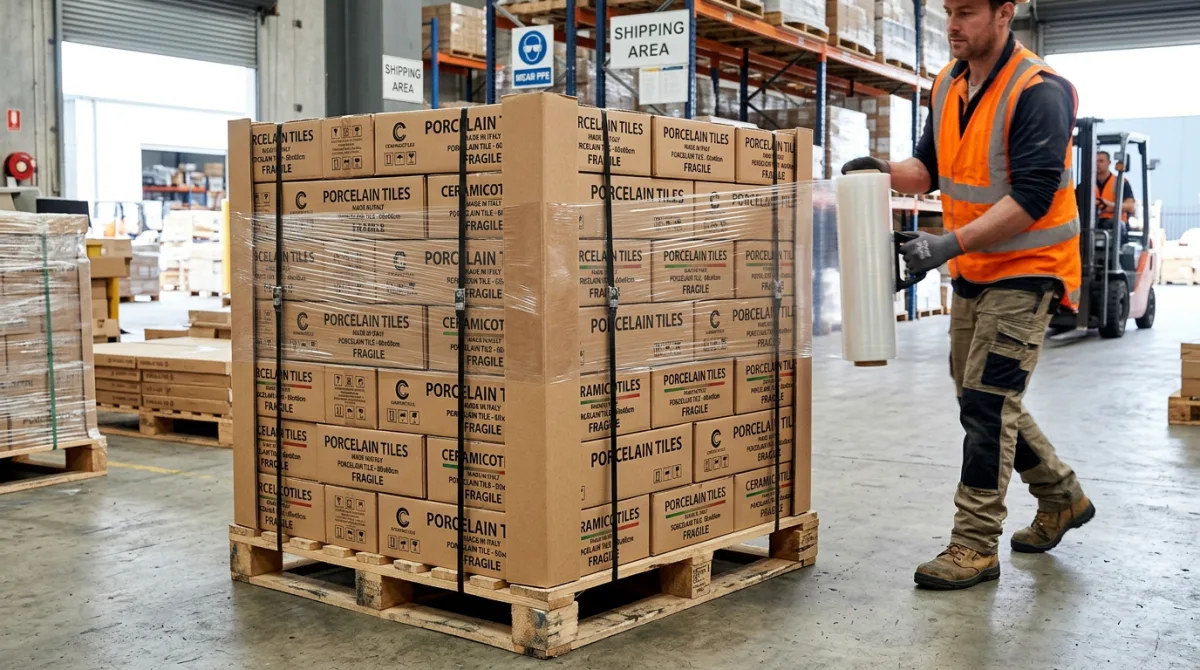
The Packaging and Packaging Waste Regulation (PPWR) began applying on 12 August 2026. For tile exporters, this matters because compliance is not limited to the tile itself. The shipment may also include cartons, plastic protection, pallets, straps and wrapping.
Review carton material and design, plastic protective films, transport pallets, unnecessary packaging, and recyclability requirements. The rules are being introduced in stages, so prepare as individual deadlines apply.
What About REACH and SCIP for Ceramic Tiles?
No, not every ceramic or porcelain tile automatically requires SCIP notification. SCIP requirements can apply when an article contains a Candidate List substance of very high concern (SVHC) above 0.1% by weight, subject to the applicable legal conditions.
Check the actual composition of the tile and relevant glaze components, identify whether any Candidate List SVHC is present, and determine whether SCIP obligations apply before placing the product on the EU market.

7 Common EU Tile Compliance Mistakes Exporters Should Avoid
- Assuming Every Tile Moved to CPR-2024 in January 2026 — CPR-2024 became generally applicable on 8 January 2026, but the transition is product-specific. Check the technical framework first.
- Adding CE Marking Without Checking the Legal Basis — Confirm that the applicable EU route requires CE marking for that specific tile family.
- Treating DoP and DoPC as the Same Document — They belong to different CPR frameworks; mismatching them leads to non-compliance.
- Claiming Every Tile Needs an EPD or Full LCA — Requirements depend on specific harmonized rules and applicable provisions.
- Assuming Every Tile Needs R11 Slip Resistance — There is no universal EU rule requiring every tile to be R11; ratings depend on the room application.
- Ignoring the Packaging — Cartons, plastic films, and wooden pallets are governed by PPWR directives.
- Allowing Product Details to Mismatch — Keep product codes, batch numbers, DoP records, and box labels completely identical.
EU Tile Compliance Checklist for 2026
Use this quick checklist before manufacturing, exporting, importing or buying ceramic and porcelain tiles for the EU market:
For Tile Manufacturers
- Identify the applicable product framework
- Check the relevant technical requirements
- Complete required testing and assessment
- Prepare the applicable DoP or DoPC
- Confirm whether CE marking is required
- Keep technical and test records
- Maintain product and batch traceability
For Tile Exporters
- Provide the required product documents
- Keep product details consistent across documents
- Review applicable EU packaging requirements
- Confirm the EU importer’s documentation needs
For EU Importers & Buyers
- Verify manufacturer details
- Check the applicable declaration
- Confirm CE marking where required
- Check declared performance and intended use
- Confirm product and batch traceability
- Check applicable packaging requirements
Simple rule: Before a tile reaches the EU market, make sure the product, documents, packaging and supply-chain information all match.
Final Thoughts — European Tile Compliance Starts Before the Container Leaves the Factory
EU tile compliance is not simply about obtaining a certificate. It starts with knowing which rules apply, how performance such as water absorption is supported, and how product information is identified, documented and packaged. From ceramic tile production to the final market, exporters should follow relevant European Union requirements, European standards, international standards and updates published in the Official Journal, including developments from the European Commission and European Parliament.
This is also important when checking trade measures such as anti-dumping measures affecting imports of ceramic tiles originating in India, including relevant Commission Implementing Regulation. Whether you are sourcing a wall tile, ceramic wall tile or another European ceramic product, review the specific collection and intended use carefully. For Ramirro Ceramica products, buyers can explore online or offline purchase options and contact the company for product-specific information before ordering.
Frequently Asked Questions About EU Tile Regulations
What are the main EU regulations affecting ceramic and porcelain tiles?
Key areas include CPR 2024, CE marking, DoP/DoPC, packaging rules under PPWR, and REACH/SCIP where applicable. Environmental and digital product information are also becoming increasingly important.
Does every tile need to follow CPR 2024 in 2026?
No. CPR 2024 became generally applicable on 8 January 2026, but the transition depends on the applicable product framework and technical specification.
Do ceramic tiles need CE marking in the EU?
CE marking is required when the applicable EU construction-product route requires it. It is not a general quality mark and does not automatically apply to every tile.
What is the difference between DoP and DoPC?
DoP means Declaration of Performance under the applicable CPR-2011 framework, while DoPC means Declaration of Performance and Conformity under CPR-2024.
Do the new EU packaging rules affect tile exporters?
Yes. PPWR can affect tile cartons, plastic protection, pallets and other packaging, with requirements being introduced progressively.
Shop Now | Chat With Expert | View Catalogue

Here’s what you get out of our article. Our team have various Ceramic Experts with experience of more than 25 Years, researches on problems our customer faces in tiling industry.
Ramirro Ceramica, – One of The Leading Tiles Manufacturer and Supplier globally, helps you people gain knowledgeable insight before making your purchase decision for products related to the floor and wall tiles.
So, we have closely monitored all kinds of trends in the ceramic tiles manufacturing world, from the old days of clay and plain color to modern digital, realistic-looking designs printed on ceramics with high-depth effects.
Our tiling Experts have seen thousands of different tiles patterns, sizes, materials, pricing, and installation techniques throughout their career.
Their expertise shared with you in simplified and organised way, helps you choose and make better decision before purchasing any flooring option available in market.
Brief about Company:
Ramirro is one of the finest Tiles manufacturers in India manufacturing porcelain and ceramic tiles. Our products have a variety of sizes and types of tiles ranging from Ceramics, porcelain, Full body etc. This helps you choose the perfect fit for your project. Plus, our collection will help you get inspiration from the architect’s design.
Here’s some more helpful links that showcase our users trust on Ramirro Ceramica Brand:
– Growth in International Market
– Trusted and Licensed Exporter
– Manufacturing Plant in India
Here’s our social proof by LinkedIn competing with top known global tiling brands: