
Tile Sourcing Evaluator: India & Spain Clusters
Identify the optimal ceramic procurement model based on volume, surface technology, and landed cost requirements.
1. What is the main sourcing priority for your upcoming tile procurement?
Morbi in Gujarat is one of India’s major ceramic manufacturing clusters, while Castellón province produces around 94% of Spain’s ceramic tiles. This makes both regions important parts of the global tile trade.
In Spain, Onda is part of the Castellón ceramic manufacturing area, while Valencia adds an important connection through exhibitions, business events and international trade.
Together, Morbi, Onda, Castellón and Valencia show how ceramic manufacturing, technology, design, trade and exhibitions connect tile markets across India and Spain.
Table of Contents
- Why Are Morbi and These Spanish Ceramic Locations Connected?
- Morbi — How One Indian Region Became a Major Ceramic Manufacturing Centre
- Onda — A Spanish Town With a Strong Connection to Tile Manufacturing
- Castellón — The Larger Ceramic Ecosystem Behind Onda
- Valencia — Why an Exhibition City Matters to the Ceramic Industry
- From Factory to Exhibition — How These Four Locations Fit Into One Industry
- What Actually Makes a Ceramic Industry Strong?
- Technology Is Changing What a Tile Can Look and Feel Like
- What International Tile Buyers Should Check Before Placing an Order
- Tile Samples Can Tell You More Than an Online Photograph
- What Can Morbi and Spain’s Ceramic Industry Teach the Global Tile Market?
- Ramirro Ceramica: Bringing Indian Tile Manufacturing to Global Markets
- Final Thoughts — A Tile Is the Result of an Entire Industry
- Frequently Asked Questions About Morbi and Spanish Ceramic Industry
Why Are Morbi and These Spanish Ceramic Locations Connected?
A modern ceramic industry is much bigger than the factory that makes a tile. It includes the businesses, technology, suppliers, designers, exporters and exhibitions that help a product move from production to international markets.
In India, Morbi, Gujarat is a major ceramic manufacturing centre. In Spain, Onda is an important ceramic manufacturing location within the wider Castellón cluster, while Valencia adds an important exhibition and business connection.
Looking at these locations together helps explain how manufacturing, technology, design, exports and exhibitions connect India and Spain within the wider global ceramic industry.
Morbi — How One Indian Region Became a Major Ceramic Manufacturing Centre
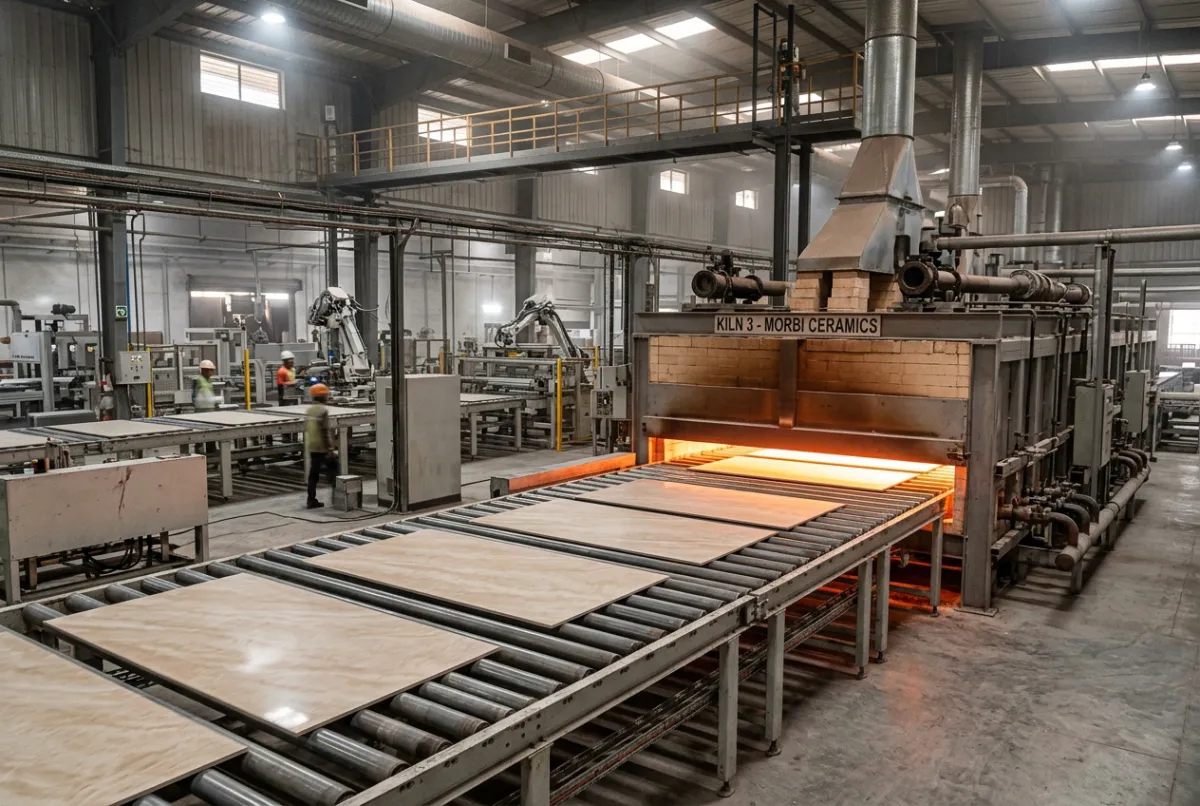
Morbi, Gujarat, has grown into one of India’s major ceramic manufacturing centres. The region makes a wide range of products, including wall tiles, floor tiles, porcelain tiles, vitrified tiles and decorative ceramic surfaces for both Indian and international markets.
Its strength comes from more than tile factories. Raw material suppliers, machinery companies, packaging providers, transporters and other supporting businesses operate around the manufacturing base. This creates what is known as a ceramic cluster — a region where businesses connected to tile production work close to one another.
For an importer, this can offer more supplier choices, wider product ranges and easier access to production and export services. Buyers can also compare designs, discuss specifications, arrange packaging and plan international shipments within an established manufacturing ecosystem.
Onda — A Spanish Town With a Strong Connection to Tile Manufacturing
Think of Onda as one important piece of Spain’s larger ceramic puzzle: Onda → Castellón Province → Valencian Community → Spain.
Onda is part of the concentrated ceramic manufacturing area of Castellón, where tile manufacturers operate alongside businesses that support production and product development.
What makes Onda interesting for the tile industry?
- Tile manufacturing: Ceramic companies in and around Onda produce products for different markets and applications.
- Supporting businesses: The manufacturing network includes suppliers and services linked to materials, machinery, technology and production.
- A connected industrial area: When related businesses are located close to manufacturers, companies can access technical support, suppliers and services without building every part of the production chain themselves.
Imagine a factory needs a new production machine, a specialist material or technical support. Being part of a strong industrial area can make those connections easier. That is why Onda is more than a location on a map. It is one part of the wider Castellón ceramic ecosystem.
Castellón — The Larger Ceramic Ecosystem Behind Onda
If Onda is one important piece, Castellón is the bigger ceramic picture. Onda is a municipality in Castellón province, which has one of Spain’s strongest concentrations of ceramic businesses. According to ASCER, around 94% of Spain’s tile production comes from Castellón province, with about 80% of the sector’s companies located there.
What supports this ceramic cluster?
- Tile manufacturers — produce ceramic and porcelain tiles.
- Frit and glaze producers — create materials for tile surfaces.
- Colour suppliers — provide ceramic colours and decorative materials.
- Machinery companies — support the production process.
- Technology and research firms — help improve products and manufacturing.
Frit is a specially prepared, glass-like ceramic material used in glazes. Glaze is a coating that gives tiles colour, shine, texture or other surface effects.
Valencia — Why an Exhibition City Matters to the Ceramic Industry
Onda and Castellón show where ceramic products are made. Valencia shows where the industry comes together.
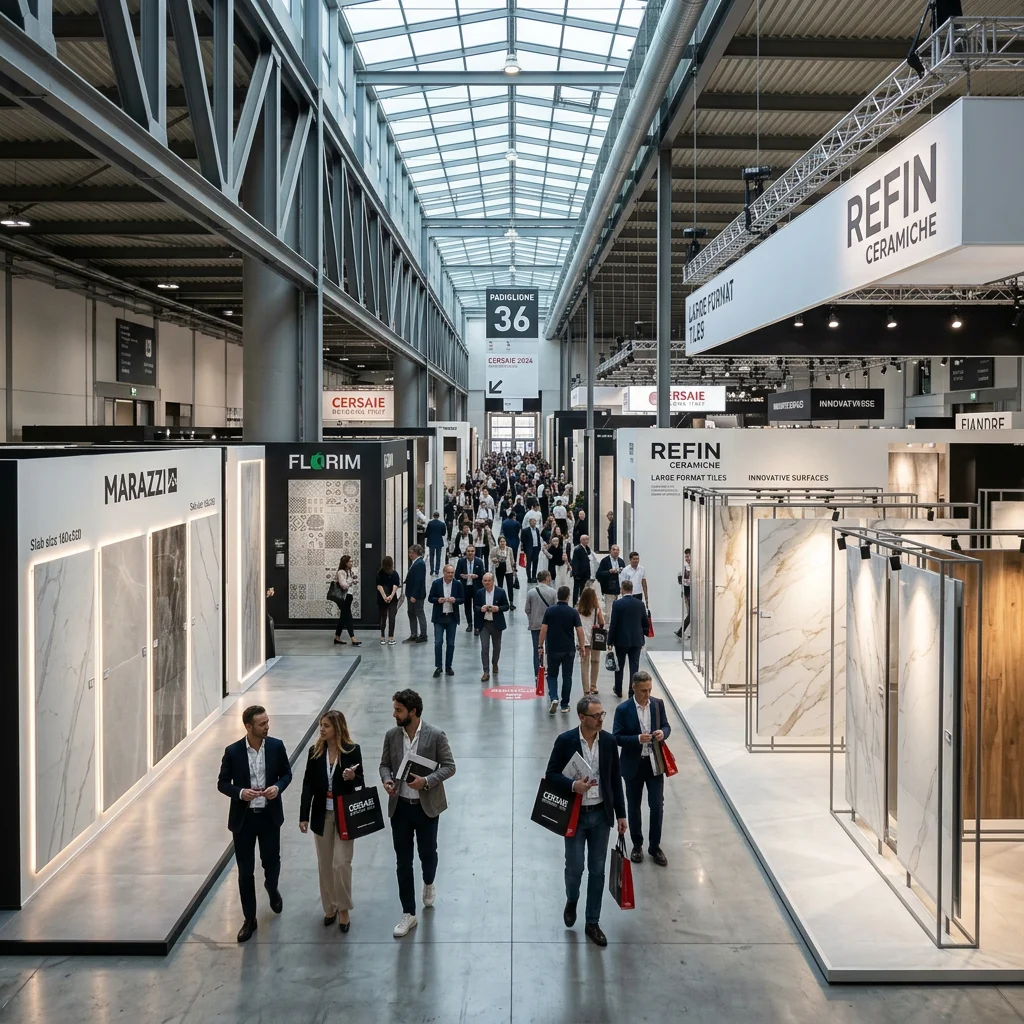
Valencia has been closely associated with CEVISAMA, an international exhibition covering ceramic tiles, bathroom products, natural stone, raw materials, machinery and related technologies. It gives manufacturers and industry professionals a place to meet beyond the factory floor.
What can you discover at a ceramic exhibition?
- New tile designs and collections
- Different sizes and surface finishes
- New machinery and production technology
- Raw materials and ceramic solutions
- Suppliers and international buyers
- New market and design trends
For an importer or designer, an exhibition is more than a showroom. It is a chance to compare products, meet suppliers, discuss export opportunities and see where the ceramic industry is heading. That gives Valencia a different role from Onda and Castellón: the focus shifts from the manufacturing cluster to exhibitions, business connections, design and international exchange.
From Factory to Exhibition — How These Four Locations Fit Into One Industry
These four locations do not play the same role — and that is exactly what makes their connection interesting:
- Morbi, India → Large scale ceramic manufacturing
- Onda, Spain → Ceramic manufacturing location
- Castellón, Spain → Wider ceramic industry ecosystem
- Valencia, Spain → Exhibitions, design and business networking
A tile does not move directly from a factory to a customer’s floor. Many people and businesses are involved along the way. Morbi represents the manufacturing side. Onda and Castellón show the strength of Spain’s ceramic production network. Valencia adds the meeting point where products, ideas, technology and businesses come together. That is the real connection: different locations, different roles, one global ceramic industry.
What Actually Makes a Ceramic Industry Strong?
A strong ceramic industry is not built by factories alone. Morbi and Castellón show how several parts of the industry can work together to support large scale ceramic production:
- Manufacturing: Can factories produce consistent tiles at the required volume? Reliable production matters when buyers need the same size, shade and finish across large orders.
- Suppliers: Are raw materials, machinery, colours, glazes and packaging available nearby? Strong supplier networks can make production and problem-solving easier.
- Technology: Can manufacturers improve tile surfaces, printing, production speed and quality control? Technology helps turn new design ideas into practical products.
- Skilled People: Factories need people who understand production, machinery, quality checks, design and technical work. Experience across the industry helps solve problems faster.
- Market Access: A strong manufacturing base also needs routes to buyers. Transport, ports, exporters, distributors, exhibitions and international business connections help ceramic products reach wider markets.
A successful ceramic industry is an ecosystem. Manufacturing, suppliers, technology, people and markets all need to work together.
Technology Is Changing What a Tile Can Look and Feel Like
Tile technology is no longer only about making tiles faster. It also affects how tiles look, feel and perform:
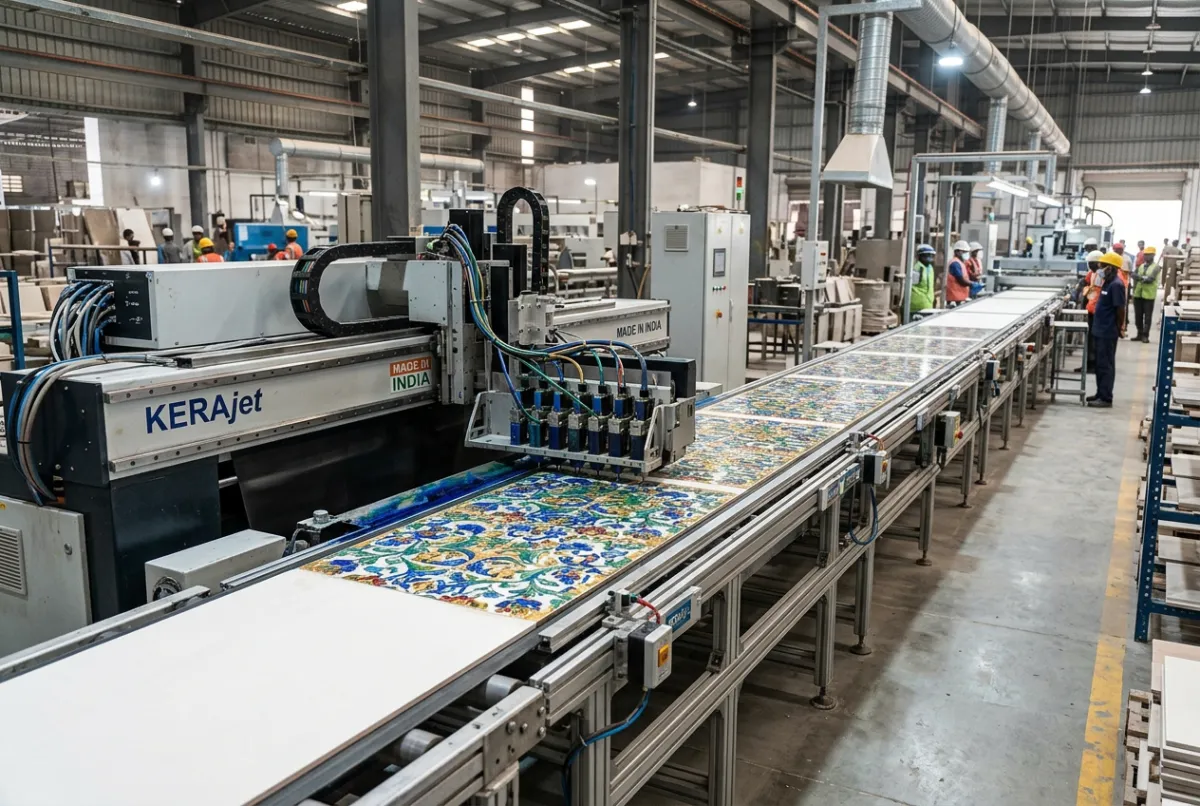
- Digital Printing: Modern printing systems can create detailed patterns, helping tiles reproduce the look of marble, stone, wood or concrete with much greater visual detail.
- Large-Format Production: New production methods allow manufacturers to make larger tiles and slabs, creating fewer visible joints in suitable applications.
- Surface Technology: Special surface processes can add texture, depth, matt effects, polished looks and natural-material finishes.
- Automation: Machines can control repeated production steps more precisely, helping manufacturers maintain consistent size, shape and finish.
- Quality Inspection: Inspection systems can help detect issues such as size differences, surface defects and production variations before products reach the buyer.
- Energy & Water Efficiency: Manufacturers are also working to reduce energy and water use, waste and resource consumption during production.
A tile can look impressive but still be unsuitable for a particular space. Before buying, check its technical properties, intended use, surface, size and installation requirements. Good tile selection starts with both appearance and performance.
What International Tile Buyers Should Check Before Placing an Order
- Tile Type: Is ceramic or porcelain better for your project? Their properties and suitable uses can differ.
- Size: Check whether the tile size works with the room, layout and installation method. Larger tiles may need more careful handling and installation.
- Surface: Choose between matt, polished, textured or other finishes based on appearance, maintenance and where the tile will be used.
- Intended Use: A tile for a wall, indoor floor, bathroom, outdoor area or commercial space may have different requirements.
- Technical Details: Do not skip the specification sheet. Check relevant information such as water absorption, slip-related performance and strength according to the intended application.
- Shade & Calibre: Shade refers to colour variation, while calibre refers to the manufacturer’s actual size category. Check both, especially for large projects and repeat orders.
- Packaging: International transport can involve handling at several stages. Strong, suitable packaging helps reduce the risk of chips, cracks and breakage.
- Supplier Experience: Ask whether the supplier has experience with export orders, documentation, packaging, container loading and international delivery.
Tile Samples Can Tell You More Than an Online Photograph
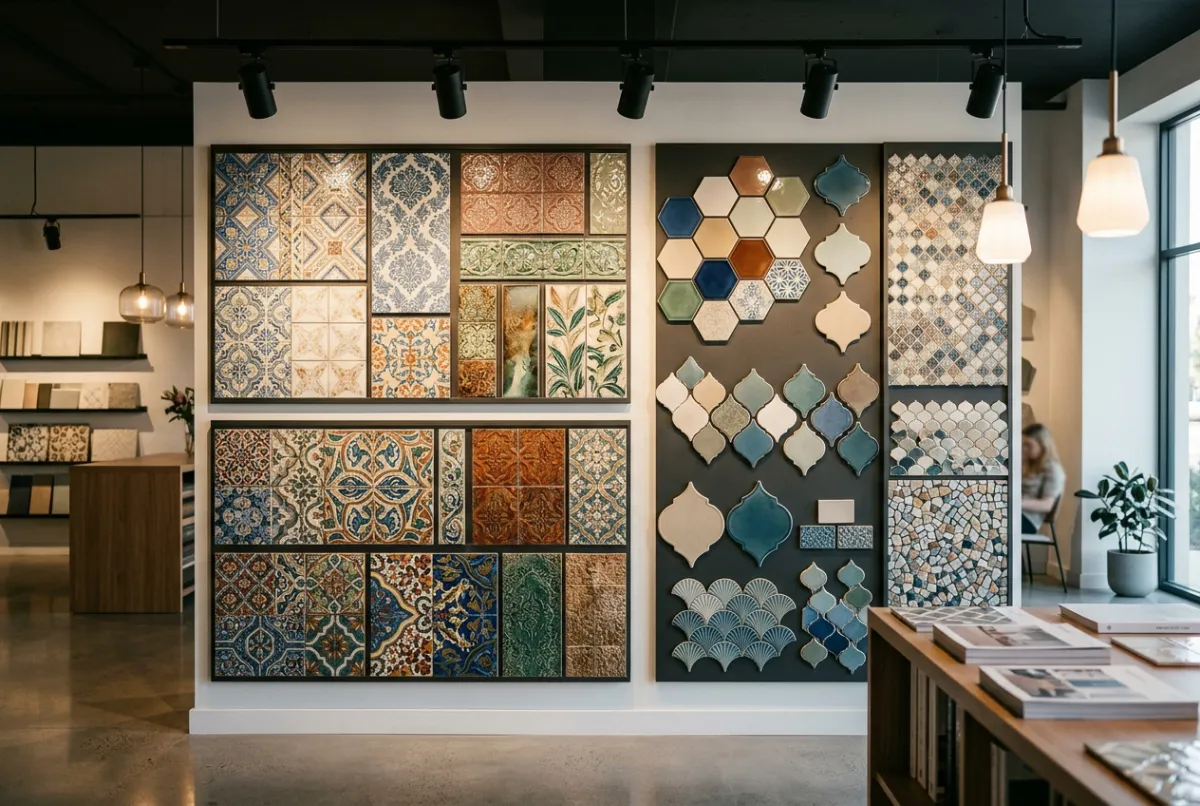
Online images are useful for shortlisting tiles, but screens can change colour, shine and pattern, while photographs rarely show true texture or scale. Before ordering, check a physical sample for colour, texture, gloss, edges, thickness, pattern repetition and surface feel. Use online collections to explore and compare, then request a sample or visit a showroom before a major purchase. This is also a practical way to evaluate Ramirro Ceramica collections before finalising your selection.
What Can Morbi and Spain’s Ceramic Industry Teach the Global Tile Market?
A strong ceramic industry needs more than factories. Morbi and Spain’s ceramic regions show how different parts of an industry can work together through technology, product development, suppliers, skilled workers, design, export knowledge and international networking.
Exhibitions add another important link. They give manufacturers, buyers and industry professionals a place to discover new products, technologies and market ideas. Manufacturing creates the product, but the wider ecosystem helps the industry grow, adapt and reach global markets.
Ramirro Ceramica: Bringing Indian Tile Manufacturing to Global Markets
Ramirro Ceramica operates within India’s wider ceramic manufacturing and export industry, developing tile collections for different spaces and design preferences. Its focus can be seen through tile collections, surface designs, product development, quality and export-ready solutions for international customers. For buyers exploring Indian ceramic products, these factors can matter as much as the appearance of the tile itself.
If you are planning a project or sourcing tiles internationally, explore the relevant Ramirro Ceramica collections, check the available specifications and contact the company for product and export information.
Final Thoughts — A Tile Is the Result of an Entire Industry
A tile is never just a finished surface. Behind morbi ceramic, morbi tiles, glazed vitrified tiles and other ceramics is a complete sector involving ceramic manufacturers, materials, technology, product quality, packaging and the supply chain. In the state of Gujarat, Morbi has grown into a ceramic hub, manufacturing hub and widely recognised ceramic capital of india, strengthening indian ceramics and morbi ceramics for residential and commercial markets.
There is no need for a Morbi vs Spain story. In 2026, buyers may import products shaped by different ceramics industry strengths, from roof tiles to modern surfaces for interior design, supported by competitive pricing and continuous disruption. Morbi, Onda, Castellón and Valencia show how people, businesses and global trade networks keep this industry moving.
Frequently Asked Questions About Morbi and Spanish Ceramic Industry
What is Morbi known for in the ceramic industry?
Morbi, Gujarat, is a major ceramic manufacturing hub known for producing a wide range of tiles for Indian and international markets.
Why is Castellón important to Spain’s tile industry?
Castellón is one of Spain’s most important ceramic regions, with a large concentration of tile manufacturers and supporting ceramic businesses.
What is CEVISAMA?
CEVISAMA is a major Spanish industry exhibition covering ceramic tiles, bathroom products, materials, machinery, design and related technologies.
How are Morbi and Spain connected through the ceramic industry?
They are connected through global ceramic manufacturing, technology, exports, design, suppliers and international buyers.
What should I check before buying tiles from an international supplier?
Check the tile type, size, finish, technical specifications, shade, packaging and supplier’s export experience.
Shop Now | Chat With Expert | View Catalogue

Here’s what you get out of our article. Our team have various Ceramic Experts with experience of more than 25 Years, researches on problems our customer faces in tiling industry.
Ramirro Ceramica, – One of The Leading Tiles Manufacturer and Supplier globally, helps you people gain knowledgeable insight before making your purchase decision for products related to the floor and wall tiles.
So, we have closely monitored all kinds of trends in the ceramic tiles manufacturing world, from the old days of clay and plain color to modern digital, realistic-looking designs printed on ceramics with high-depth effects.
Our tiling Experts have seen thousands of different tiles patterns, sizes, materials, pricing, and installation techniques throughout their career.
Their expertise shared with you in simplified and organised way, helps you choose and make better decision before purchasing any flooring option available in market.
Brief about Company:
Ramirro is one of the finest Tiles manufacturers in India manufacturing porcelain and ceramic tiles. Our products have a variety of sizes and types of tiles ranging from Ceramics, porcelain, Full body etc. This helps you choose the perfect fit for your project. Plus, our collection will help you get inspiration from the architect’s design.
Here’s some more helpful links that showcase our users trust on Ramirro Ceramica Brand:
– Growth in International Market
– Trusted and Licensed Exporter
– Manufacturing Plant in India
Here’s our social proof by LinkedIn competing with top known global tiling brands: