Carved vs Digital Tile Evaluator
Find out whether carved relief tiles, high-definition digital tiles, or a hybrid combination fits your room and lifestyle.
1. What is your primary design priority for this surface?
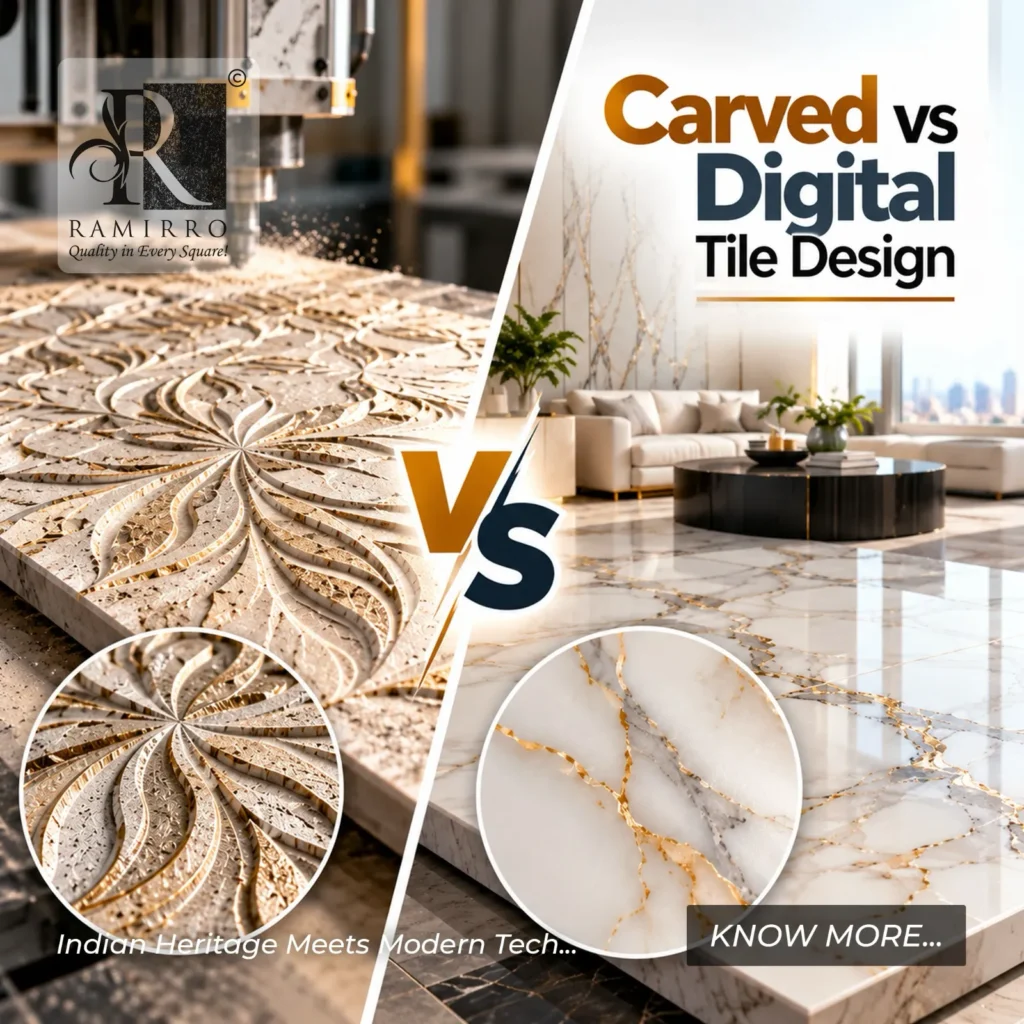
Choose carved tiles for physical texture and depth, or digital designs for finer patterns and richer colours. Both techniques can bring Indian heritage into modern spaces in different ways.
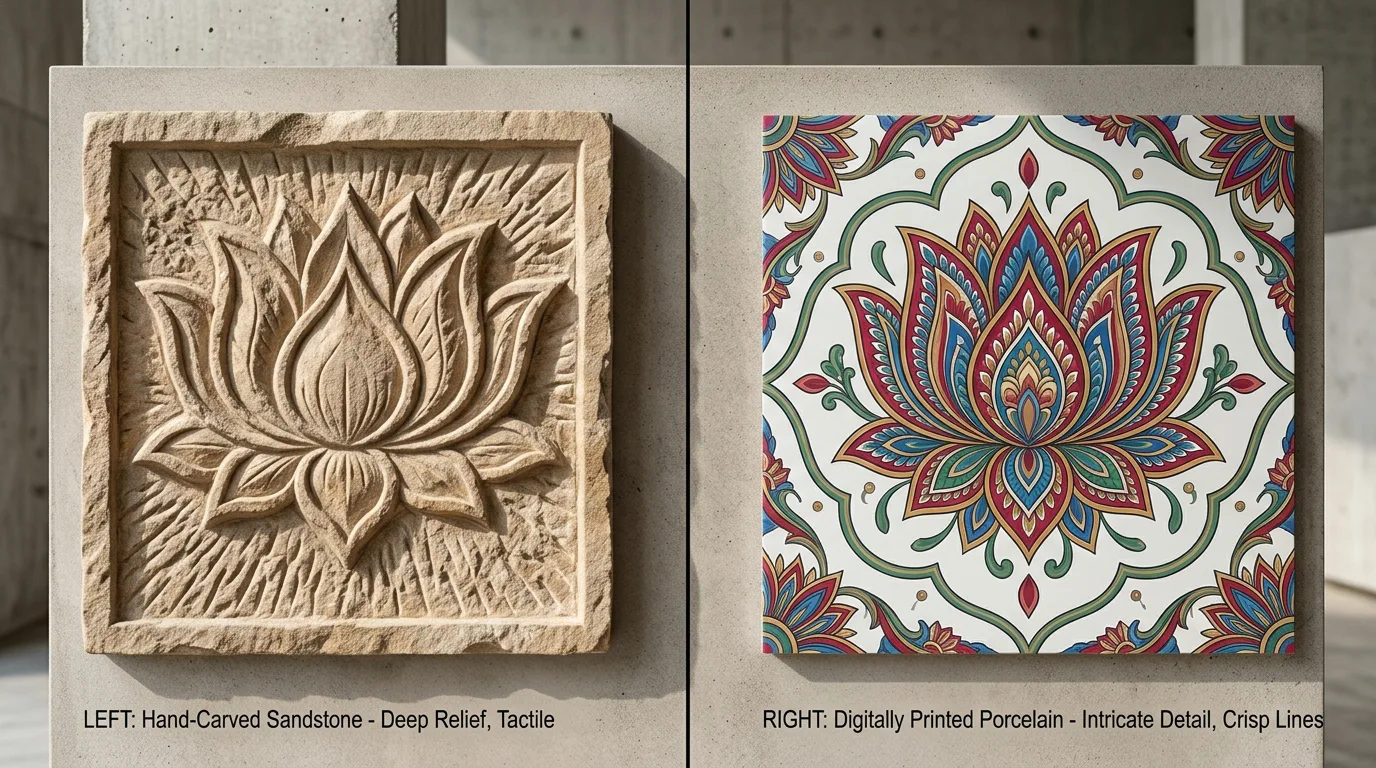
Imagine a lotus pattern on two tiles. Carving creates raised petals and grooves, while digital printing captures delicate lines and intricate details.
The right choice depends on whether you prefer a design you can feel or one that stands out through visual detail.
Table of Contents
- One Indian Pattern, Two Completely Different Experiences
- From a Traditional Drawing to a Finished Tile: How Do the Two Methods Work?
- Which Indian Heritage Patterns Come Alive Through Carving, and Which Through Printing?
- The Detail You See Is Not Always the Detail You Feel
- How the Same Heritage Tile Can Change the Mood of a Room
- What Changes When You Use the Same Design Across an Entire Wall or Floor?
- Carved vs Digital Tile Design: What Should You Compare Before Buying?
- Can Indian Heritage Stay Meaningful When Tile Making Becomes More Modern?
- Final Thoughts: One Heritage, Two Ways to Experience It
One Indian Pattern, Two Completely Different Experiences
Carved tiles add physical depth to Indian heritage designs, while digital printing captures finer patterns, delicate lines, and richer colours. The better choice depends on whether you prefer texture or visual detail.
Imagine a traditional lotus motif. On a carved tile, grooves and shadows give each petal depth. On a digitally printed tile, layered colours and fine outlines bring out intricate details.
The pattern may be the same, but the experience is different. Let’s explore how both techniques work, which Indian designs suit them, and what to consider when choosing tiles for your space.
From a Traditional Drawing to a Finished Tile: How Do the Two Methods Work?
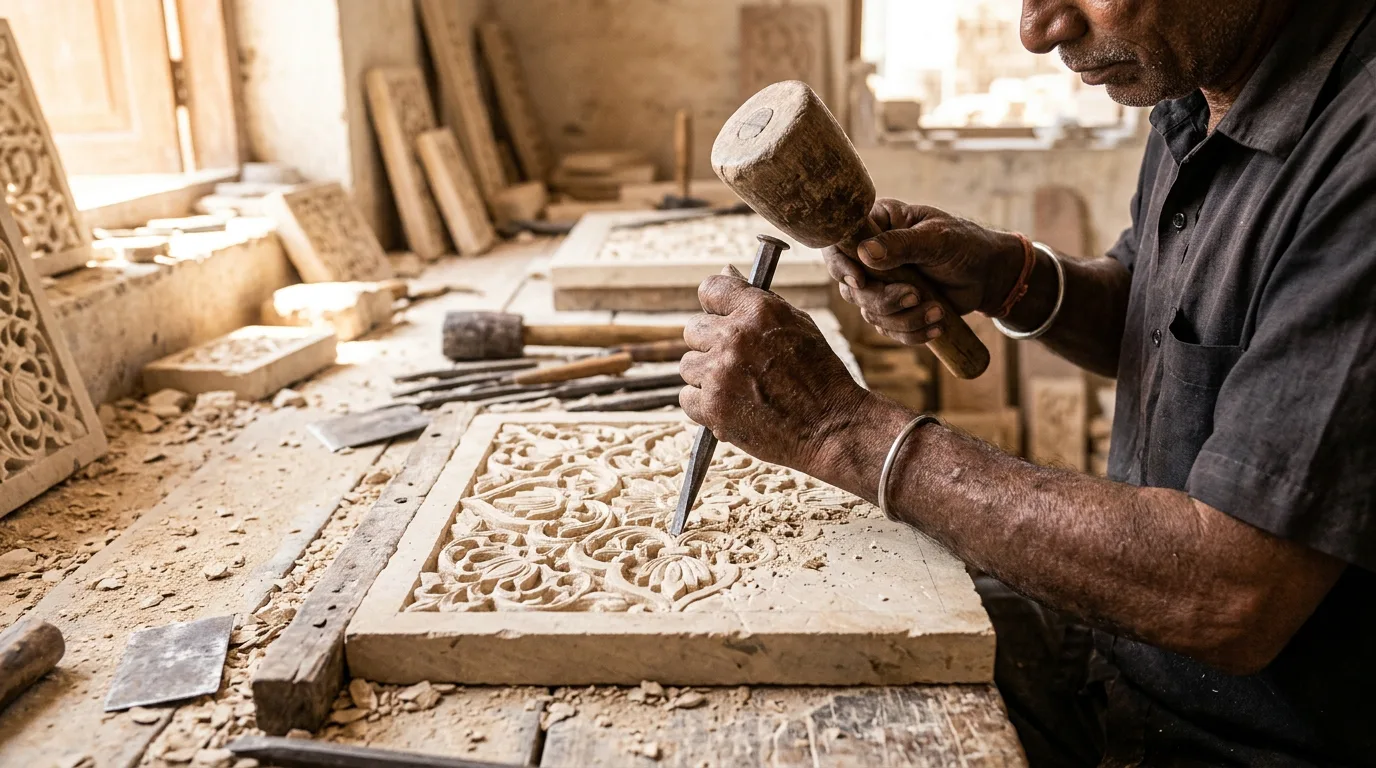
Hand Carving: Giving a Pattern Physical Depth
Carving creates a pattern by cutting, pressing, or shaping parts of a tile’s surface. Floral outlines, geometric lines, and decorative motifs can form grooves or raised areas that catch light and create natural shadows.
Imagine a lotus design carved into a single colour tile. Each petal has a physical outline, so the pattern remains visible through its shape and shadows rather than relying only on colour. The depth and finish depend on the material, tools, design, and manufacturing process.
Despite the name, not all carved tiles are handmade. Some patterns are shaped by hand, while others are created using machines or moulds. These methods can produce different levels of detail and surface variation.
Digital Printing: Bringing Fine Details and Colours onto a Tile
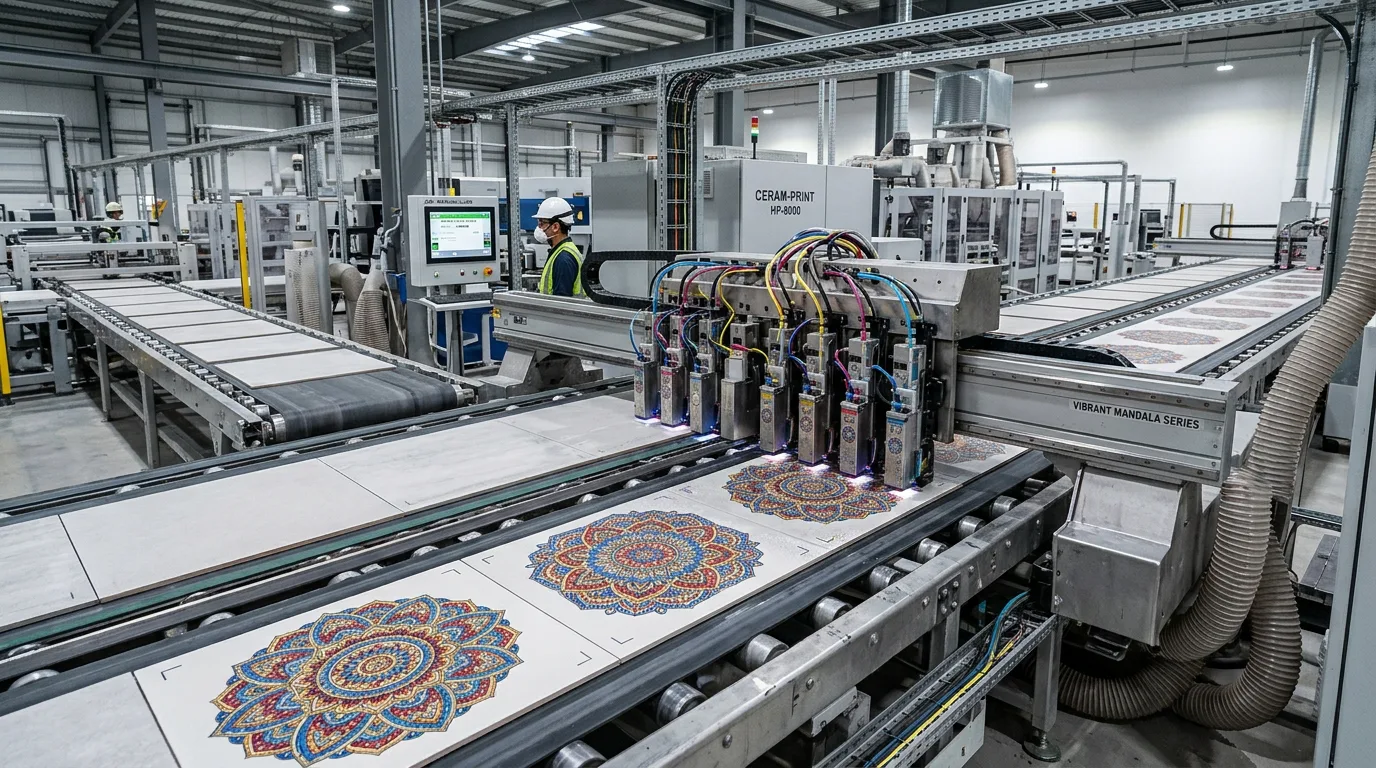
Digital tile printing uses specialised equipment to apply a design from a digital image. This allows manufacturers to reproduce fine outlines, intricate patterns, and multiple colours that may be difficult to achieve through carving alone.
Consider the same lotus motif printed onto a tile. Delicate petal lines, subtle colour changes, and small decorative details can recreate the look of a traditional Indian illustration. Digital files also help manufacturers reproduce a design consistently across multiple tiles.
However, visual depth is not the same as physical depth. A printed lotus may appear raised because of shading and colour contrast, even when the tile surface is smooth. The final appearance depends on the printing technology, tile surface, and any additional finishing applied.
Which Indian Heritage Patterns Come Alive Through Carving, and Which Through Printing?
When Shape Matters More Than Colour
- Lotus petals and floral shapes: Carving creates grooves and raised edges that make each petal stand out through light and shadow.
- Geometric borders: Repeated lines and shapes inspired by traditional Indian architecture can gain depth through carving.
- Jaali inspired patterns: Carving can highlight the repeating geometry of traditional decorative screens without creating actual openings.
Best suited for: Designs where the shape, depth, and texture matter more than colour.
When Fine Details Tell the Story
- Mandala inspired designs: Printing can reproduce detailed layers and small decorative elements.
- Multicoloured floral patterns: Different shades and fine outlines can bring traditional flowers to life.
- Painting inspired borders: Digital printing can capture intricate lines and decorative details inspired by Indian artwork.
- Complex heritage motifs: Patterns containing many small elements can be reproduced without carving every detail into the surface.
Best suited for: Designs where colour, fine lines, and visual complexity are the main attractions.
What If the Design Needs Both?
- Carved shapes with printed details: Raised lotus petals can be combined with printed colours or fine outlines.
- Texture with visual detail: The surface adds physical depth, while printing adds colour and decorative elements.
- Manufacturing matters: Whether both techniques can be combined depends on the tile’s production process and finish.
The key takeaway: Choose carving when you want the pattern’s shape to stand out, digital printing when fine details and colours matter most, or a combination when you want both.
The Detail You See Is Not Always the Detail You Feel
When Your Eyes See Depth but Your Fingers Feel a Flat Surface
- Printed shadows create an illusion: Digital printing uses contrasting colours, highlights, and shadows to make patterns appear raised or carved.
- Fine details can look three dimensional: A digitally printed lotus may appear to have layered petals even when its surface is smooth.
- Photographs can be misleading: Lighting and camera angles can make a flat tile look textured, so catalogue images may not show how the surface actually feels.
When the Surface Becomes Part of the Design
- Carving creates real depth: Grooves and raised areas can be felt when you run your fingers across the tile.
- Light changes the appearance: Side lighting can emphasise grooves and shadows, while direct light may reveal different surface details.
- The setting makes a difference: A carved pattern may look more dramatic in daylight or under warm indoor lighting, depending on the direction and intensity of the light.
Why This Matters Before You Buy
- Request a physical sample: This helps you check whether the texture matches your expectations.
- View it from different angles: Tilt the sample to see how light changes the pattern.
- Touch the surface: Check whether it feels smooth, slightly textured, or deeply carved.
- Consider where it will go: For floor tiles, also check the manufacturer’s slip resistance information and suitability for the intended space.
Remember: A tile that looks textured is not necessarily physically textured. If the feel of the surface matters as much as its appearance, always check the actual finish before buying.
How the Same Heritage Tile Can Change the Mood of a Room
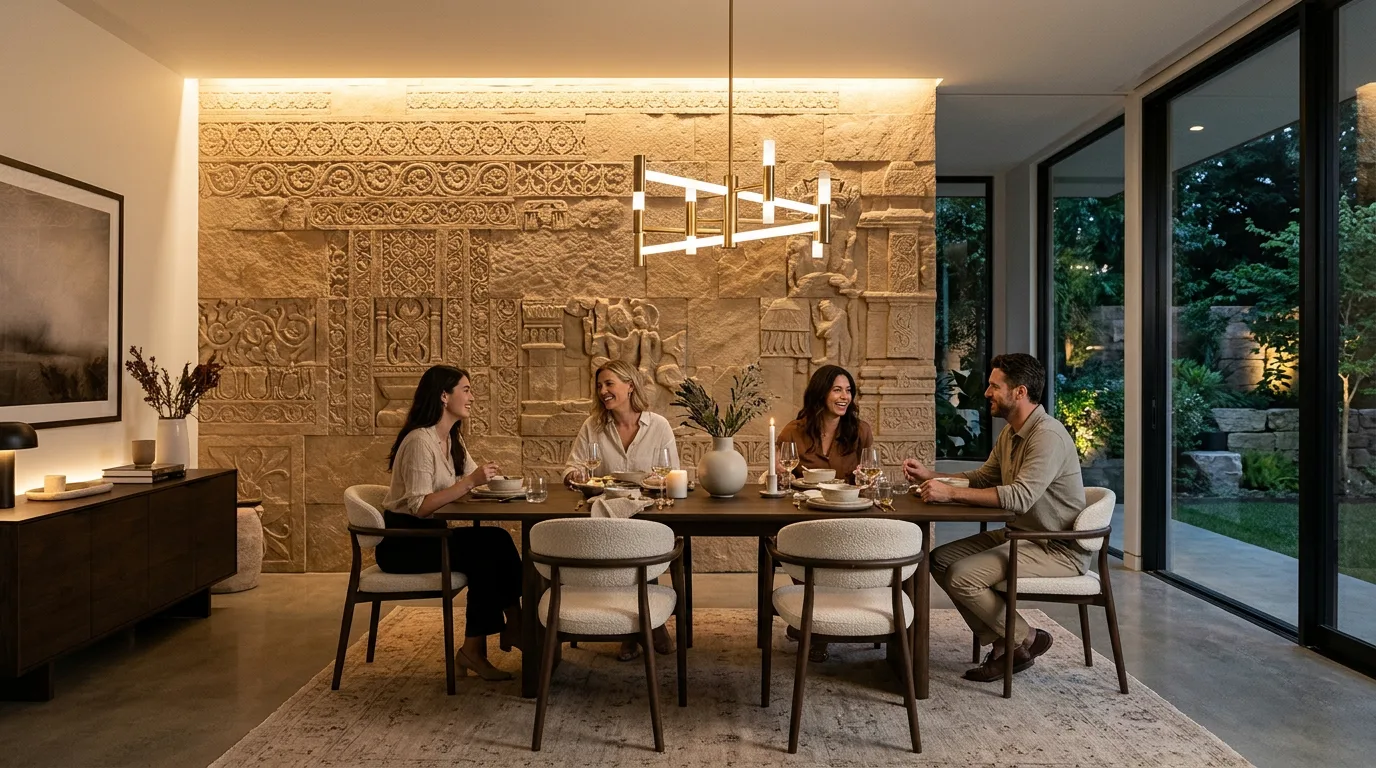
A Living Room That Needs a Focal Point
- Choose carved designs for depth: A heritage inspired carved tile wall can create shadows and texture, making the surface itself a feature.
- Choose digital printing for visual detail: Intricate mandalas, floral artwork, or colourful traditional patterns can draw attention through their imagery.
- Think about the mood: Carving creates a more tactile look, while detailed printing offers greater freedom with colour and pattern.
A Kitchen or Bathroom That Needs Decorative Detail
- Use digital prints for intricate backsplashes: Traditional Indian motifs can introduce colour and decorative detail without relying on a deeply textured surface.
- Consider carved tiles for added character: Grooves and raised patterns can make a decorative wall more interesting, but deeper recesses may collect dirt and need extra cleaning.
- Check suitability before choosing: Make sure the specific tile and finish are appropriate for the intended kitchen or bathroom application.
A Floor That Needs More Than a Beautiful Pattern
- Don’t judge by appearance alone: A striking heritage motif does not automatically make a tile suitable for flooring.
- Check slip resistance: Choose a product appropriate for the floor’s conditions, especially in areas exposed to water.
- Consider maintenance: Surface texture, finish, and the manufacturer’s cleaning guidance all affect everyday care.
- Don’t rule out either technique: Both carved and digitally printed tiles may be suitable for floors, depending on their specifications and intended use.
What Changes When You Use the Same Design Across an Entire Wall or Floor?
Pattern Repetition and Visual Flow
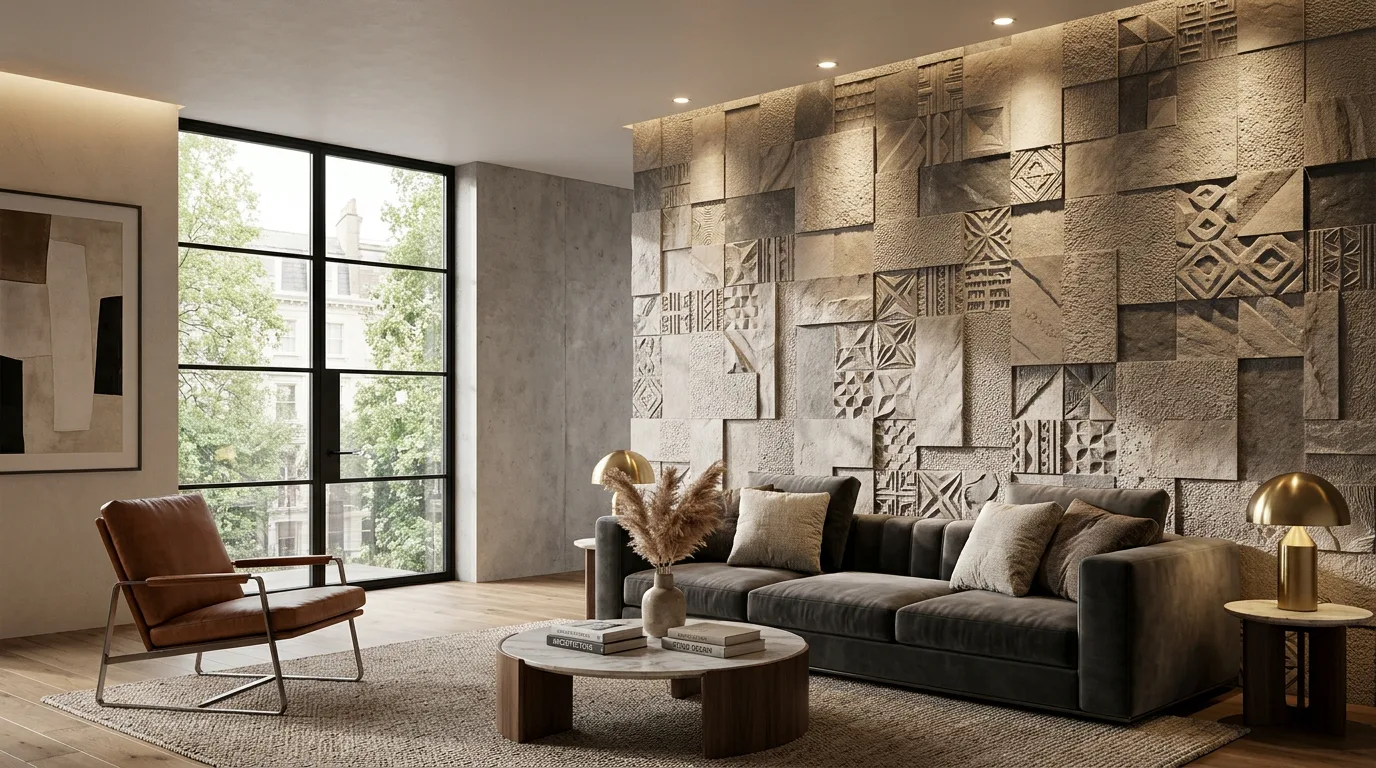
Digital printing allows manufacturers to reproduce detailed designs consistently, but the final look depends on how the patterns are arranged. A floral motif repeated across a wall, for example, may create a balanced rhythm or feel too busy if the design is dense.
Carved patterns need the same attention. Repeated lotus petals, geometric lines, or raised shapes should connect visually rather than make the surface feel crowded. Before choosing a design, consider how it will look across the whole space, not just on a single tile.
Grout Lines Can Change the Final Look
Grout fills the gaps between tiles, but those lines also become part of the overall design. On digitally printed tiles, grout lines can interrupt fine illustrations or separate details that are meant to flow together. With carved geometric patterns, poorly planned spacing may break the visual rhythm.
The grout colour matters, too. A contrasting shade can highlight the tile layout, while a closer colour match can make the surface feel more continuous.
Plan the Layout Before Installation
Before installation begins, ask your supplier or installer to show you how several tiles will look when placed together. Check whether the patterns align, whether the design repeats naturally, and how grout lines affect the overall appearance.
For larger motifs, also consider the direction of each tile and the spacing between them. The real design isn’t just the tile you choose; it’s the complete surface those tiles create together.
Carved vs Digital Tile Design: What Should You Compare Before Buying?
| Buying Factor | Carved Tiles | Digitally Printed Tiles |
|---|---|---|
| Main visual feature | Physical depth and surface shape | Fine details, imagery, and colour |
| Surface feel | May have grooves or raised areas | May be smooth or textured |
| Fine patterns | Detail depends on the carving method | Can reproduce intricate designs and lines |
| Colour options | Depend on the material and finish | Can reproduce multiple colours and subtle variations |
| Repeated designs | Depend on the production method and pattern layout | Digital files support consistent reproduction |
| Cleaning | Deep grooves may need extra attention | Depends on the surface finish and texture |
| Best design use | Patterns that benefit from physical depth | Patterns that rely on fine detail and colour |
Look Beyond the Price of a Single Tile
Neither carved nor digitally printed tiles are always cheaper. The price depends on factors such as the tile material, manufacturing process, design complexity, finish, order quantity, and supplier.
Instead of comparing prices alone, consider the overall value. A decorative tile might look perfect in a catalogue, but its maintenance needs and suitability for your space matter just as much.
Ask for the Information That a Photograph Cannot Show
Before placing an order, ask the supplier about the tile’s actual surface texture, finish, and intended application. If you’re planning to install it on a floor, check its slip resistance and suitability for that particular space.
Also ask about cleaning requirements, pattern alignment across multiple tiles, and whether physical samples are available. A sample can help you judge the colour, texture, and finish under your own lighting conditions.
Can Indian Heritage Stay Meaningful When Tile Making Becomes More Modern?
A traditional Indian motif doesn’t have to look exactly as it did centuries ago to remain inspiring. Sometimes, a small change in its shape, colour, or presentation can make it feel at home in a modern space.
Imagine a traditional floral border redesigned for a contemporary living room. A designer might simplify its lines and reproduce the pattern through digital printing, preserving its visual character while adding new colours. Alternatively, carving could highlight the flower’s outline, turning a familiar motif into a tactile surface feature.
Both approaches draw inspiration from Indian heritage, but they express it differently. Digital printing focuses on reproducing visual details, while carving changes the physical surface. Neither technique automatically means a tile is handmade or that traditional craftsmanship has been preserved.
The important question is how thoughtfully the original design is adapted. Heritage doesn’t have to mean copying the past exactly; it can mean carrying its shapes, ideas, and artistic character into the spaces we live in today.
Final Thoughts: One Heritage, Two Ways to Experience It
Carved and digitally printed tiles offer different ways to bring Indian heritage into modern interior design. Hand-carved surfaces add physical depth, while digital wall tiles use digital technology to reproduce intricate patterns and designs. Whether you prefer an artisan-made appearance or machine-made precision, the right choice depends on your style and needs.
Before choosing a ceramic tile, consider its appearance and cost, maintenance, and intended use. Comparing ceramic vs porcelain tiles, glazed vitrified options, and different types of tile can help you find a long-wearing tile surface that is easy to clean and suitable for your space. For floors and bathrooms, always check the product specifications rather than assuming a particular design is the best floor tile.
Explore Ramirro Ceramica’s collections to discover different designs and patterns for your home, from decorative wall finishes to suitable floor tiles. You can enquire about purchasing online or through the showroom. If you need help choosing the right tile, understanding the difference between vitrified tiles and other options, or finding a collection that suits your project, contact Ramirro Ceramica for guidance.
Shop Now | Chat With Expert | View Catalogue

Here’s what you get out of our article. Our team have various Ceramic Experts with experience of more than 25 Years, researches on problems our customer faces in tiling industry.
Ramirro Ceramica, – One of The Leading Tiles Manufacturer and Supplier globally, helps you people gain knowledgeable insight before making your purchase decision for products related to the floor and wall tiles.
So, we have closely monitored all kinds of trends in the ceramic tiles manufacturing world, from the old days of clay and plain color to modern digital, realistic-looking designs printed on ceramics with high-depth effects.
Our tiling Experts have seen thousands of different tiles patterns, sizes, materials, pricing, and installation techniques throughout their career.
Their expertise shared with you in simplified and organised way, helps you choose and make better decision before purchasing any flooring option available in market.
Brief about Company:
Ramirro is one of the finest Tiles manufacturers in India manufacturing porcelain and ceramic tiles. Our products have a variety of sizes and types of tiles ranging from Ceramics, porcelain, Full body etc. This helps you choose the perfect fit for your project. Plus, our collection will help you get inspiration from the architect’s design.
Here’s some more helpful links that showcase our users trust on Ramirro Ceramica Brand:
– Growth in International Market
– Trusted and Licensed Exporter
– Manufacturing Plant in India
Here’s our social proof by LinkedIn competing with top known global tiling brands: