
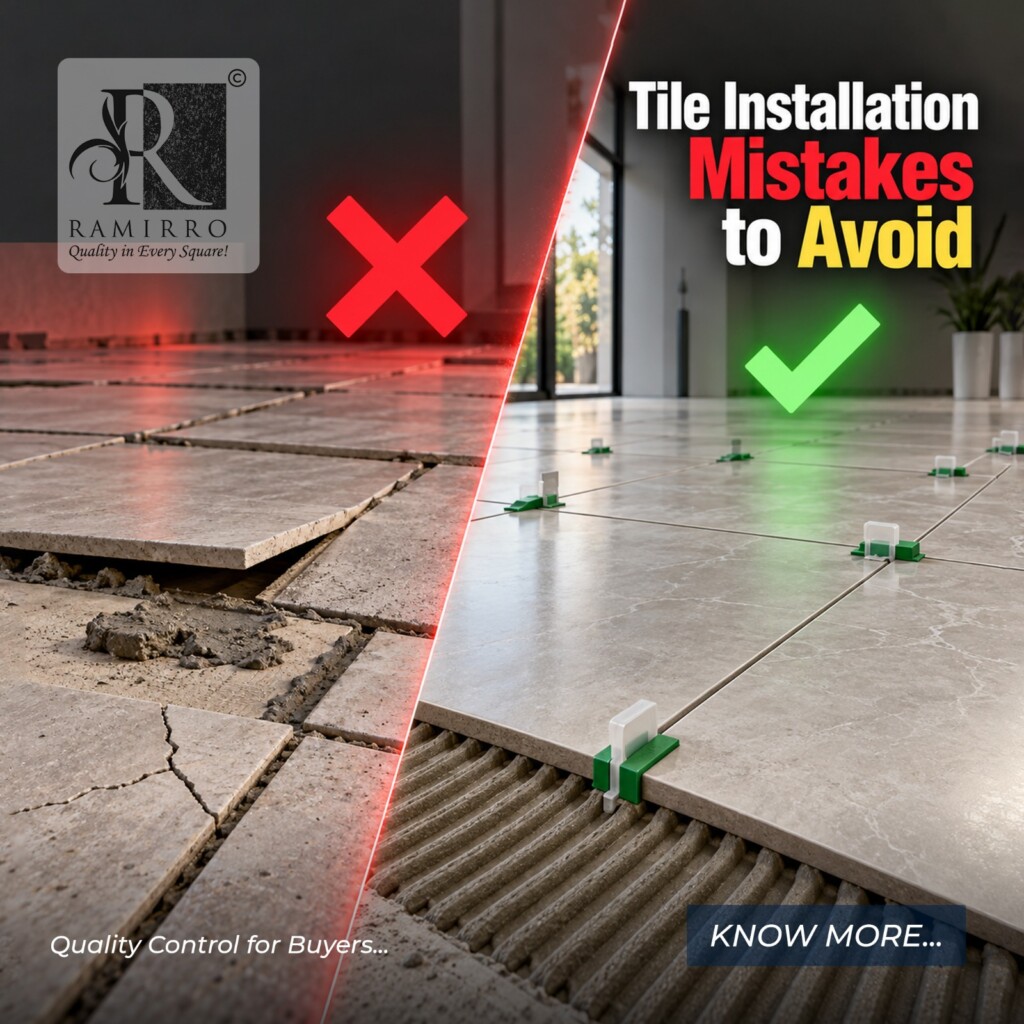
Tile Installation Mistakes & Failure Diagnostic Quiz
Determine whether job-site installation errors or manufacturing defects are causing cracked tiles, hollow sounds, and lippage.
1. What is the most common cause of cracked porcelain tiles 6 months after installation?
Table of Contents: Common Tile Installation Mistakes That Damage Brand Reputation: Errors to Avoid and Solutions for Better Tile Installation
- Why Tile Quality Alone Cannot Guarantee a Good Finished Installation
- Inexperienced Tile Labour Can Turn Simple Installation Work Into Expensive Customer Complaints
- Poor Cutting and Drilling Can Crack or Chip Tiles Even When the Original Tile Is in Good Condition
- Tile Fabrication Is More Than Cutting — Large Tiles Need the Right Support, Tools and Cutting Method
- Sharp Internal Corners and Poor Core Bore Cutting Can Create Weak Points Around Pipes, Drains and Fixtures
- Incorrect Tile Layout Can Make a High Quality Product Look Poorly Designed
- Uneven Surfaces, Missing Movement Joints and Poor Drainage Can Cause Problems Long After the Tiles Are Installed
- Wrong Installation Practices, Including Unnecessary Tile Soaking, Can Create More Problems Than They Solve
- Poor Finishing and Site Handling Can Damage Tiles After Installation and Still Leave the Brand With the Complaint
- How Tile Manufacturers, Installers and Customers Can Prevent Installation Problems Before They Become Brand Complaints
- A Simple Final Check Can Prevent an Installation Mistake From Becoming a Brand Reputation Problem
- Final Thoughts — A Quality Tile Deserves the Right Installation to Show What It Can Do
The most common avoidable mistake is using untrained labour for tile cutting and installation; using the right tools, techniques, and trained workers can prevent many costly errors.
Poor cutting, incorrect drilling, inadequate support during fabrication, and careless handling can cause chipped edges, broken corners, and cracks.
Other problems, such as uneven surfaces, poor layout, incorrect drainage, and missing movement joints, can affect the finished installation.
When customers see these defects, they may blame the tile brand. Understanding whether the problem came from manufacturing or installation is therefore important for protecting brand reputation.
Why Tile Quality Alone Cannot Guarantee a Good Finished Installation
A tile can meet its required quality parameters when it leaves the factory, but that does not guarantee a perfect result on the wall or floor. The tile still has to be transported, handled, cut or fabricated, installed, cleaned, and used correctly.
Think of the process as a chain: factory → transport → site → cutting and fabrication → installation → finishing → everyday use. A mistake at any one stage can affect the final appearance or performance. Factory quality checks can control the product, but they cannot control how a worker handles or installs it at the site.
For example, a tile may arrive without any visible damage, but an installer may cut too aggressively around a pipe or drill a hole using an unsuitable method. The tile can crack during this work. The homeowner sees a cracked tile and may assume that the tile itself was weak.
Inexperienced Tile Labour Can Turn Simple Installation Work Into Expensive Customer Complaints
Tile installation is not simply placing tiles on a floor or wall. The worker needs to understand the tile, choose [suitable tools](/tiles-cutting-types/), handle different sizes correctly, and know how to work around pipes, drains, corners, and other fixed points.
This becomes even more important with porcelain, [large format](/large-format-big-slab-tiles-safe-handling-and-installation-tips-you-must-know-ramirro-ceramica-guide/) tiles, and tiles that need detailed cutting or fabrication. A worker who lacks experience may use the wrong tool, handle a large tile without enough support, or make a difficult cut without understanding where the tile could crack.
The more demanding the tile or design, the more important proper installation knowledge becomes. A skilled installer helps ensure that the quality built into the tile is not lost at the project site.
Poor Cutting and Drilling Can Crack or Chip Tiles Even When the Original Tile Is in Good Condition
Cutting and drilling are routine parts of tile installation, but they need the right tools and technique. A worn blade, unsuitable cutting equipment, excessive pressure, poor cutting speed, or careless handling can damage the tile. Drilling can also cause problems when the wrong bit is used, the drill is forced, or the hole is made incorrectly.
These mistakes can leave chipped edges, broken corners, cracks, or rough and damaged holes around pipes, taps, drains, and fittings. Porcelain tiles, in particular, may require suitable [diamond tools](/tiles-cutting-types/) for certain cutting and drilling work. The correct method should always follow the tile and tool manufacturer’s guidance.
The important point is that the damage may happen during fabrication, not during manufacturing. A cutting problem can easily become a product quality complaint when the customer only sees the finished, damaged tile.
Tile Fabrication Is More Than Cutting — Large Tiles Need the Right Support, Tools and Cutting Method
Tile fabrication means changing a tile from its original shape to fit a particular part of a project. It can include cutting, drilling, shaping edges, making openings for pipes and fittings, creating corner cuts, or making mitre cuts where two edges meet at an angle.
Fabrication becomes more demanding when working with large format tiles and porcelain panels. Their size makes them harder to move and support, while detailed cuts leave less room for mistakes. The work needs a stable support surface, suitable cutting and drilling tools, and a worker who understands how to handle the tile without putting unnecessary stress on it.
For example, a large tile is placed on a work surface, but part of it remains unsupported while a long cut is being made. As the cut progresses, the unsupported section can break. The damaged piece may later be reported as a defective tile, even though the break occurred during fabrication.
Good fabrication is not just about making the right cut. It is about supporting, handling, cutting, and finishing the tile correctly from start to finish.
Request Technical Consultation & Factory Specifications
Contact our senior ceramic engineers for certified technical test reports, compliance files, and project guidance from Ramirro Ceramica.
Sharp Internal Corners and Poor Core Bore Cutting Can Create Weak Points Around Pipes, Drains and Fixtures
Tiles often need special cuts around pipes, drains, taps, sockets, and other fixtures. These may include round holes, L-cuts, and U-cuts, which need more care than a simple straight cut.
Core drilling means making a round hole in a tile for a pipe or fitting. Poor drilling or sharp internal corners can create stress points, leading to chips or cracks.
Where suitable, a properly positioned relief hole and the correct cutting method can reduce this risk. Otherwise, a cutting mistake may later be mistaken for weak or defective tile.
Incorrect Tile Layout Can Make a High Quality Product Look Poorly Designed
[Tile layout](/web-stories/types-of-tiles-layout-pattern/) means planning where each tile will be placed before installation starts. A poor layout can waste good tiles and make the finished space look unbalanced.
- Starting from the wrong point: Tile lines may not align properly with walls, doors, or the room’s main view.
- Leaving very narrow pieces at the edges: Small strips around walls can make the installation look poorly planned.
- Ignoring doors and fixtures: Tiles may end awkwardly around door frames, drains, pipes, or bathroom fittings.
- Not planning patterns: Marble look and decorative tiles may look mismatched if their patterns or veins are placed randomly.
- Ignoring tile direction: Wood look or directional tiles can look inconsistent when pieces are turned incorrectly.
- Failing to check the complete layout first: A few minutes of dry planning can prevent unnecessary cutting and visible design mistakes.
For example, a marble look tile may have attractive veins, but if the installer does not plan their direction, the finished wall can look disconnected. The tile may be perfectly good; the problem is the installation layout.
Uneven Surfaces, Missing Movement Joints and Poor Drainage Can Cause Problems Long After the Tiles Are Installed
The surface beneath the tile and the way the area is prepared can greatly affect the finished result. A quality tile cannot correct problems in the surface or building around it.
- Uneven substrate: The substrate is simply the surface underneath the tile. If it is uneven, weak, or not properly prepared, the finished floor can have height differences, uneven joints, or other installation problems.
- Missing [movement joints](/large-format-big-slab-tiles-safe-handling-and-installation-tips-you-must-know-ramirro-ceramica-guide/): These are planned flexible gaps that allow the tile installation to handle normal movement. Ignoring required movement joints can contribute to cracked tiles or grout.
- Poor [floor slope](/large-format-big-slab-tiles-safe-handling-and-installation-tips-you-must-know-ramirro-ceramica-guide/): Bathrooms, balconies, and other areas need suitable drainage. If the floor does not slope properly toward the drain, water can remain on the surface.
These problems can appear after the installation is complete, making the tile look responsible. In reality, the tile cannot correct poor surface preparation, movement planning, or drainage design.
Wrong Installation Practices, Including Unnecessary Tile Soaking, Can Create More Problems Than They Solve
Should tiles always be soaked in water before installation? No. Soaking is not a universal requirement for every tile or installation method.
Traditional installation methods and some absorbent [ceramic tiles](/best-ceramic-tiles/) may have different practices, while modern installation systems use specific setting materials and instructions. Porcelain tiles have very low water absorption, so soaking them simply to prevent cracks is not a general rule.
The same applies to other installation habits passed from one worker to another. A method that worked for an older tile or installation system may not be suitable for a newer product.
The safest approach is simple: follow the installation instructions for the specific tile and installation system instead of relying on assumptions or old practices.
Poor Finishing and Site Handling Can Damage Tiles After Installation and Still Leave the Brand With the Complaint
Tile damage can happen even after the installation is complete. Other workers may drag ladders or tools across the surface, place heavy materials on the tiles, or spill paint and cement. Without proper protection, a finished floor can easily be scratched, chipped, or stained.
Cleaning can also cause problems. Leaving grout or cement residue on the surface, or using unsuitable cleaning products, can affect the tile’s appearance.
For example, a contractor may drag metal equipment across a newly finished floor and leave scratches. The homeowner sees the damaged tiles and may contact the tile brand, even though the damage happened after installation.
Order Physical Architectural Sample Box
Inspect calibrated porcelain finishes, surface textures, and edge rectifications with an official Ramirro Ceramica sample kit.
Not every post installation complaint is a manufacturing problem or even an installation problem. Site handling and finishing can also affect how the final product looks.
How Tile Manufacturers, Installers and Customers Can Prevent Installation Problems Before They Become Brand Complaints
Preventing installation problems is easier than dealing with a complaint after the project is finished. Each person involved has a different role.
For tile manufacturers: Provide clear product information, application guidance, and installation instructions. Where needed, include guidance for cutting, drilling, fabrication, handling, and large format tiles. Clear batch and product details can also help when a complaint needs to be investigated.
For installers: Understand the tile before starting work. Use suitable tools, plan difficult cuts, support large tiles properly, inspect the tiles before installation, and follow the recommended installation method. Protect the finished surface from other site work.
For customers: Ask about the installer’s experience with the selected tile, especially for large format or complex designs. Check the installation before final handover and report visible problems early. Keeping a few spare tiles from the same batch can also help with future repairs.
Good tile + correct installation + careful site handling = a better customer experience.
A Simple Final Check Can Prevent an Installation Mistake From Becoming a Brand Reputation Problem
A final check can catch small problems before they become customer complaints. Use this quick checklist before the work moves to the next stage.
Before Installation
- Is the correct product and batch checked?
- Is the layout planned?
- Is the surface properly prepared?
- Does the installer understand the tile and its requirements?
During Fabrication
- Are suitable cutting and drilling tools being used?
- Is the tile properly supported?
- Are cuts, holes, and corners being made carefully?
During Installation
- Is the recommended installation method being followed?
- Are tiles properly aligned?
- Are required joints provided?
- Is the floor slope suitable for drainage?
Before Handover
- Are there any cracks, chips, or damaged edges?
- Are the finished surfaces free from site damage?
- Has grout or cement residue been removed correctly?
- Is the completed installation clean and protected?
A few minutes of checking can prevent a small installation mistake from becoming a costly complaint for the customer and the tile brand.
Final Thoughts — A Quality Tile Deserves the Right Installation to Show What It Can Do
A [quality tile](/tiles-in-ghana/) is only one part of a successful tile project. The right tile selection, suitable tile type and size, skilled tile work, correct adhesive, proper [grout lines](/tile-spacing/), and careful handling all matter when installing tile.
From [floor tile](/531-amazing-black-tile-variety-for-floors-walls-more/) and kitchen tile to bathroom tile in wet areas, avoiding common mistakes can help prevent poor installation, tile failure, and unnecessary claims. Before blaming the product, check the entire installation and identify the actual issue.
Whether you purchase a tile collection online or offline, choose the right tile and follow the recommended installation method. For professional assurance on product selection or installation requirements, contact the tile supplier or manufacturer. Avoiding these common mistakes today can help create a successful, long-lasting tile floor tomorrow.
Get Factory-Direct B2B Container Quote
Receive fast FOB or CIF quotations for export-grade porcelain and ceramic tiles shipped directly from Morbi, India.
Shop Now | Chat With Expert | View Catalogue

Here’s what you get out of our article. Our team have various Ceramic Experts with experience of more than 25 Years, researches on problems our customer faces in tiling industry.
Ramirro Ceramica, – One of The Leading Tiles Manufacturer and Supplier globally, helps you people gain knowledgeable insight before making your purchase decision for products related to the floor and wall tiles.
So, we have closely monitored all kinds of trends in the ceramic tiles manufacturing world, from the old days of clay and plain color to modern digital, realistic-looking designs printed on ceramics with high-depth effects.
Our tiling Experts have seen thousands of different tiles patterns, sizes, materials, pricing, and installation techniques throughout their career.
Their expertise shared with you in simplified and organised way, helps you choose and make better decision before purchasing any flooring option available in market.
Brief about Company:
Ramirro is one of the finest Tiles manufacturers in India manufacturing porcelain and ceramic tiles. Our products have a variety of sizes and types of tiles ranging from Ceramics, porcelain, Full body etc. This helps you choose the perfect fit for your project. Plus, our collection will help you get inspiration from the architect’s design.
Here’s some more helpful links that showcase our users trust on Ramirro Ceramica Brand:
– Growth in International Market
– Trusted and Licensed Exporter
– Manufacturing Plant in India
Here’s our social proof by LinkedIn competing with top known global tiling brands: