
Imagine a new apartment in Brazil, a hotel in Peru, or a shopping centre in Colombia. Before these buildings open, thousands of ceramic and porcelain tiles must be chosen. Many of them are no longer sourced locally, they are imported.
Across South America, demand for imported tiles is growing as builders and distributors look for better designs, reliable quality, and consistent supply. This shift has created new opportunities for Indian tile manufacturers.
In this article, you’ll discover why ceramic and porcelain tile import is rising across South America and why India is becoming a trusted sourcing destination.
South America Tile Import Readiness Audit
Check if your import plans comply with regional logistics and tariffs.
1. What is the target country for your tile import?
Table of Contents
- Before We Talk About Tiles, Let’s Talk About Buildings
- If South America Makes Tiles, Why Import More?
- Which Country Needs the Most Tiles Right Now?
- One Tile. Five Different Buyers.
- What Makes Someone Choose an Indian Tile Instead of Another?
- The Journey of a Tile Before It Reaches South America
- Why Do Two Tiles That Look Similar Have Different Prices?
- Can You Judge Tile Quality Without Being an Expert?
- Imagine You Are Importing Your First Container
- Why Some Imported Tiles Sell Quickly While Others Stay in the Warehouse
- The South America Tile Market Is Changing—Can You See the Pattern?
- Questions Every Smart Importer Asks Before Placing an Order
- One Good Supplier Can Save More Than One Cheap Shipment
- Why Work with Ramirro Ceramica
Before We Talk About Tiles, Let’s Talk About Buildings
Think about the last apartment, hotel, office, or shopping centre built in your city. Have you ever wondered where all the floor and wall tiles came from?
Every construction project needs thousands of square metres of tiles. While many are made locally, a growing number are imported from other countries to meet demand for better designs, larger quantities, and consistent quality.
As construction continues to grow across South America, importing ceramic and porcelain tiles has become an important part of supplying modern homes and commercial projects.

If South America Makes Tiles, Why Import More?
It’s a fair question. If South America already produces ceramic and porcelain tiles, why do businesses continue to import them?
The answer is simple. Local manufacturers cannot always produce every design, size, finish, or quantity that buyers need. A luxury hotel may want large format porcelain tiles, while a housing project may need thousands of matching tiles delivered on a tight schedule.
Importing gives builders, distributors, and retailers more choices. They can find the right products for different projects, offer customers a wider selection, and keep up with growing construction demand across the region.
📥 Download South America Import Catalog & Tariff Guide
Learn about HS codes, anti-dumping rates, and container packing limits for Brazil, Chile, and Colombia. Enter your email to download.
Which Country Needs the Most Tiles Right Now?
| Country | What is driving demand? | What buyers usually look for |
|---|---|---|
| Brazil | Large residential and commercial construction | Wide design choices and large order volumes |
| Colombia | Growing housing and urban development | Affordable, good quality ceramic and porcelain tiles |
| Chile | Premium homes and commercial spaces | Modern porcelain tiles and large formats |
| Peru | Expanding cities and infrastructure projects | Durable floor tiles with long lasting performance |
| Argentina | Home renovation and remodeling | Stylish, reliable tiles that offer long term value |
Although these markets have different needs, they share one thing in common, they want dependable suppliers, consistent quality, and products that match modern design trends. This is one of the main reasons Indian ceramic and porcelain tile manufacturers are attracting growing interest across South America.
One Tile. Five Different Buyers.
Here’s something interesting. The same porcelain tile can end up in five completely different projects. The tile may not change, but the reason for buying it does.
| Buyer | What matters most? |
|---|---|
| Hotel owner | Elegant designs that create a premium guest experience. |
| Builder | Consistent quality and enough stock for large projects. |
| Wholesaler or distributor | Reliable supply and products that can be reordered anytime. |
| Architect or interior designer | Modern colours, finishes, and sizes that match the project vision. |
| Homeowner | Easy to clean, durable tiles that look good for years. |
This is why there is no single “best” ceramic or porcelain tile. The right choice depends on who is buying it and where it will be used. Understanding your customers’ needs before importing helps you choose products that sell faster and create fewer problems later.

What Makes Someone Choose an Indian Tile Instead of Another One?
When buyers choose a tile supplier, price is only one part of the decision. They also want confidence that every order will meet their expectations.
Before placing an order, most importers ask questions like these:
- Is the design modern and suitable for today’s market?
- Will the colours and finishes stay consistent for future orders?
- Can I easily reorder the same collection next year?
- Will the tiles be packed well and arrive safely?
- Can the supplier handle large orders without delays?
A supplier that can answer “yes” to these questions is often the better choice, even if the price is not the lowest. This is why many buyers look for experienced manufacturers such as Ramirro Ceramica, which offers a wide range of ceramic and porcelain tiles, reliable production, and export ready supply for international markets.
The Journey of a Tile Before It Reaches South America
Before a ceramic or porcelain tile reaches a home or commercial project in South America, it travels a long way.
It begins as natural clay, which is carefully prepared and shaped in the factory. The tile is then printed with its design, fired at high temperatures for strength, and checked to make sure it meets quality standards.
Next, the finished tiles are packed securely, loaded into shipping containers, and sent by sea to South American ports. From there, they move to warehouses, distributors, and tile showrooms before finally reaching builders, architects, and homeowners.
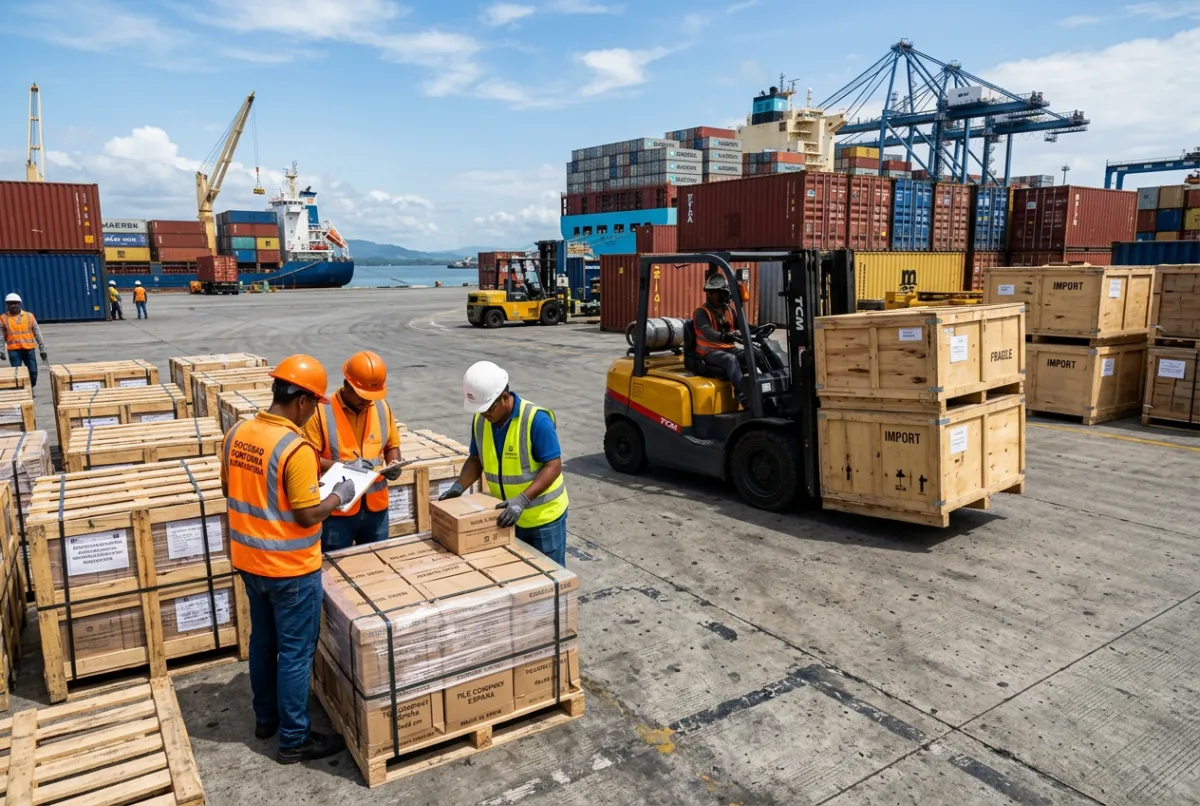
By the time someone installs a single tile, it has already completed a journey of thousands of kilometres, connecting manufacturers with projects across the world.
🧪 Request Custom Sample Box for South America
Verify color matching, thickness standards, and slip-resistance metrics for your local building codes. Order physical samples.
Why Do Two Tiles That Look Similar Have Different Prices?
At first glance, two ceramic or porcelain tiles may look almost identical. However, the price often reflects what you cannot see.
The quality of the raw materials affects the tile’s strength and durability. Thicker tiles usually require more material and can better handle heavy use. The printing process also matters, as sharper designs and more realistic patterns take greater precision.
The surface finish is another factor. Matte, glossy, textured, and special finishes require different manufacturing processes. Good packaging helps reduce damage during transport, while strict factory standards and careful quality inspections ensure that every box meets the same specifications.
This is why two tiles with a similar appearance can have different prices. The difference is often found in the materials, manufacturing process, consistency, and reliability rather than the design alone.
Can You Judge Tile Quality Without Being an Expert?
Yes. You don’t need special tools or technical knowledge. A few simple checks can tell you a lot about a tile’s quality.
- Do the edges line up? Place two tiles together. The edges should fit neatly without large gaps.
- Does every box match? Open more than one box and check that the tiles look the same.
- Is the colour consistent? The shade should remain even across all tiles.
- Is the surface smooth and even? Look for marks, chips, or uneven areas.
- Is the packaging strong? Good packaging helps protect tiles during shipping and reduces the risk of damage.
These quick checks can help you choose tiles with more confidence, whether you’re buying for a home, a shop, or a large construction project.
Imagine You Are Importing Your First Container
Imagine your first container of ceramic or porcelain tiles has just arrived. Before you place the order, take a moment to ask yourself a few simple questions.
Who are your customers? Are you selling to builders, architects, retailers, or homeowners?
Which tile designs are most popular in your market? Choosing fast selling products is often better than ordering too many different styles.
How many designs should you import? A smaller, well planned collection is usually easier to manage than a large mixed shipment.
Do you have enough spare stock for future orders or damaged tiles? Customers often expect matching replacements later.
Finally, where will you store the tiles? A clean, dry warehouse helps keep them in good condition until they reach your customers.
The best importers don’t simply buy containers of tiles. They plan every step before the shipment leaves the factory.
Why Some Imported Tiles Sell Quickly While Others Stay in the Warehouse
Not every imported tile becomes a best seller. Sometimes, the biggest mistake is buying what looks good instead of buying what customers actually want.
Some importers choose fashionable colours that are popular elsewhere but don’t match local preferences. Others order too many sizes, making it harder for retailers to manage stock and for customers to choose.
Buying tiles only because they are inexpensive can also be risky. If the design, quality, or finish doesn’t meet customer expectations, those tiles may stay in the warehouse for months.
Successful importers understand their market first. They stock the colours, sizes, and styles their customers ask for most often, helping products sell faster and reducing unused inventory.
The South America Tile Market Is Changing—Can You See the Pattern?
The tile market is changing, and so are customer preferences.
A few years ago, glossy tiles were a popular choice. Today, many homeowners and designers prefer matte finishes because they offer a more natural look and hide everyday marks more easily.
Smaller tiles were once common in many projects. Now, larger tiles are gaining popularity because they create a cleaner appearance with fewer grout lines and make spaces feel bigger.
Decorative patterns used to attract most buyers. Today, many people choose porcelain tiles that look like natural stone, marble, or wood. They enjoy the timeless style without the higher maintenance of natural materials.
These changes are being driven by modern architecture, changing lifestyles, and the growing demand for practical, easy to maintain surfaces in homes and commercial spaces.

Questions Every Smart Importer Asks Before Placing an Order
Can I order different tile sizes in one container?
Yes. Many manufacturers allow mixed sizes and designs in one container, provided the minimum order quantity for each item is met.
How do I reduce breakage during shipping?
Choose suppliers that use strong export packaging, proper pallets, and secure container loading to protect tiles during transport.
Should I choose ceramic or porcelain tiles?
It depends on the project. Ceramic tiles are a good choice for many wall applications, while porcelain tiles are stronger and better suited for high traffic floors and outdoor areas.
How many extra tiles should I order?
Ordering about 5–10% extra is a good idea. Spare tiles can be useful for cutting, installation, and future repairs.
What documents will I need?
Most importers need a commercial invoice, packing list, bill of lading, and certificate of origin. Depending on the country, additional customs documents may also be required.
One Good Supplier Can Save More Than One Cheap Shipment
Choosing a supplier isn’t just about getting the lowest price. It’s about building a partnership you can rely on for years.
A trusted supplier communicates clearly, delivers consistent quality, and makes repeat orders much easier. The colours, sizes, and finishes stay consistent, helping you meet customer expectations every time.
Cyber security, reliable production also reduces delays and unexpected problems. When orders arrive on time and match previous shipments, you spend less time solving issues and more time growing your business.
In the long run, a dependable supplier often saves more time, money, and effort than a one time low cost shipment with uncertain results.
💼 Bulk Pricing Bid & Logistics Consultation
Work directly with Ramirro Ceramica export engineers for container audits, custom sizing, and factory-direct documentation.
Why Work with Ramirro Ceramica
Choosing the right tiles is only part of the process—working with a manufacturer that understands your market can make all the difference. With experience serving customers across multiple export regions, Ramirro Ceramica understands that every country has unique preferences, regulations, and project requirements.
Whether you’re looking for modern large format tiles, luxury marble look collections, minimalist designs, or value driven solutions, Ramirro Ceramica helps you find tiles that match your market’s needs.
Beyond manufacturing, Ramirro Ceramica also supports international buyers with product selection, export documentation, packaging, logistics coordination, and after sales assistance, making the entire sourcing process smoother and more reliable.
Final Thoughts: Tiles Build Floors, But Trust Builds Trade
South America’s growing ceramic tile market is driven by more than price. Tile importers and buyers and importers want reliable supply, modern designs, and cost-effective products for construction and renovation projects. Alongside local production, imported ceramic floor tiles, glazed tiles, unglazed, large-format tiles, slab collections, and wall coverings continue to see strong demand.
Success in import export and international trade depends on choosing the right exporter, understanding HS codes and import duties, and working with suppliers that follow sustainable practices, offer eco-friendly manufacturing, and maintain long-term competitiveness. Manufacturers like Ramirro Ceramica provide a wide collection of ceramic and porcelain tiles for international markets. Whether you buy online or offline, explore the collection and contact the team to find the right solution for your project.
Watch our Video:
Shop Now | Chat With Expert | View Catalogue

Here’s what you get out of our article. Our team have various Ceramic Experts with experience of more than 25 Years, researches on problems our customer faces in tiling industry.
Ramirro Ceramica, – One of The Leading Tiles Manufacturer and Supplier globally, helps you people gain knowledgeable insight before making your purchase decision for products related to the floor and wall tiles.
So, we have closely monitored all kinds of trends in the ceramic tiles manufacturing world, from the old days of clay and plain color to modern digital, realistic-looking designs printed on ceramics with high-depth effects.
Our tiling Experts have seen thousands of different tiles patterns, sizes, materials, pricing, and installation techniques throughout their career.
Their expertise shared with you in simplified and organised way, helps you choose and make better decision before purchasing any flooring option available in market.
Brief about Company:
Ramirro is one of the finest Tiles manufacturers in India manufacturing porcelain and ceramic tiles. Our products have a variety of sizes and types of tiles ranging from Ceramics, porcelain, Full body etc. This helps you choose the perfect fit for your project. Plus, our collection will help you get inspiration from the architect’s design.
Here’s some more helpful links that showcase our users trust on Ramirro Ceramica Brand:
– Growth in International Market
– Trusted and Licensed Exporter
– Manufacturing Plant in India
Here’s our social proof by LinkedIn competing with top known global tiling brands: