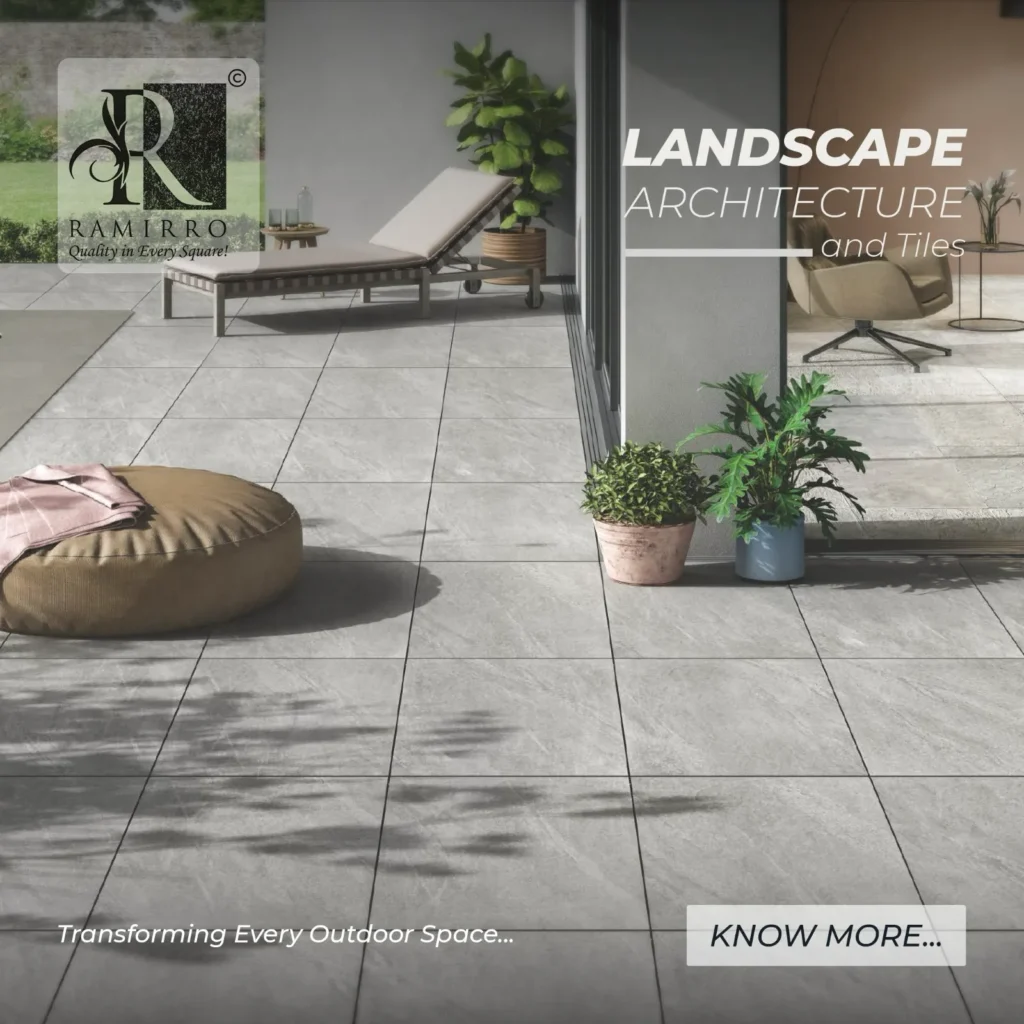
Landscape architecture is all about shaping outdoor spaces in a way that feels natural, functional, and enjoyable. From gardens and rooftops to pool decks and walkways, every element must work together to create a space people love to use. Tiles play a major role in this process because they influence safety, movement, comfort, and overall design. A landscape architect relies on the right tile textures, colors, and materials to guide how people experience an outdoor area. Ramirro Ceramica, a trusted tile manufacturer known for durable and design focused surfaces, provides solutions that support modern landscape needs. In this article, we’ll explore how tiles shape outdoor environments and how landscape architects use tile design to bring ideas to life.
- Why Tiles Are Becoming Essential In Modern Landscape Architectural Projects
- What is Landscape Architecture and Why it Matters?
- Introducing Softscape & Hardscape
- How Tiles Shape Outdoor Spaces in Landscape Architecture
- Connecting Every Outdoor Tile Type to Real Landscape Architecture Use Cases
- Swimming Pool Tiles: Safe Edges & Cool Surfaces
- Wall Cladding Tiles: Turning Vertical Surfaces into Design Anchors
- Paver Tiles: Building Strong Pathways & Public Plazas
- Slip Resistant Outdoor Tiles: The Foundation of Safety
- Outdoor Tiles for Mindfulness Zones (Gardens, Zen Corners, Yoga Decks)
- Residential Uses: Backyards, Patios, Balconies, Terraces
- Commercial Uses: Resorts, Cafés, Plazas, Corporate Landscapes
- Urban Rooftops & Pathways
- The Science of Tile Color & Texture in Landscape Architecture
- Green Building & Landscape Architecture: How Tiles Support Sustainability
- Why Landscape Architects Prefer Ramirro Ceramica for Outdoor Projects
- How a Landscape Architect Actually Selects Tiles (Step by Step Logic)
- Real Outdoor Design Scenarios
- Ramirro Ceramica: Tiles Are the Backbone of Modern Landscape Architecture
Why Tiles Are Becoming Essential In Modern Landscape Architectural Projects
Tiles are becoming a key material in modern landscape architecture because they offer a rare combination of durability, design flexibility, and long term performance. Today’s outdoor spaces whether residential backyards or large commercial courtyards need surfaces that can handle weather, foot traffic, and everyday use without losing their beauty. Tiles provide this reliability while also giving landscape architects the freedom to shape how a space looks and feels.
What is Landscape Architecture and Why it Matters?
Landscape architecture is the art and science of designing outdoor spaces so they feel functional, safe, beautiful, and connected to the environment around them. It involves planning and shaping areas such as gardens, terraces, walkways, rooftops, pool decks, public plazas, and commercial courtyards.
A landscape architect carefully blends soft elements like plants, grass, and trees with hard elements such as tiles, stone, lighting, and pathways. When these parts work together, they create outdoor spaces that are comfortable to use, easy to navigate, and visually appealing. Landscape architecture matters because it improves how people live, move, and interact with their surroundings turning ordinary outdoor areas into meaningful, enjoyable places.
Introducing Softscape & Hardscape
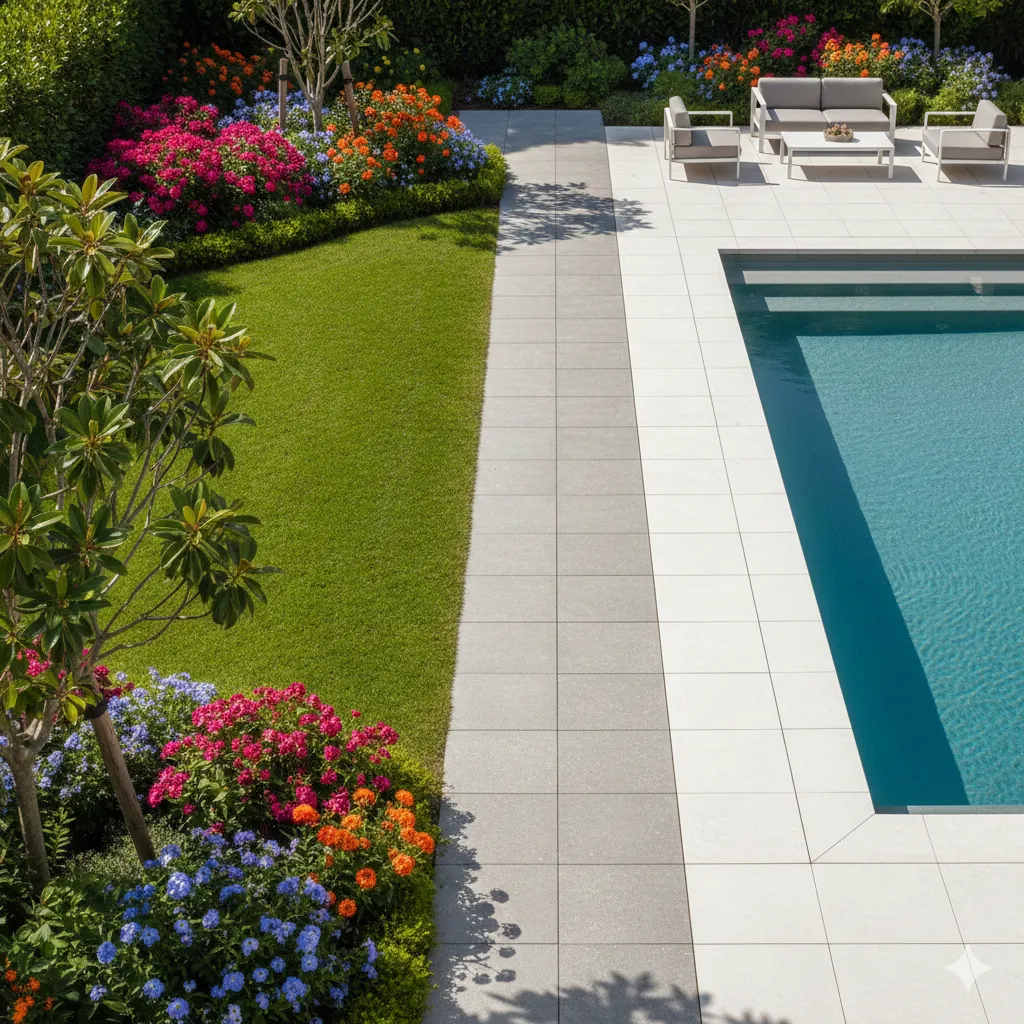
Every outdoor space is made up of two key elements: softscape and hardscape. Softscape includes all the living components; plants, grass, soil, shrubs, and trees that bring life, color, and freshness to an area. Hardscape includes the non living, built elements such as tiles, pathways, pavers, walls, decks, and pool surrounds. These features provide structure, safety, and durability.
A successful landscape design is always a balance of both. Softscape creates a natural, soothing environment, while hardscape forms the strong foundation that supports movement, defines zones, and ensures long term performance. When combined thoughtfully, they create outdoor spaces that are both beautiful and practical.
How Tiles Shape Outdoor Spaces in Landscape Architecture
Tiles as the “Silent Designers” of Outdoor Experience
Texture guides movement: Rough tiles improve grip on walkways and pool areas, while smoother tiles create relaxed seating zones.
Color controls heat and mood: Light colors stay cool under the sun, dark colors add warmth, and natural tones create a calm outdoor feel.
Patterns define identity: Tile patterns guide direction, highlight zones, and give the space its unique character.
Function + Aesthetics: The Landscape Architect’s Approach
Every outdoor tile choice solves a purpose:
Slip resistance for wet or rainy areas
Thermal comfort for sun exposed spots like pool decks
High durability for heavy foot traffic
Natural visual connection so the hardscape blends with greenery
Connecting Every Outdoor Tile Type to Real Landscape Architecture Use Cases
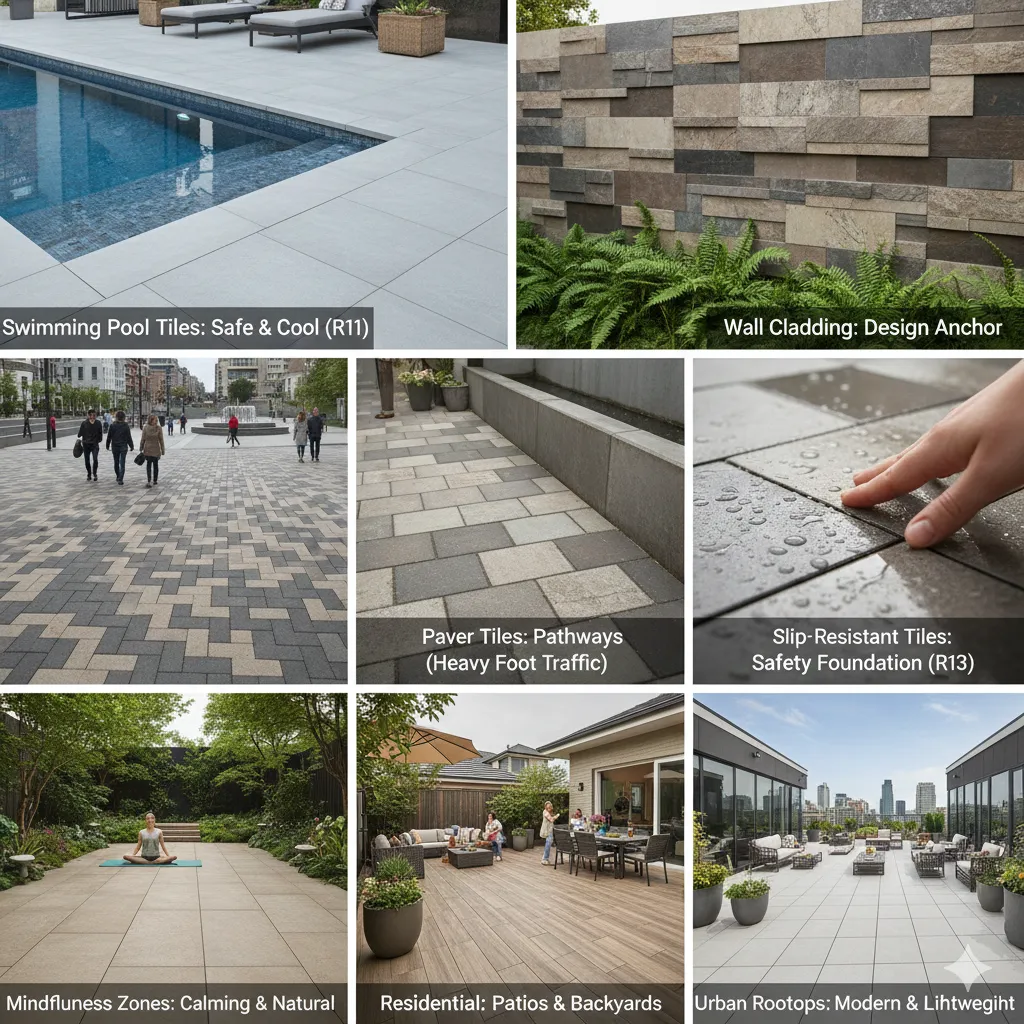
Swimming Pool Tiles: Safe Edges & Cool Surfaces
Tiles around pools must stay anti slip, cool, and durable. Porcelain tiles work best because they have low water absorption (<0.5%), resist UV fading, and handle chemicals from pool water. Ramirro Ceramica offers pool friendly textures and coping tiles designed for long term safety and comfort.
Wall Cladding Tiles: Turning Vertical Surfaces into Design Anchors
Landscape architects use cladding to highlight garden walls, entrances, terrace edges, and seating blocks. These tiles add depth, texture, and protection while helping create focal points and strong visual identity.
Paver Tiles: Building Strong Pathways & Public Plazas
Paver tiles are designed for heavy foot traffic in driveways, pathways, courtyards, and public plazas. They resist load, stains, and harsh weather. The pattern of pavers also guides how people move through the space.
Slip Resistant Outdoor Tiles: The Foundation of Safety
In areas that get wet like pool decks, garden walkways, terraces, and ramps; slip resistant tiles are essential. R ratings (R9-R13) help measure grip levels. Microtexture on these tiles improves safety without compromising design.
Outdoor Tiles for Mindfulness Zones (Gardens, Zen Corners, Yoga Decks)
Calming textures and natural tones create peaceful areas for meditation or yoga. These tiles make mindfulness spaces beautiful, low maintenance, and weather friendly.
Residential Uses: Backyards, Patios, Balconies, Terraces
Outdoor tiles help convert small or unused spaces into functional living areas. They’re easy to clean, weather resistant, and ideal for everyday family use.
Commercial Uses: Resorts, Cafés, Plazas, Corporate Landscapes
Commercial landscapes need durable surfaces that handle constant use. Tiles provide strength, style, and consistency, keeping public areas both safe and visually cohesive.
Urban Rooftops & Pathways
Modern rooftops act as outdoor lounges. Lightweight porcelain tiles are perfect for these spaces because they manage heat, slip risks, and structural load limits while offering clean, modern aesthetics.
The Science of Tile Color & Texture in Landscape Architecture
How Color Impacts Temperature
Tile color directly affects how hot an outdoor surface becomes.
Light colors reflect sunlight, keeping tiles cool; perfect for pool decks, terraces, and barefoot areas.
Dark colors absorb more heat, making them better for shaded or cooler environments.
In busy public spaces like plazas, mid tone tiles help reduce glare while still managing surface temperature.
How Rough Surfaces Absorb Heat Differently
Rough or textured tiles have more surface area, which means they absorb slightly more heat. This is important because:
Rough textures improve slip resistance, especially when wet.
Designers must balance safety and heat comfort when choosing textured outdoor tiles.
Mood & Psychology of Outdoor Tile Colors
Colors influence how people feel in a space:
Blues & greens create a calm, refreshing mood ideal for relaxation areas.
Browns & greys offer an urban, natural balance that suits modern landscapes.
Earthy tones feel warm and timeless, blending easily with plants and natural surroundings.
Green Building & Landscape Architecture: How Tiles Support Sustainability
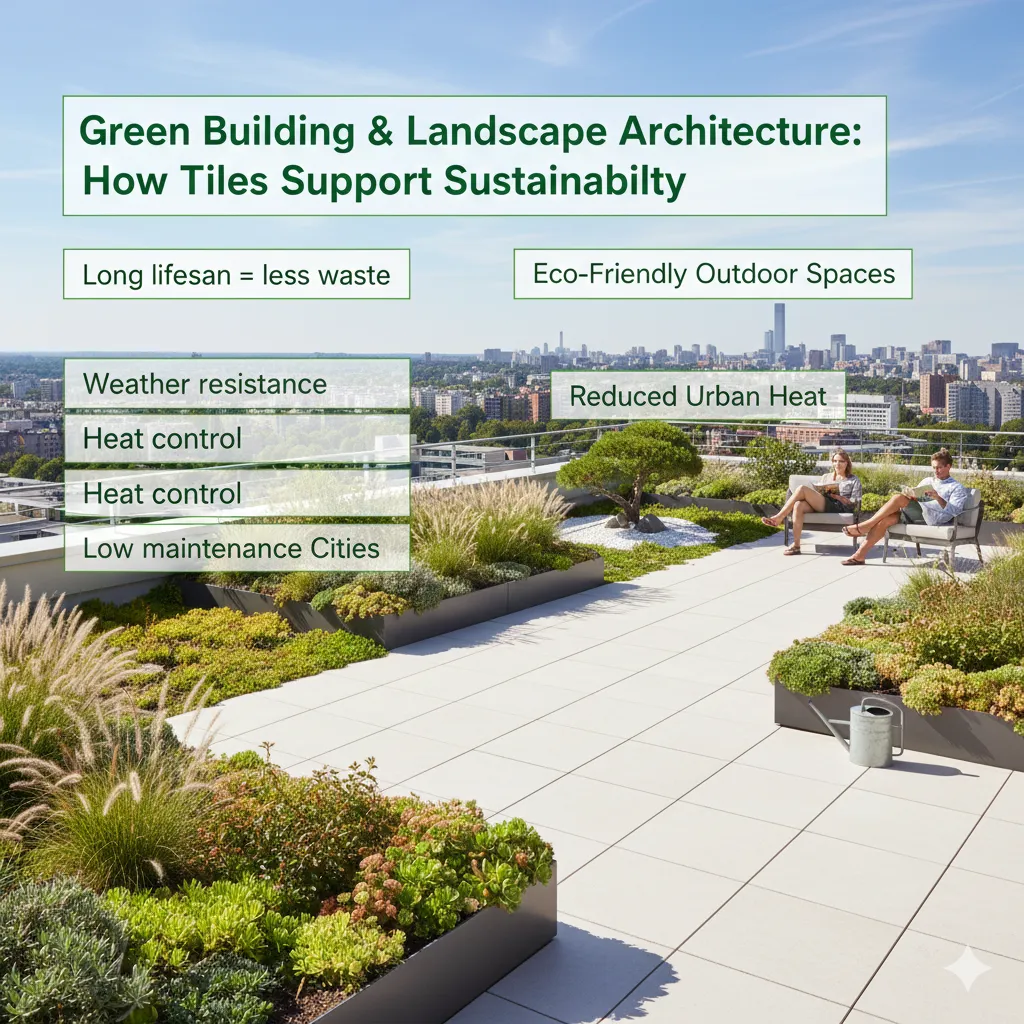
What is Green Building?
Green building focuses on creating spaces that save energy, reduce heat, use fewer resources, and support the natural environment. In outdoor design, this means choosing materials that last long, stay cool, and require minimal maintenance.
Role of Tiles in Sustainable Outdoor Design
Tiles contribute to sustainability in several ways:
Long lifespan = less waste: Durable tiles reduce the need for frequent replacement.
Weather resistance: Porcelain tiles handle sun, rain, and temperature changes without degrading, extending the life of outdoor spaces.
Heat control: Light colored tiles reflect sunlight and help reduce the urban heat island effect in cities.
Low maintenance: Tiles require minimal cleaning water and fewer chemicals, making them eco friendly for daily use.
Landscape Architecture + Tiles = Eco Friendly Outdoor Spaces
When outdoor designs combine strong hardscape materials like tiles with natural softscape elements, the space becomes both functional and environmentally responsible. Tiles help create low water landscapes, reduce long term energy use, and support greener, more sustainable homes and cities.
Why Landscape Architects Prefer Ramirro Ceramica for Outdoor Projects
Material Engineering Designed for Outdoor Challenges
Ramirro Ceramica tiles are built for real outdoor conditions. Their surfaces provide slip resistance for safety, resist fading under strong sunlight, and use high strength porcelain that performs well in areas with heavy foot traffic and weather changes.
Tile Designs Inspired by Natural Landscape Elements
Landscape architects appreciate how Ramirro Ceramica tiles blend with nature. Stone look, wood look, earthy tones, and textured finishes help outdoor spaces feel natural and balanced while maintaining a modern look.
Customization Advantage
Every outdoor project has different needs, and Ramirro Ceramica supports this with flexible size options, patterns, and special finishes. This allows architects to match tiles to the exact design style or layout they want to achieve.
Durability That Reduces Lifecycle Cost
Ramirro Ceramica tiles are made to last. They resist cracking, fading, heat, and water damage, which reduces long term maintenance costs and keeps outdoor spaces looking good for years.
How a Landscape Architect Actually Selects Tiles (Step by Step Logic)
Understanding the Space Purpose: The architect first identifies how the outdoor area will be used; relaxation, walking, seating, entertaining, or heavy public movement. This decides whether the tiles need to be comfortable, decorative, or highly durable.
Analyzing Foot Traffic: They check how many people will use the space daily. Light use spaces like balconies need simple, stylish tiles. Busy areas like pathways or plazas need strong, thick, high strength porcelain tiles.
Evaluating Climate Conditions: Weather plays a major role. Hot regions require tiles that stay cool. Rainy or humid zones require slip resistant tiles. Freeze thaw regions need tiles that won’t crack under temperature changes.
Shortlisting Textures (Safety First): Texture is selected based on safety. Rough or matte textures are chosen for wet areas such as pool decks and garden paths. Smooth textures are used only in dry, low risk spaces.
Choosing Colors Based on Heat and Mood: Color affects both temperature and feel. Light colors reflect heat and keep surfaces cool. Earthy tones create a calm, natural look. Dark tones add warmth and contrast in shaded spaces.
Selecting Patterns That Flow with Softscape: Patterns are chosen to match the arrangement of plants, trees, and landscaping features. Clean patterns create an open look, while textured or patterned tiles add character to focal points and seating areas.
Planning Drainage, Slopes & Maintenance: Before final selection, the architect ensures tiles will support proper drainage so water doesn’t collect. They also consider how easy the surface will be to clean and maintain.
Final Material Selection: After balancing purpose, traffic, climate, texture, color, and maintenance needs, the architect chooses the final tile. Most outdoor spaces benefit from porcelain tiles due to their strength, low water absorption, and long life making brands like Ramirro Ceramica a preferred choice.
Real Outdoor Design Scenarios
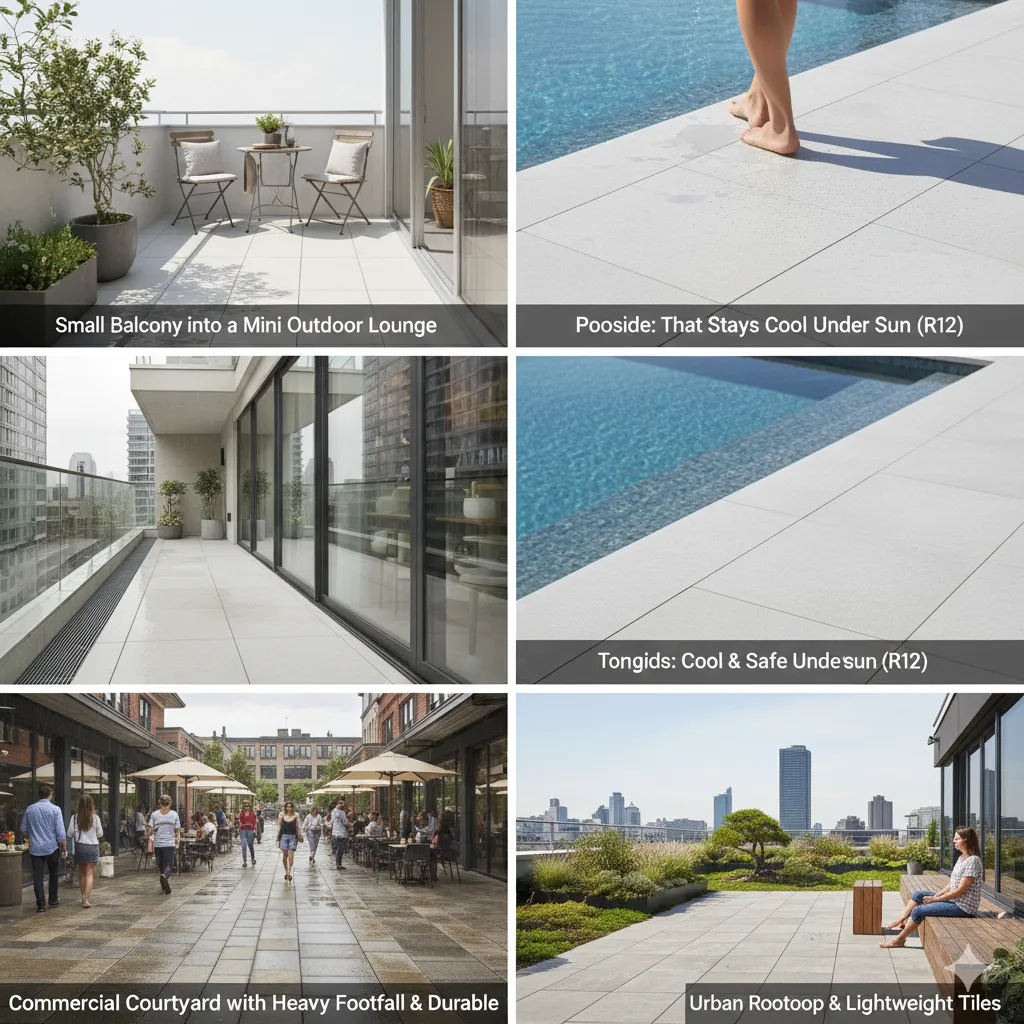
Transforming a Small Balcony into a Mini Outdoor Lounge
A small balcony can feel bigger and more usable with the right tiles. A landscape architect chooses light colored, matte finish tiles to keep the space cool and visually open. The main challenge is limited space, so tiles with a clean pattern help avoid a crowded look. The outcome is a comfortable mini lounge where people can sit, relax, or enjoy evening tea without worrying about heat or slippery floors.
Poolside That Stays Cool Under Harsh Sun
Around a pool, safety and comfort come first. Architects use slip resistant porcelain tiles that stay cool even during strong sunlight. Light colors reduce heat absorption, making the surface comfortable for barefoot walking. The result is a safe, stylish poolside area where the tiles protect against slipping, stay cool, and maintain their color despite constant water and sun exposure.
Commercial Courtyard with Heavy Footfall
Commercial spaces like cafe courtyards or office plazas experience constant movement. Paver tiles are selected because they handle heavy weight and resist stains, dirt, and weather. The architect also plans the slope carefully so water drains properly and the surface stays safe. The outcome is a strong, long lasting courtyard that looks neat and performs well under daily use.
Urban Rooftop Zen Space
Rooftops often become quiet escape zones in busy cities. Architects use textured, nature inspired tiles; stone look or earthy tones to create a calming, Zen like atmosphere. The challenge is heat and limited structural load, so lightweight porcelain tiles are chosen. With added greenery and softscape elements, the rooftop becomes a peaceful meditation or yoga space that feels close to nature.
Ramirro Ceramica: Tiles Are the Backbone of Modern Landscape Architecture
Shop Now | Chat With Expert | View Catalogue
In today’s landscape architecture, tiles are far more than decorative elements; they shape movement, control temperature, improve safety, and influence how people experience outdoor spaces. A landscape architect uses tiles the way a painter uses colors, bringing design and planning to life through texture, tone, and material expression. As cities face rapid urbanization, climate change, and growing concerns around green infrastructure and environmental justice, outdoor surfaces must be durable, efficient, and responsibly designed. This aligns closely with the history of landscape architecture, where site design, urban planning, and regional planning have always worked together to create public spaces that support people and the environment.
Ramirro Ceramica contributes to this modern design practice with tiles engineered for real landscape environments; strong enough for urban and regional outdoor demands, reliable under changing climate conditions, and crafted for long term beauty. Whether the project involves contemporary urban planning or nature driven site design, Ramirro Ceramica helps landscape architects build outdoor spaces that are resilient, meaningful, and ready for the future.

Here’s what you get out of our article. Our team have various Ceramic Experts with experience of more than 25 Years, researches on problems our customer faces in tiling industry.
Ramirro Ceramica, – One of The Leading Tiles Manufacturer and Supplier globally, helps you people gain knowledgeable insight before making your purchase decision for products related to the floor and wall tiles.
So, we have closely monitored all kinds of trends in the ceramic tiles manufacturing world, from the old days of clay and plain color to modern digital, realistic-looking designs printed on ceramics with high-depth effects.
Our tiling Experts have seen thousands of different tiles patterns, sizes, materials, pricing, and installation techniques throughout their career.
Their expertise shared with you in simplified and organised way, helps you choose and make better decision before purchasing any flooring option available in market.
Brief about Company:
Ramirro is one of the finest Tiles manufacturers in India manufacturing porcelain and ceramic tiles. Our products have a variety of sizes and types of tiles ranging from Ceramics, porcelain, Full body etc. This helps you choose the perfect fit for your project. Plus, our collection will help you get inspiration from the architect’s design.
Here’s some more helpful links that showcase our users trust on Ramirro Ceramica Brand:
– Growth in International Market
– Trusted and Licensed Exporter
– Manufacturing Plant in India
Here’s our social proof by LinkedIn competing with top known global tiling brands: