Tactile tiles play a vital role in building safer and more accessible spaces for everyone. These specially designed tiles guide people with visual impairments, reduce slip risks, and create clear walking paths in busy public and private environments. As cities grow and safety standards rise, tactile surfaces have become an essential part of modern flooring solutions. Ramirro Ceramica, a trusted name in high performance porcelain tile manufacturing, offers advanced tactile surface flooring engineered for durability, clarity, and long term safety. This guide explains everything you need to know about tactile tiles; how they work, where they are used, and why they matter.
- What Are Tactile Tiles?
- Understanding Tactile Patterns: The Language of Touch
- Materials Used in Tactile Tiles: Which Is Best?
- Where Do Tactile Tiles Need to Be Installed? (With Real World Scenarios)
- Real Life Use Cases Beyond Accessibility
- Why Porcelain Tactile Tiles from Ramirro Ceramica Are the Best Choice
- Choosing the Right Tactile Tile: A Simple Decision Guide
- Make Every Step Safer with Ramirro Ceramica’s High Performance Tactile Tile Solutions
What Are Tactile Tiles?
Tactile tiles are specially designed floor tiles that help people navigate a space safely using touch. You’ll often see them in public places like footpaths, railway stations, malls, and building entrances. These tiles have raised patterns such as bumps or bars that can be felt under the feet or detected using a walking cane. This simple texture difference sends a clear message: stop, move carefully, or follow this direction.
How tactile tiles guide visually impaired people
For people with low vision or complete blindness, tactile tiles act like a built in navigation system. Instead of depending on signs or visual cues, they follow the textured patterns on the floor.
Warning tiles with bumps alert them to a hazard ahead like stairs, edges, or crossings.
Directional tiles with straight bars show a safe path to walk in crowded or open spaces.
How the foot sole and walking cane detect patterns
Our feet naturally sense changes in texture and pressure. Even through shoes, the raised surface of tactile tiles feels different from regular flooring. This immediate feedback helps the person understand where they are. For cane users, the cane taps the bumps or bars and creates a distinct vibration and sound. This helps identify the pattern without needing to see it.
Tactile Tiles vs Anti Slip Tiles
Tactile tiles guide movement and provide information through touch.
Anti slip tiles prevent slipping on wet or smooth surfaces.
Tactile tiles can also be anti slip, especially when made from porcelain, but their main job is communication, not just slip resistance.
Why tactile tiles aren’t only for blind people, everyone benefits
Elderly people who need extra stability
Children who run or walk quickly without noticing hazards
Commuters navigating crowded public spaces
Anyone walking on wet floors or outdoor areas
Visitors in unfamiliar buildings who need clear guidance
Understanding Tactile Patterns: The Language of Touch
Warning Tactile Tiles (Blister Pattern)
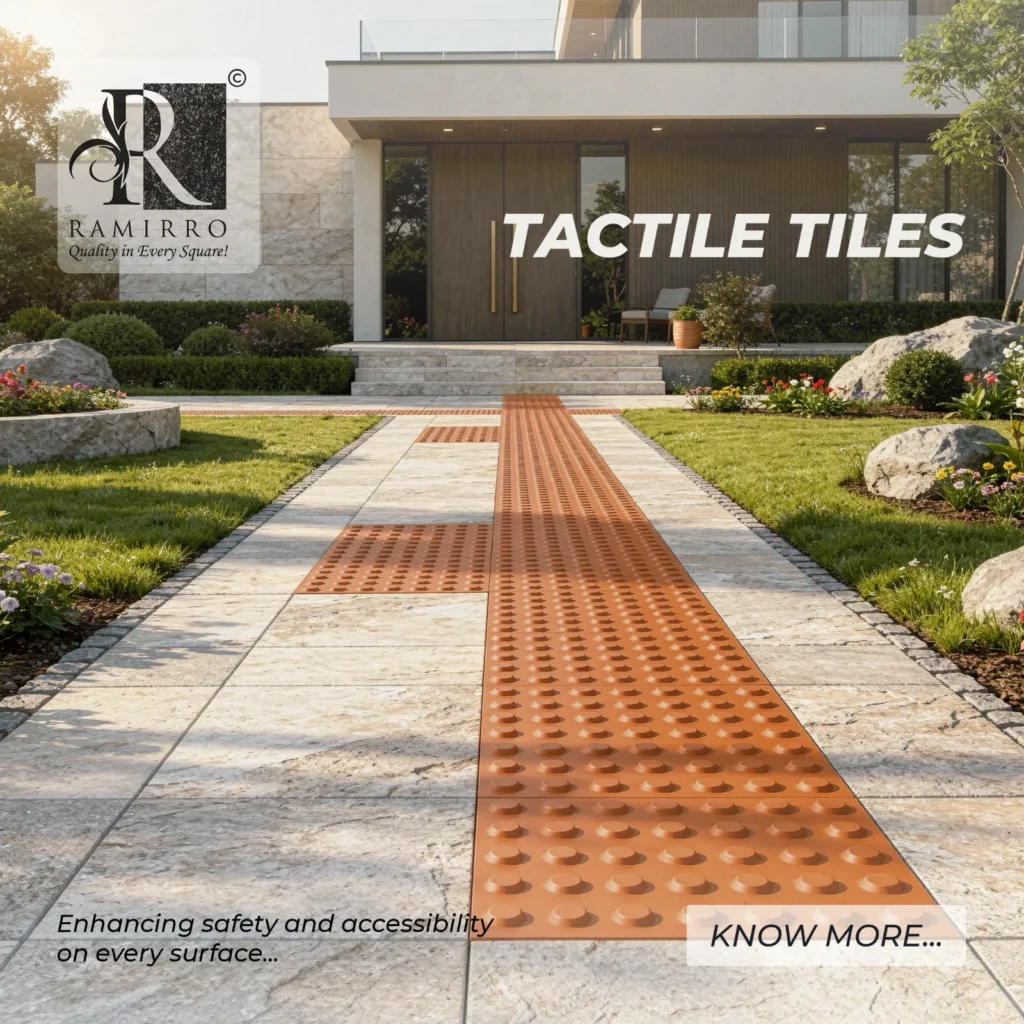
Warning tactile tiles have small round bumps that immediately feel different from normal flooring. When someone steps on them, the bumps signal that a hazard or change is ahead. This pattern tells you to slow down, stop, and be aware of what comes next. You’ll find these tiles near staircase edges, platform ends, road crossings, ramps, and other risky areas. The bumps are shaped and spaced carefully so they’re easy to feel underfoot and easy to detect with a cane.
Directional Tactile Tiles (Bar Pattern)
Directional tactile tiles have long raised bars that point in one clear direction. When a person walks or taps over them, these bars guide them forward like arrows on the floor. They help people stay on the correct path in places like railway stations, malls, airports, and long corridors. The straight pattern makes navigation simple and consistent, especially in large or confusing spaces.
Guiding vs Warning When to Use Which?
The easiest way to remember the difference is this: bars mean “go this way,” and bumps mean “be careful.” Directional tiles guide movement, while warning tiles alert you to stop or check your surroundings.
Materials Used in Tactile Tiles: Which Is Best?
Rubber tactile tiles are flexible and comfortable to walk on. They are often used indoors or in temporary setups. Rubber wears out faster, fades over time, and can peel in harsh weather or heavy foot traffic. They are not ideal for outdoor or long term use.
Metal tactile studs offer a premium look and excellent durability. They are often used in high end commercial areas or luxury projects. But metal studs can be expensive, noisy under footsteps, and slippery when wet unless treated properly. They also require skilled installation.
PVC tactile tiles are lightweight and easy to install. They work well in low traffic indoor areas like offices, schools, or basic accessibility pathways. The downside is that PVC is not strong enough for outdoor use, high footfall, or extreme temperature changes. It can warp, lose color, or detach over time.
Concrete tactile tiles are commonly used in outdoor public spaces because they are heavy and stable. Concrete can crack in heat, chip under load, and absorb stains easily. Maintaining them in the long run becomes difficult, especially in cities with high temperature variation.
Porcelain tactile tiles by Ramirro Ceramica, offer the most reliable balance of strength, grip, and longevity. Porcelain does not fade, crack, or deform under weather changes. It is stain proof, water resistant, and easy to clean, making it suitable for both indoor and outdoor use. The texture remains consistent even after years of foot traffic, ensuring continuous safety for users.
Where Do Tactile Tiles Need to Be Installed? (With Real World Scenarios)
Public Transport Areas
Railway & metro platforms: Warning tiles (blister pattern) near platform edges help visually impaired passengers avoid falling onto tracks, while directional tiles guide them to exits and ticket counters.
Bus stations: Tactile paths lead safely from drop off zones to boarding areas, reducing confusion and accidents in crowded spaces.
Airport walkways: Long corridors, check in areas, and boarding gates use tactile tiles to guide passengers with luggage, strollers, or visual impairments, especially in busy terminals.
Educational Institutions
Schools, colleges, universities: Tactile tiles help students and staff navigate between classrooms, libraries, and restrooms. They reduce accidents on rainy days, as textured surfaces offer extra grip on wet floors.
Outdoor campuses: Pathways, staircases, and open plazas benefit from tactile tiles, guiding everyone safely during events or in poor visibility.
Hospitals & Health Facilities
Safe movement for elderly patients: Tactile tiles near staircases, ramps, and corridors help older adults and patients with mobility issues walk confidently, reducing falls.
Wheelchair friendly transitions: Smooth, tactile transitions at doorways and ramps ensure seamless movement for wheelchairs and mobility aids.
Commercial Buildings
Malls, offices, IT parks: Polished entry lobbies and open atriums often lack grip; tactile safety zones near stairs, escalators, and glass doors prevent slips and guide visitors.
Entry lobbies: Tactile tiles mark safe pathways from entrances to elevators, restrooms, and reception, especially in buildings with high footfall.
Outdoor & Urban Infrastructure
Footpaths & parks: Tactile tiles on sidewalks and park trails guide pedestrians safely, especially at crossings, junctions, and near benches.
Traffic crossings: Warning tiles at pedestrian crossings alert visually impaired people before stepping onto the road, making cities safer for everyone.
Municipal walkways: Tactile tiles in city centers, near markets, and government buildings create accessible routes for all citizens.
Residential Spaces
Elderly friendly homes: Tactile tiles near staircases, bathrooms, and bedrooms help seniors move safely and independently.
Safety in private bungalows: Slippery areas near pools, terraces, and ramps are ideal for tactile safety zones, preventing accidents for all family members.
Real Life Use Cases Beyond Accessibility
Rain & Wet Area Safety
Tactile tiles act as built in anti slip zones, especially near swimming pools, terrace floors, and podiums. Their textured surfaces provide extra grip during monsoon or on wet surfaces, reducing the risk of slips and falls for all users, including children and the elderly.
Crowd Management
In stadiums and event spaces, tactile tiles help organize foot traffic naturally. Raised patterns guide people along safe pathways, reducing bottlenecks and preventing confusion in crowded environments.
Emergency Guidance
During low visibility situations like night time, power cuts, or smoke; tactile tiles help people navigate safely. The textured patterns offer physical cues that can be followed even when visual signs are hard to see.
Navigation in Complex Buildings
In large malls, offices, and hospitals, tactile tiles help visitors find entrances, exits, lifts, and counters without relying on signboards. This makes navigation easier and reduces the need for constant signage.
Wayfinding for Senior Citizens
Tactile tiles support slower walkers by providing clear, tactile cues on ramps, curved paths, and transition zones. This reduces the risk of missteps and helps older adults move confidently and independently.
Child Safety in Schools
In schools, tactile tiles on corridors, stairs, and play zones help children walk safely. The raised patterns guide them and prevent slips, especially in areas prone to wetness or high activity.
Why Porcelain Tactile Tiles from Ramirro Ceramica Are the Best Choice
Engineered Slip Resistant Surface
Designed to handle heavy foot traffic, Ramirro’s tactile tiles feature a specially engineered slip resistant surface. They are tested extensively for both wet and dry traction, ensuring safe walkways regardless of weather conditions or cleaning routines.
Color Longevity & Visual Contrast
For low vision users, high contrast between the tactile tiles and surrounding floor is crucial for quick identification. Ramirro Ceramica uses UV safe pigments that maintain vibrant colors over time, ensuring that guidance and warning signals remain clear and effective even after years of outdoor exposure.
Extra Strength for Outdoor Use
Built to withstand challenging climates; extreme heat, monsoon rain, and dirt Ramirro Ceramica’s porcelain tiles resist fading and peeling, unlike PVC or softer materials. Their durability means less maintenance and lifelong safety in outdoor environments.
Hygienic & Easy to Clean
Porcelain tiles from Ramirro Ceramica are non porous and resistant to stains, making them ideal for hospitals, schools, and public facilities. Cleaning involves simple routine washing, with no special chemicals required, maintaining hygiene standards effortlessly.
Precision Manufacturing
Consistency in bump height and pattern placement is vital for cane detection and smooth guidance. Ramirro Ceramica’s rigorous quality control ensures every tile meets strict standards, providing reliable, uniform tactile feedback for users and maintaining the integrity of the guidance system.
Outdoor Porcelain Pavers: A Practical Alternative to Tactile Tiles
Outdoor porcelain pavers are a strong, stylish option for areas where tactile tiles aren’t needed but safety and durability are still important. These pavers are engineered for exterior use, offering excellent slip resistance and long lasting performance in wet or high traffic environments. Unlike traditional concrete or stone pavers, porcelain pavers resist fading, chipping, and staining, making them ideal for patios, walkways, and pool decks. They provide a smooth, consistent surface that’s easy to clean and maintain, ensuring safety and visual clarity for all users, even without the specific tactile patterns found in dedicated tactile tiles.
Choosing the Right Tactile Tile: A Simple Decision Guide
If you need hazard warning (like near stairs, platform edges, or drop offs), choose the blister (dome) pattern. This acts like a “stop sign” for your feet or cane, alerting you to danger ahead.
If you need direction guidance (for safe pathways in corridors, plazas, or open areas), pick the bar (corduroy) pattern. These bars guide you along the correct route, like a raised line you can follow with your foot or cane.
If installing outdoors, porcelain is the best choice. It handles rain, heat, and heavy use without fading or cracking, making it ideal for Indian weather.
If expecting heavy traffic (like in metro stations or busy malls), choose stoneware or porcelain with higher strength ratings. These materials resist wear and maintain their safety features even with constant footfall.
Make Every Step Safer with Ramirro Ceramica’s High Performance Tactile Tile Solutions
Tactile tiles are essential for combining safety, accessibility, and modern city design, especially in busy environments like pedestrian walkways, transit hubs, shopping centers, and department stores. Ramirro Ceramica’s porcelain tactile tiles provide durable, long lasting ground surface indicators that comply with ADA and other global standards. These tactile walking surface indicators include both warning and directional bars, designed to alert visually impaired pedestrians to hazards and guide their safe movement.
Detectable warning tiles and tactile warning surfaces offer excellent wear resistance, making them ideal for high traffic public right of way areas and pedestrian crossings near traffic lights. Their precise tactile symbols and surface indicators provide clear, reliable information, ensuring safe navigation while enhancing the aesthetic of any space.
With tactile indicator solutions, architects and planners gain the advantage tactile products bring: compliance, durability, and effectiveness, helping build safer, smarter, and future ready spaces that serve all users with confidence.
Shop Now | Chat With Expert | View Catalogue
Here’s what you get out of our article. Our team have various Ceramic Experts with experience of more than 25 Years, researches on problems our customer faces in tiling industry.
Ramirro Ceramica, – One of The Leading Tiles Manufacturer and Supplier globally, helps you people gain knowledgeable insight before making your purchase decision for products related to the floor and wall tiles.
So, we have closely monitored all kinds of trends in the ceramic tiles manufacturing world, from the old days of clay and plain color to modern digital, realistic-looking designs printed on ceramics with high-depth effects.
Our tiling Experts have seen thousands of different tiles patterns, sizes, materials, pricing, and installation techniques throughout their career.
Their expertise shared with you in simplified and organised way, helps you choose and make better decision before purchasing any flooring option available in market.
Brief about Company:
Ramirro is one of the finest Tiles manufacturers in India manufacturing porcelain and ceramic tiles. Our products have a variety of sizes and types of tiles ranging from Ceramics, porcelain, Full body etc. This helps you choose the perfect fit for your project. Plus, our collection will help you get inspiration from the architect’s design.
Here’s some more helpful links that showcase our users trust on Ramirro Ceramica Brand:
– Growth in International Market
– Trusted and Licensed Exporter
– Manufacturing Plant in India
Here’s our social proof by LinkedIn competing with top known global tiling brands: