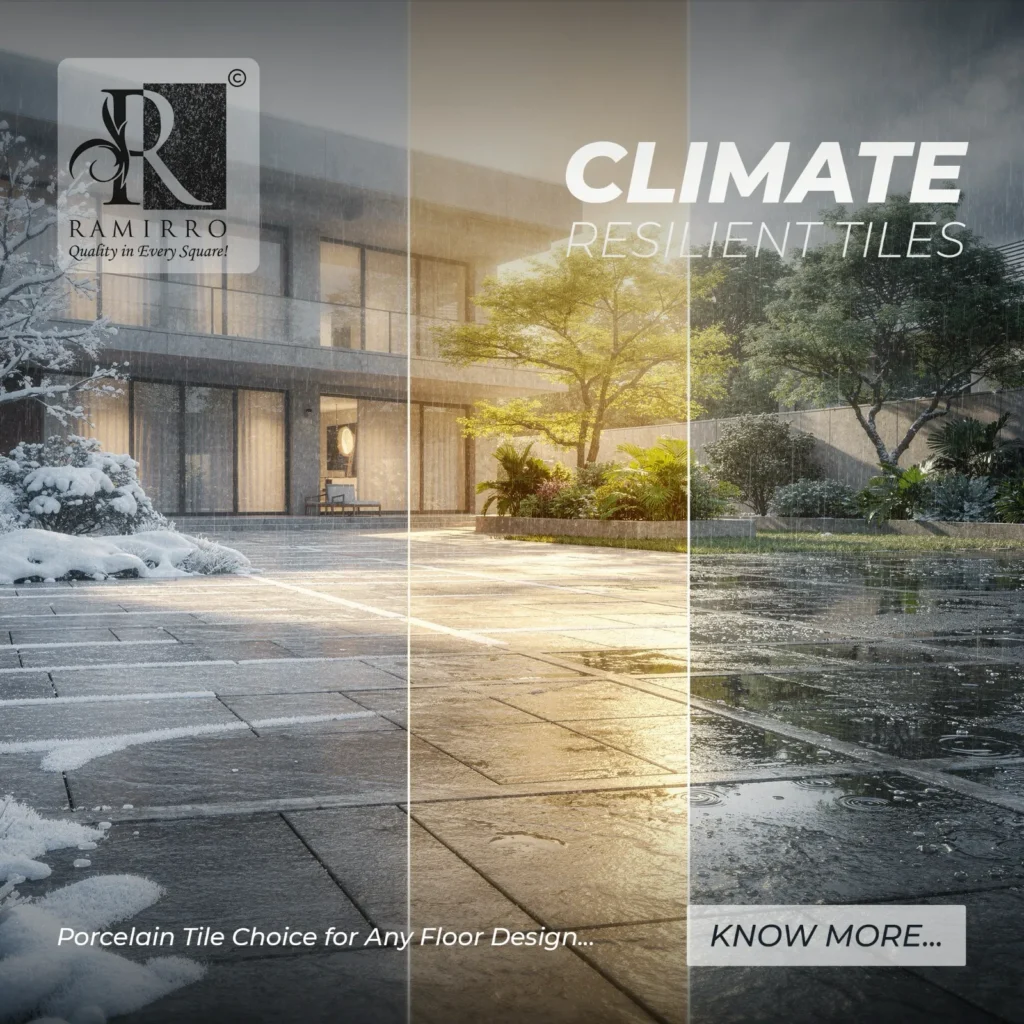
Homes across the world are getting hotter every year, and most of the heat enters through the roof. This is why climate resilient roof tiles are becoming an essential part of modern construction. These tiles help reduce heat, keep indoor spaces cooler, and cut down energy use. Instead of relying only on air conditioners, homeowners can now choose smarter roofing materials that naturally control temperature. Ramirro Ceramica, a trusted innovator in porcelain technology, creates roof tiles designed to handle extreme heat, strong sunlight, and changing weather.
- Why Homes Are Getting Hotter and Why Roof Tiles Matter More Than Ever
- SECTION 1: Understanding Climate Resilient Roof Tiles
- SECTION 2: How Roof Tiles Reduce Heat Inside the Home
- SECTION 3: Energy Efficiency Benefits
- SECTION 4: Ramirro Ceramica’s Approach to Climate Resilient Roof Tiles
- SECTION 5: Choosing the Right Climate Resilient Roof Tile for Your Home
- SECTION 6: Tile Installation and Maintenance
- SECTION 7: Future of Climate Resilient Roofing
- Cooler Homes Start at the Roof And Ramirro Ceramica’s Smarter Tile Choices Make the Biggest Impact
Why Homes Are Getting Hotter and Why Roof Tiles Matter More Than Ever
Homes today heat up faster than they did a decade ago. Rising temperatures, stronger sunlight, and growing urban areas all trap more heat around buildings. Most of this heat enters through the roof, which absorbs sunlight during the day and releases it into the rooms below. This is why many homes feel warm even at night. While air conditioners can cool the air, they do not stop the roof from storing heat. A better long term solution is to use roof tiles that block heat at the source.
Modern climate resilient tiles reflect more sunlight, absorb less heat, and create naturally cooler interiors. Ramirro Ceramica has developed advanced porcelain roof tiles designed for today’s climate challenges. Our climate adaptive materials help keep homes cooler without increasing electricity use, making them one of the smartest choices for modern roofing.
SECTION 1: Understanding Climate Resilient Roof Tiles
What Makes a Roof Tile “Climate Resilient”? The Science in Simple Words
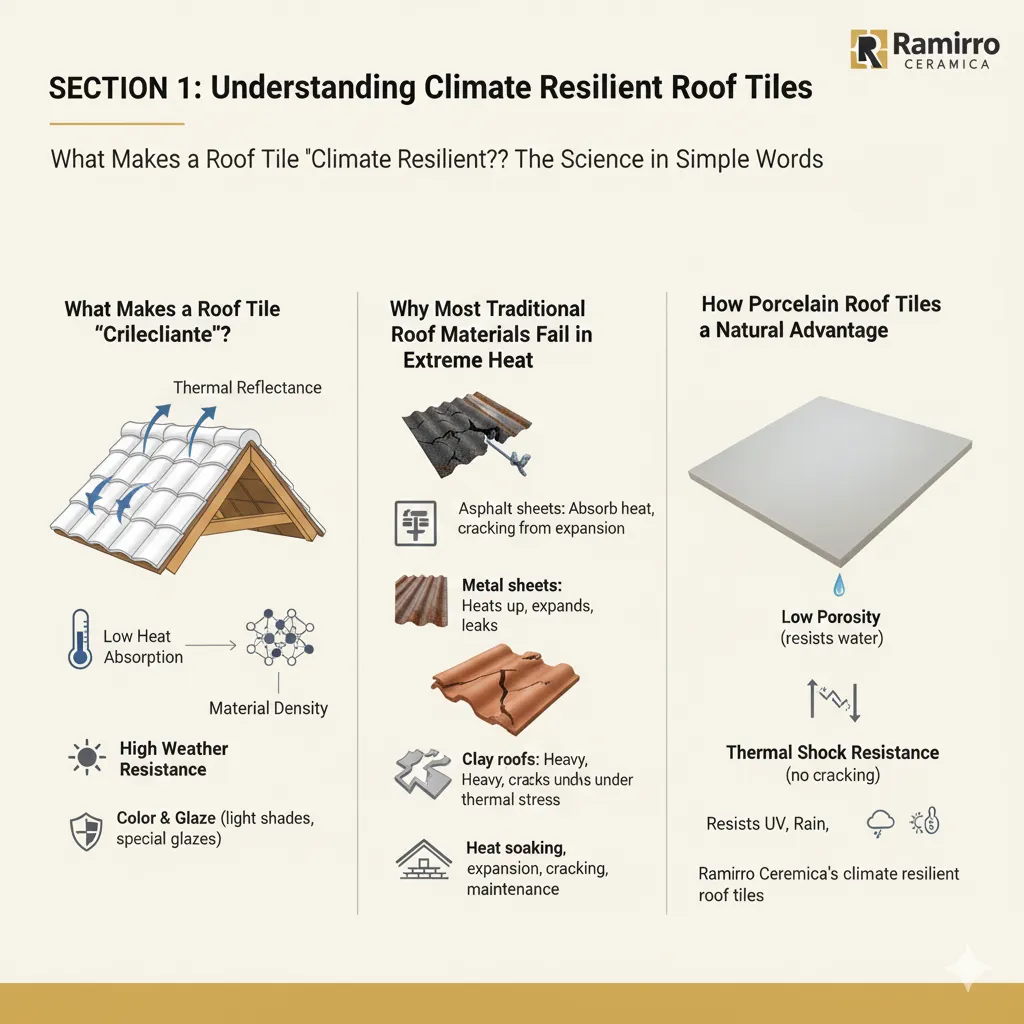
A climate resilient roof tile is designed to stay strong and cool even when exposed to intense heat, strong sunlight, and changing weather. The first key factor is thermal reflectance, which means the tile reflects a good amount of sunlight instead of absorbing it. Tiles with higher reflectance stay cooler on the surface. The second factor is low heat absorption. If a tile does not store much heat, it will not pass that heat into the rooms below. Material density also plays a big role. Dense materials, like porcelain, slow down the movement of heat, keeping the indoor temperature more stable.
A good climate resilient tile must also have high weather resistance, so it can handle UV rays, rain, humidity, and sudden temperature shifts without cracking. Even color and glaze affect heat performance; light shades reflect more sunlight, and special glazes can further reduce heat build up. These simple properties work together to create tiles that truly perform well in hot climates.
Why Most Traditional Roof Materials Fail in Extreme Heat
Most traditional roof materials struggle in extreme heat due to several key issues:
Asphalt sheets: These absorb a lot of heat, causing the roof surface to soar above 150°F in direct sun. The constant expansion and contraction from daily temperature swings lead to cracking, deterioration, and frequent repairs.
Metal sheets: While durable, metal roofs heat up quickly and can transfer that heat into the building. They also expand and contract significantly, which can cause fasteners to loosen, seams to open, and leaks to develop over time.
Clay roofs: Clay tiles are naturally resistant to heat and UV, but they are heavy and prone to cracking under repeated thermal stress. Their installation requires extra support, and they can be expensive to maintain in high temperature regions.
All these materials are susceptible to heat soaking, expansion, cracking, and require more maintenance in extreme climates, making them less ideal compared to modern climate resilient options.
How Porcelain Roof Tiles Offer a Natural Advantage
Porcelain roof tiles perform well in extreme heat because of their strong material structure. Their low porosity means they absorb very little water, which helps them stay stable in humid or coastal climates. Their higher density slows heat transfer, keeping homes cooler for longer. Porcelain also handles thermal shock well, so it does not crack when temperatures change suddenly. It resists humidity, UV rays, and harsh weather, making it a durable choice for hot regions. These natural qualities are the base of Ramirro Ceramica’s climate resilient roof tiles, designed for reliable performance in demanding climates.
SECTION 2: How Roof Tiles Reduce Heat Inside the Home
The Heat Path: How Sunlight Travels Through a Roof and Warms a Room
When the sun hits the roof, the tile absorbs heat and stores it. As the tile warms up, it releases that heat into the rooms below. This is why homes often feel hot even after sunset. If the roof material absorbs a lot of sunlight, this cycle happens every day and raises indoor temperatures. Climate resilient tiles break this cycle by reflecting more heat and slowing down heat transfer, helping homes stay cooler.
Thermal Reflective Surfaces: Why Tile Shade, Finish, and Ingredients Matter
The color and finish of a roof tile strongly affect how much heat it absorbs. Light colored tiles reflect more sunlight, helping the roof stay cooler. Modern tiles often use nano coating or reflective glazing to lower surface temperature even further. Smooth finishes release heat more easily, while textured surfaces can hold small amounts of heat. With the right shade, glaze, and finish, a roof can stay significantly cooler and reduce heat entering the home.
How Porcelain’s Microstructure Slows Heat Transfer
Porcelain roof tiles stay cooler because of their special internal structure. Their dense body slows down how fast heat can move through the tile. The low porosity means the tile absorbs very little moisture, which helps keep the temperature stable. Porcelain is also fired at about 1200°C, giving it strong resistance to sudden temperature changes. These natural qualities make porcelain a reliable choice for reducing heat inside the home.
SECTION 3: Energy Efficiency Benefits
Long Term Savings: Why the Right Roof Tile Pays for Itself
Reduced AC usage: Less strain on air conditioning systems leads to lower electricity bills over time.
Less roof maintenance: Climate resilient tiles resist thermal stress and weathering, requiring fewer repairs and replacements.
Longer lifespan: Compared to traditional roofing materials, these tiles last longer, reducing long term costs.
The Environmental Angle: Small Materials Create Big Climate Wins
Less electricity → fewer emissions: Lower energy consumption means reduced carbon footprint.
Tiles last longer → reduced replacement waste: Durable tiles mean less frequent replacements and less waste.
Manufactured using responsible methods: Ramirro Ceramica prioritizes sustainable practices, further minimizing environmental impact.
SECTION 4: Ramirro Ceramica’s Approach to Climate Resilient Roof Tiles
Material Engineering: What Goes Into a Ramirro Ceramica Climate Resilient Tile
Ramirro Ceramica designs its roof tiles with a strong focus on material science. Each tile begins with carefully selected raw materials to ensure strength and consistency. The tiles are made with a controlled porcelain body formulation, giving them the right density to slow heat transfer. During manufacturing, the tiles are fired with precise temperature control to achieve excellent thermal stability. This engineering approach helps the tiles perform reliably in hot and changing climates.
Surface Technology That Makes Ramirro Ceramica Tiles Cooler
The surface of a tile affects how much heat it absorbs. Ramirro Ceramica uses light reflective color options to reduce surface temperature under strong sunlight. The company also applies durable glazes that hold up well in UV heavy regions. Even the finish matters. Matte and smooth surfaces can reflect and release heat differently, giving homeowners more choices based on their climate and design needs.
Performance in Real Weather Conditions Across Different Regions
Ramirro Ceramica’s tiles are tested and proven in diverse environments:
Hot tropical climates: Effective heat reflection and moisture resistance.
Coastal regions: Superior resistance to salt and humidity.
Dry heat regions: Stable performance under intense sun exposure.
High humidity zones: Low porosity and strong structural integrity.
Why Architects Choose Ramirro Ceramica for Climate Responsive Projects
Architects trust Ramirro Ceramica for:
Predictable performance in real world conditions.
Consistency in large batches for big projects.
Reliable technical support throughout the process.
Proven durability and field tested results in challenging climates.
This approach ensures that Ramirro Ceramica’s climate resilient roof tiles deliver both performance and peace of mind for every project.
SECTION 5: Choosing the Right Climate Resilient Roof Tile for Your Home
Key Features Homeowners Should Actually Look For
Right color for climate: Light colors reflect more heat, keeping homes cooler in hot regions.
Tile thickness: Thicker tiles often offer better insulation and durability.
Tile density: Higher density slows heat transfer and improves strength.
Slip resistance: Essential for sloped surfaces and rainy or humid areas.
UV resistant glaze: Ensures long lasting performance in sun heavy climates.
Mistakes People Make When Selecting Roof Materials
Choosing tiles purely by color without considering climate needs.
Ignoring local weather factors like humidity or UV exposure.
Not checking manufacturing standards for durability and performance.
Confusing ceramic with porcelain, which can lead to choosing less durable options.
How Ramirro Ceramica Helps Homeowners Make the Right Choice
Provides technical guidance tailored to your region and needs.
Offers data backed suggestions for optimal performance.
Gives honest recommendations, focusing on long term cost and value.
Ensures homeowners understand the real benefits and savings over time.
This approach helps homeowners select the best tile for their climate, ensuring comfort, safety, and lasting value.
SECTION 6: Tile Installation and Maintenance
Installation Factors That Influence Heat Performance
Proper underlayment: A high quality underlayment helps insulate the roof and improves heat reflection.
Ventilation gap: Adequate ventilation under the tiles allows hot air to escape, reducing indoor temperatures.
Orientation and tile alignment: Proper alignment ensures maximum coverage and heat reflection, especially on sun facing slopes.
Shaded vs sun facing slopes: Tiles on sun facing slopes benefit most from reflective finishes, while shaded areas may need less emphasis on reflectivity.
Simple Maintenance Tips to Keep Tiles Performing at Their Best
Cleaning dust: Regularly clean dust and debris from tiles, as accumulated dirt increases heat absorption.
Checking seals: Inspect seals and joints periodically to prevent water ingress and maintain insulation.
Maintaining roof ventilation: Ensure vents and gaps remain clear for optimal airflow and cooling.
SECTION 7: Future of Climate Resilient Roofing
How Climate Change Is Pushing Innovation in Tile Technology
As temperatures continue to rise, the roofing industry is moving toward smarter, more efficient materials. There is a growing focus on thermal performance, with tiles designed to reflect more sunlight and retain less heat. Manufacturers are developing advanced reflective glazes that help roofs stay cooler even on extremely hot days. Around the world, many regions are also adopting cool roof standards, encouraging the use of materials that reduce heat absorption and improve energy efficiency. These trends are shaping a new generation of roofing solutions built for modern climate challenges.
How Ramirro Ceramica Is Contributing to the Next Generation of Roof Tiles
Ramirro Ceramica is actively developing materials that address future climate needs. The company is experimenting with advanced porcelain formulations to improve heat resistance and structural stability. Its commitment to sustainable manufacturing helps reduce environmental impact while maintaining product quality. Ramirro Ceramica is also working toward greater performance data transparency, giving architects and homeowners clear information about how each tile behaves in real weather conditions. By supporting climate adaptive architecture, Ramirro Ceramica aims to create roofing solutions that remain effective, durable, and energy efficient for years to come.
Cooler Homes Start at the Roof And Ramirro Ceramica’s Smarter Tile Choices Make the Biggest Impact
Keeping homes cooler begins with choosing the right materials, especially as temperatures rise and the impacts of climate change become more visible in every urban environment. Roofs, floors, and walls all respond to shifting weather patterns, and the choice of building materials now plays a major role in reducing heating and cooling demands. This is where Ramirro Ceramica stands out. With its advanced porcelain tile technology, the company creates materials designed to handle extreme weather, temperature fluctuations, and daily hot and cold cycles without losing strength or aesthetic appeal. Their tiles have low water absorption, do not absorb moisture, and are designed to withstand surface stress, reducing the risk of cracks or surface overheating.
Whether used as part of a modern tile system, flooring system, resilient flooring, commercial flooring, or for outdoor applications, Ramirro Ceramica’s products help stabilize building temperatures and provide climate comfort. These tiles bring together durability and design, offering solutions that work for both floor and wall installations in any urban space. As cities warm and buildings need smarter ways to stay cool, choosing a tile that supports energy efficiency becomes essential. Ramirro Ceramica’s commitment to engineering, quality, and innovation makes their roofing and flooring materials some of the most reliable options for long term performance in changing climates.