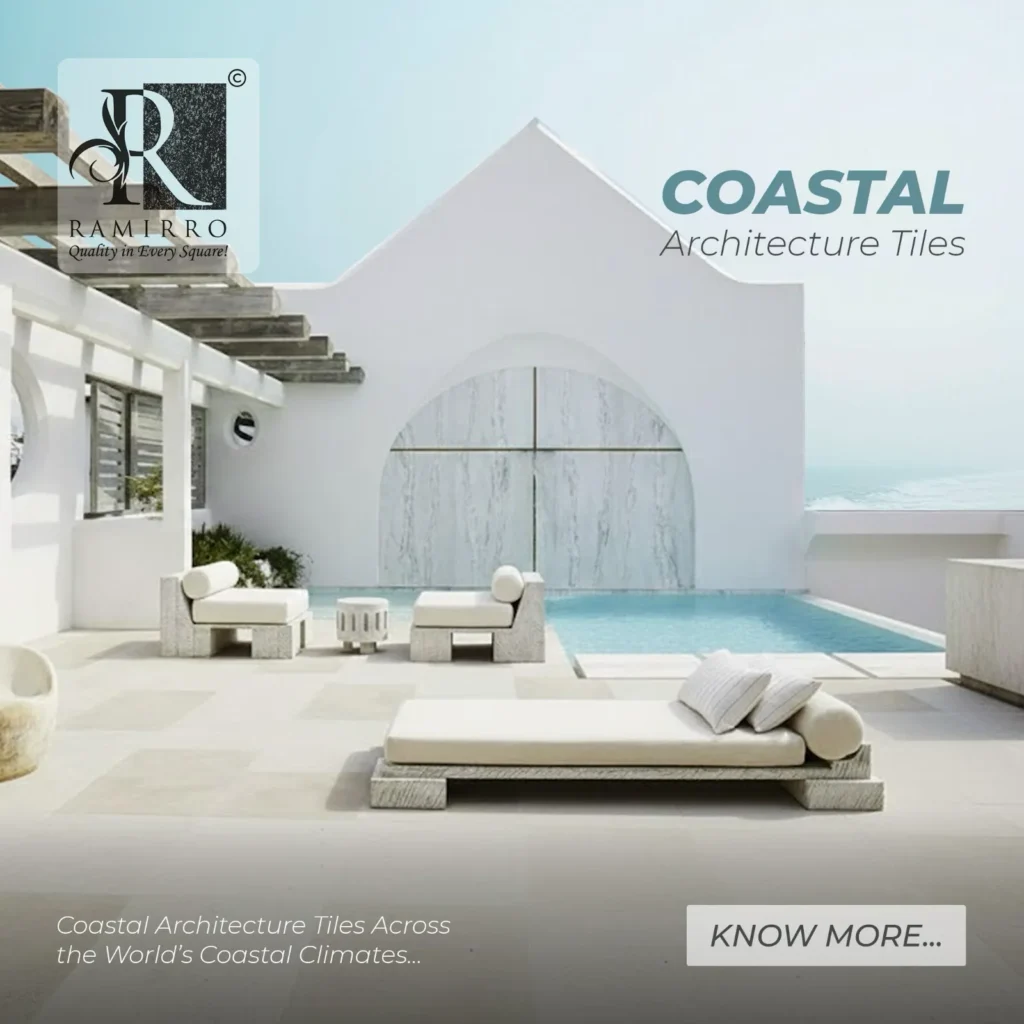
Coastal Architecture Tiles: Inspiring Home Design Ideas and Style Tips from Coastal Architects
Coastal homes demand more from their surfaces than just good looks, which is why coastal architects increasingly rely on tiles that can handle humidity, salt laden air, and sandy feet while still delivering calm, timeless style. Ramirro Ceramica is an innovative tile manufacturer known for crafting high performance porcelain and ceramic tiles that suit these demanding seaside conditions, helping homeowners create bright, breezy interiors that flow effortlessly to outdoor decks and terraces. In this guide, you will discover practical home design ideas and style tips inspired by coastal architects around the world, so you can choose surfaces that feel like the sea yet stand strong against the coastal climate.
- Coastal Architecture Tiles: Inspiring Home Design Ideas and Style Tips from Coastal Architects
- Why Coastal Architecture Is Not a Style, It’s a Climate Response
- Modern Coastal Architecture Around the World: Why One Tile Never Fits All
- Australian Coastal Architecture: Designed for Sun, Salt, and Open Living
- Mediterranean Coastal Architecture: Where Tradition Meets Heat and Humidity
- Japanese Coastal Architecture: Minimalism Built for Moisture and Movement
- African Coastal Architecture: Climate Honest Materials and Natural Cooling
- Beach House Architecture vs. Coastal Residential Architecture
- The Tile Design Principles Coastal Architects Actually Follow
- How Ramirro Ceramica Interprets Coastal Architecture – Not Just Designs for It
- Choosing Coastal Architecture Tiles: What Homeowners Should Ask Before Buying
- Coastal Home Design Ideas by Region
- Coastal Architecture That Lasts Is Quiet, Thoughtful, and Climate Aware
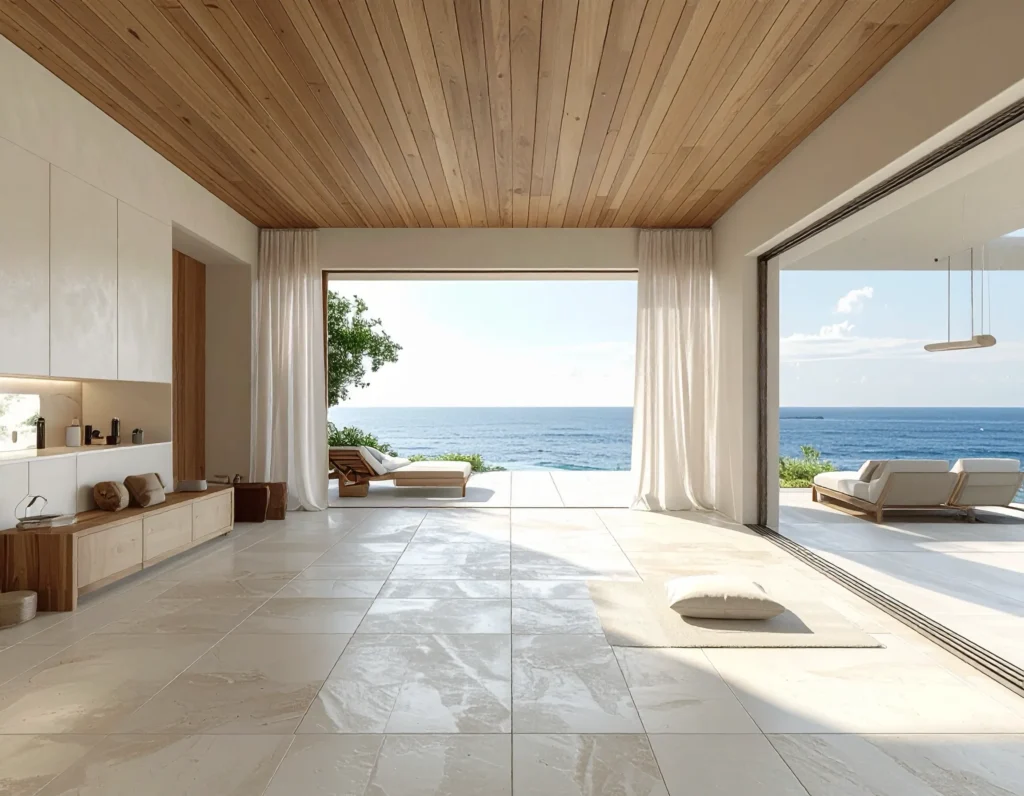
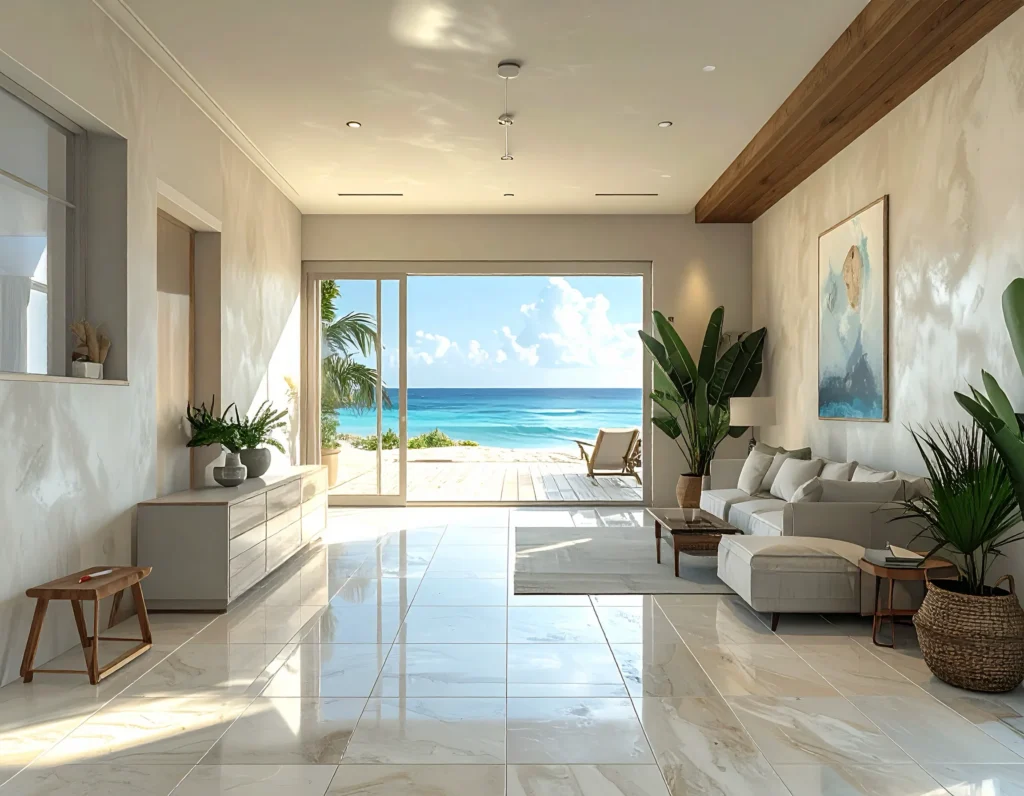
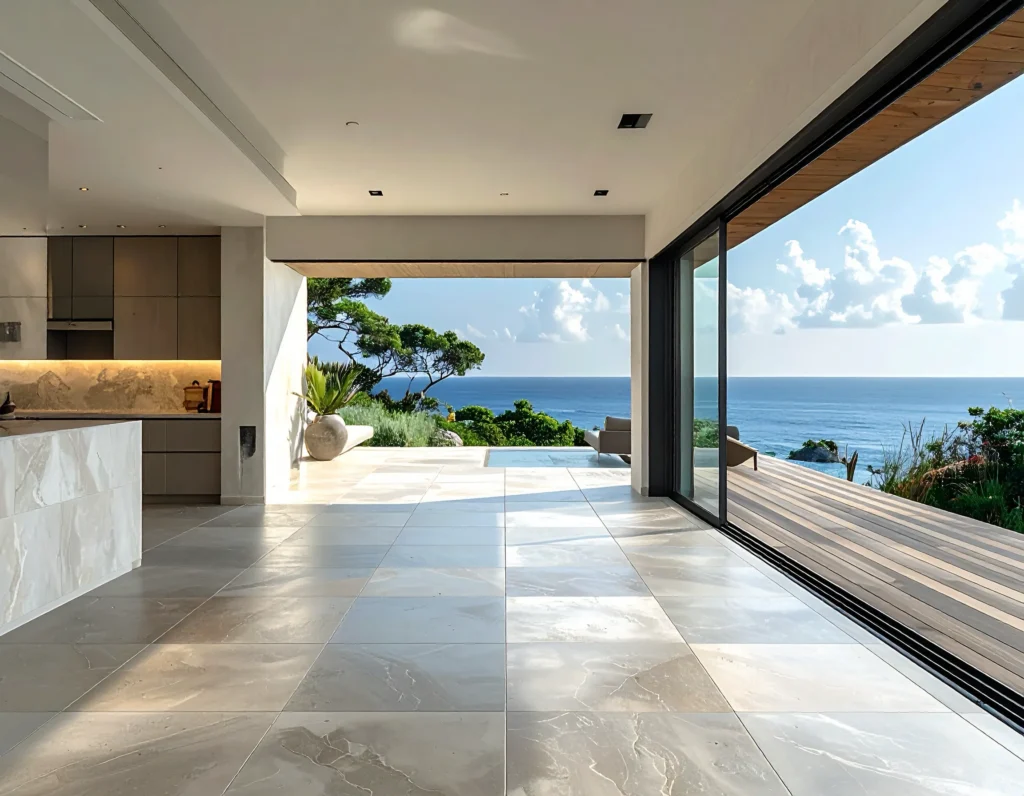
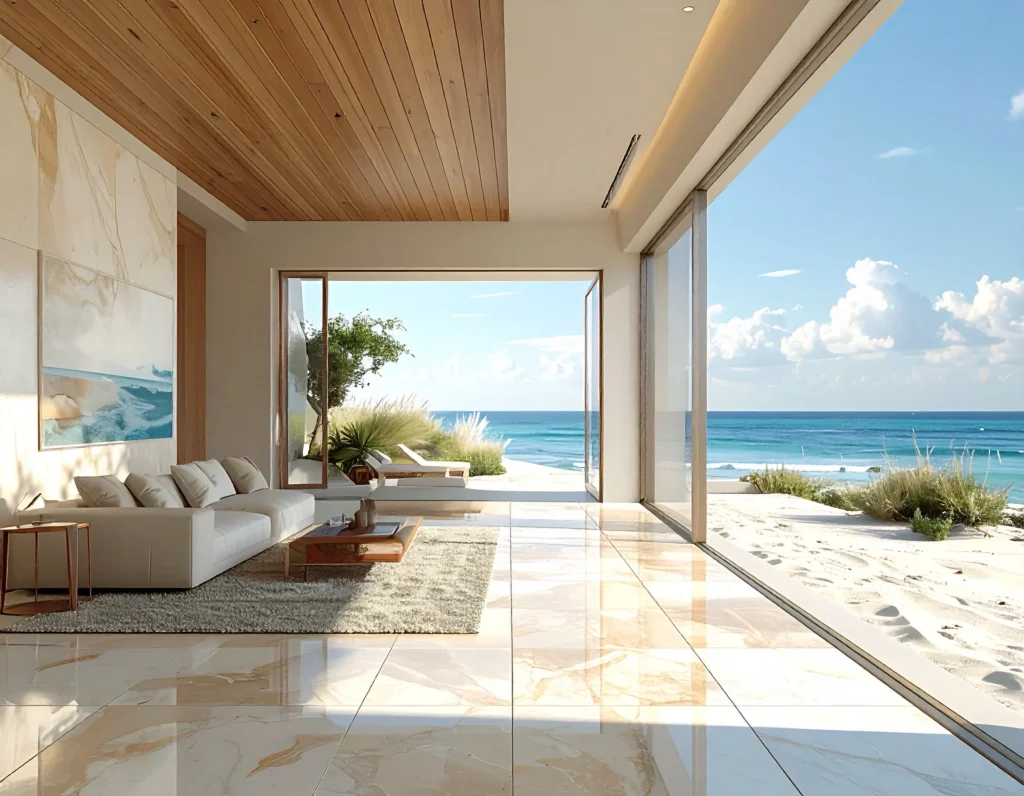
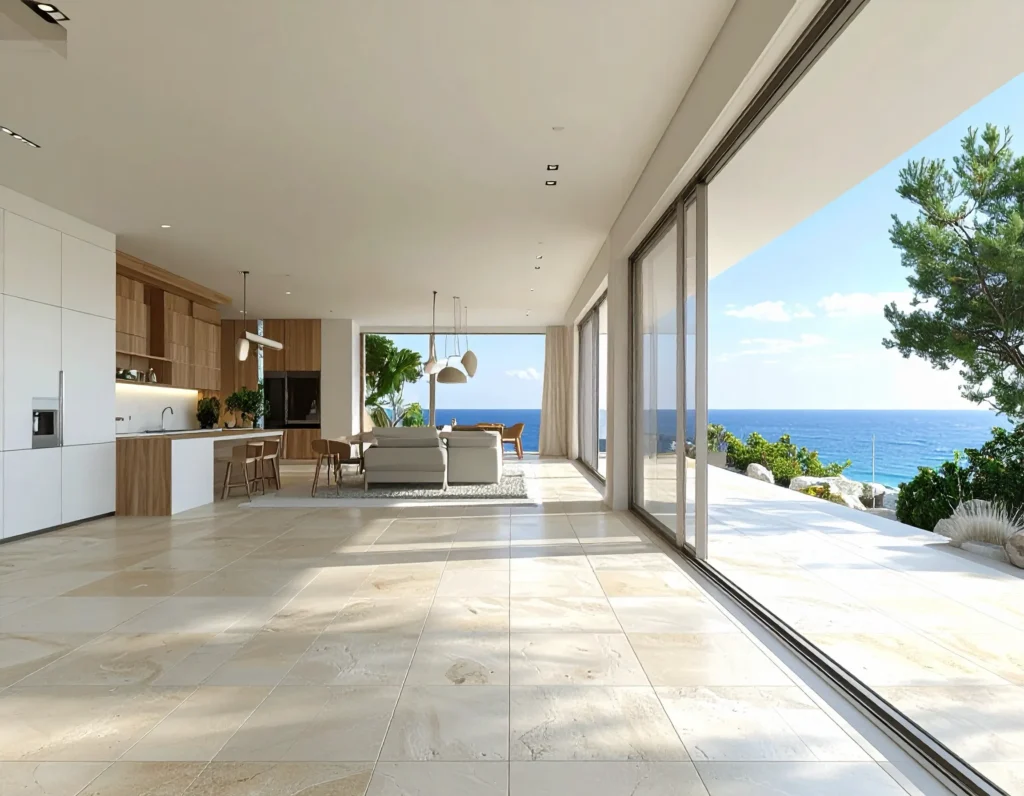
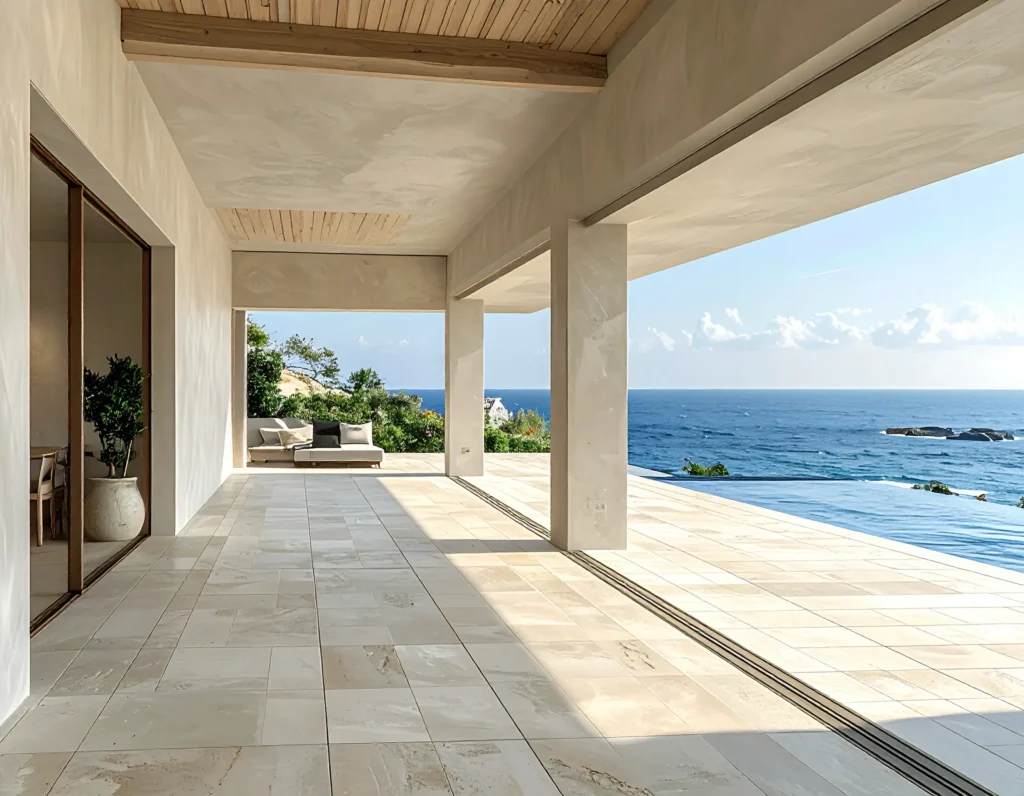
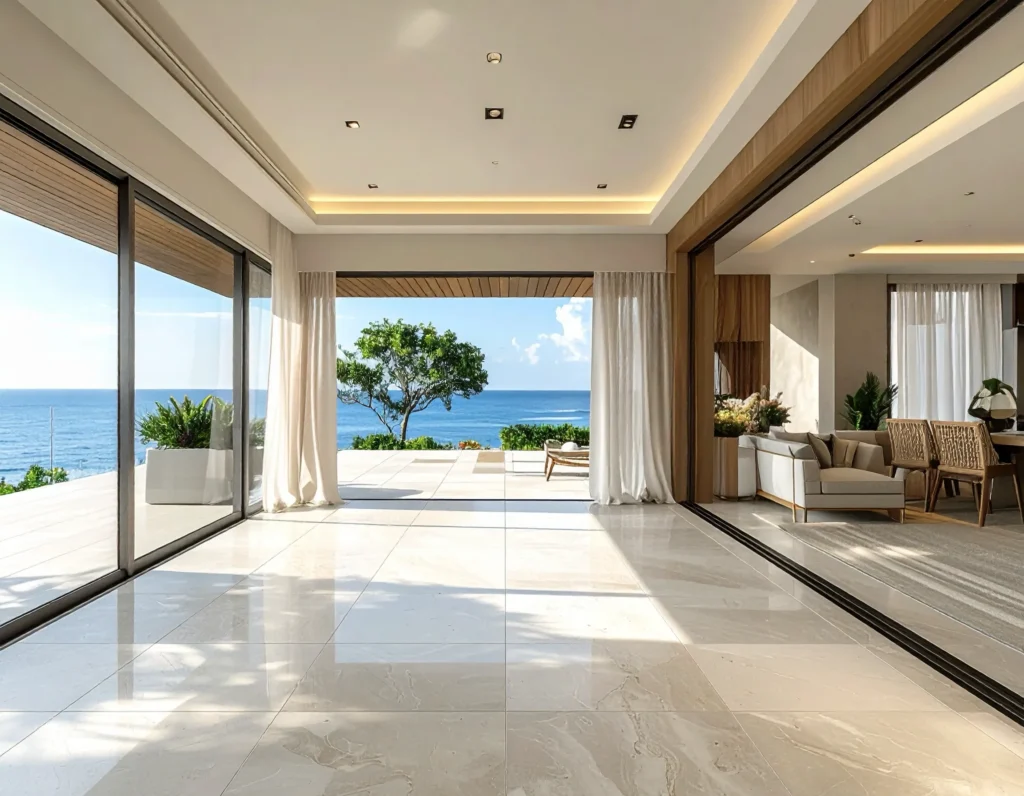
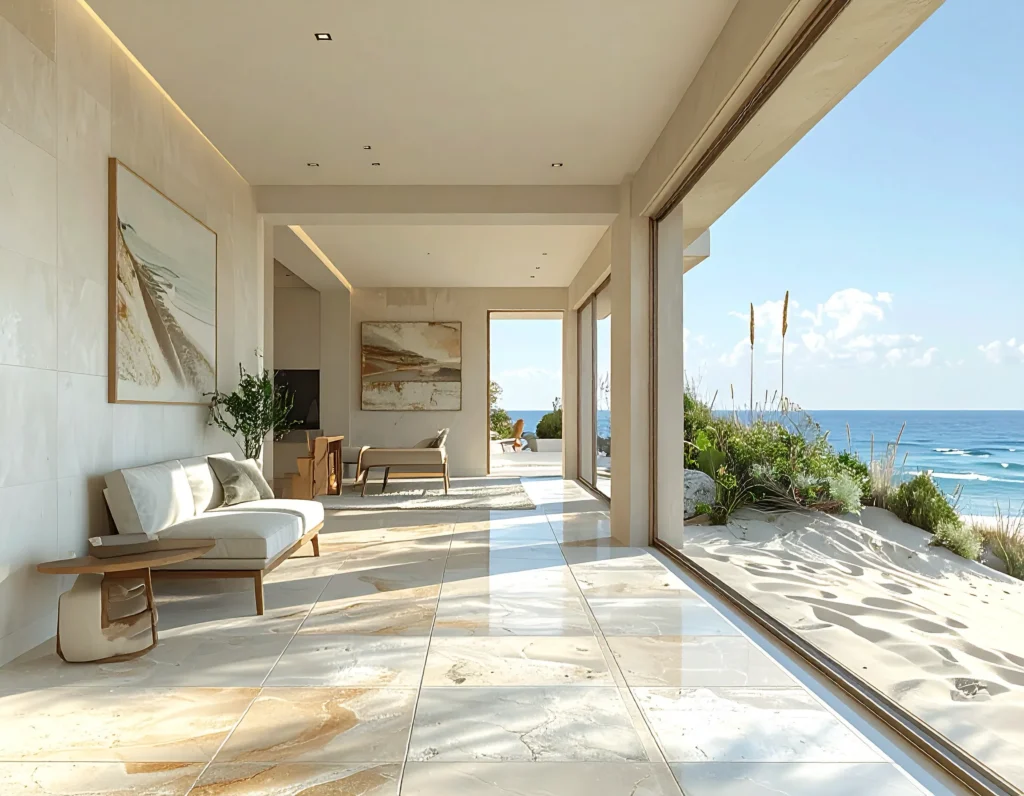
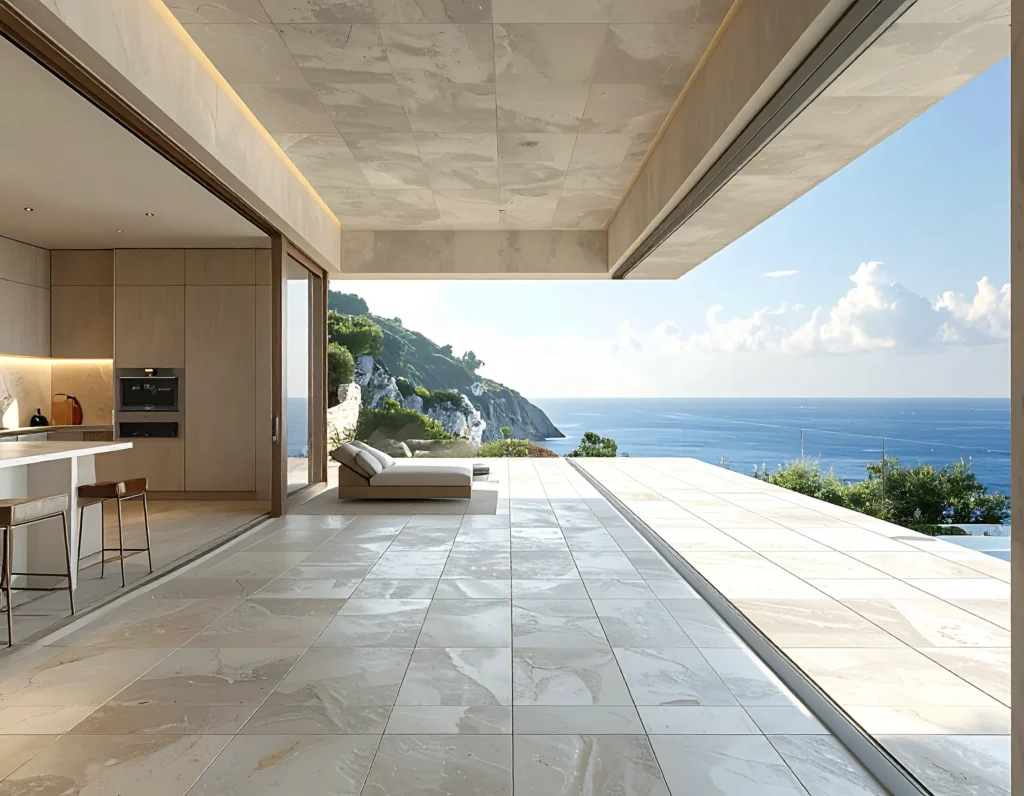
Why Coastal Architecture Is Not a Style, It’s a Climate Response
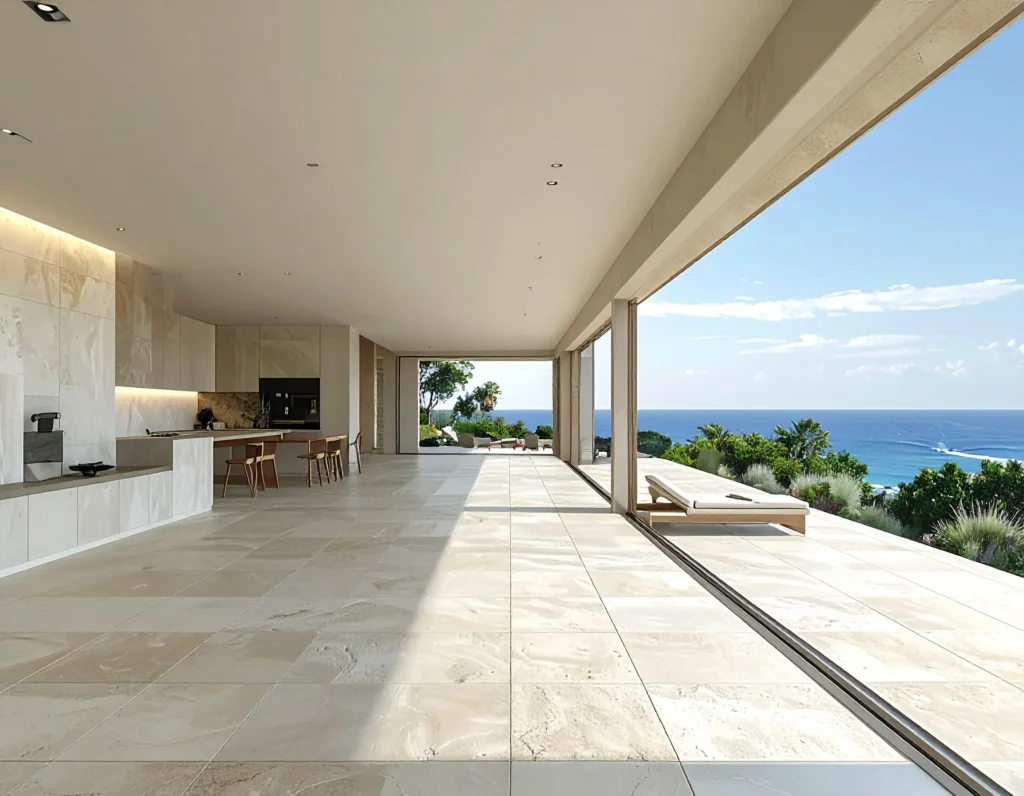
Coastal architecture is not just a look; it is a climate response built around salt air, humidity, UV exposure, wind load, and constant moisture cycles that quietly attack every surface of a home over time. When these forces are ignored and designers simply copy “beach house aesthetics” from images, materials such as paints, metals, low grade stone, or unsuitable tiles can fade, crack, corrode, or lose adhesion far earlier than in inland conditions, leading to costly failures and renovations. Coastal architects therefore work performance first and beauty second, selecting robust envelopes, detailing for drainage and ventilation, and relying on tiles as a silent protective layer that resists water absorption, salt crystallization, and abrasion, so the home can survive decades of coastal weather while still delivering the relaxed, light filled style people love.
Modern Coastal Architecture Around the World: Why One Tile Never Fits All
Modern coastal architecture proves that one tile specification can never work for every shoreline, because each region’s climate, culture, and construction traditions pull the design in different directions. Australia’s sun drenched surf coasts need UV stable, slip resistant porcelain that can handle intense heat and sandy indoor outdoor living, while Japan’s coastal homes often combine minimalism with seismic aware construction and strong humidity control, favoring calm, tactile surfaces that bridge interior and exterior with precision. Mediterranean Europe’s coastal villages lean on stone look and terracotta inspired tiles that echo centuries old masonry and courtyard culture, whereas African coasts balance high heat, salt exposure, and rapidly evolving building methods, prioritising cool, light reflective, durable tiles that cope with both tradition and modern density.
Because climate, culture, and construction systems are so different, architects design with geography, not against it, tuning tile choices to local temperature swings, salt load, rainfall, lifestyle, and structural practices instead of forcing a single “coastal look” everywhere.
Australian Coastal Architecture: Designed for Sun, Salt, and Open Living
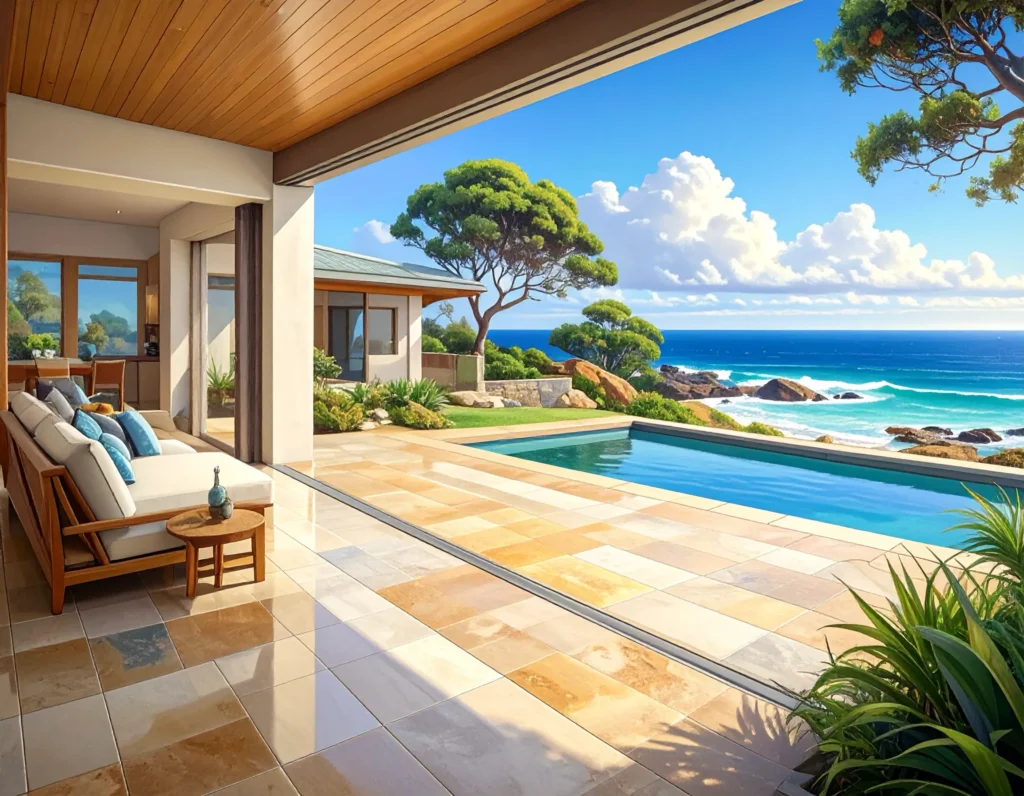
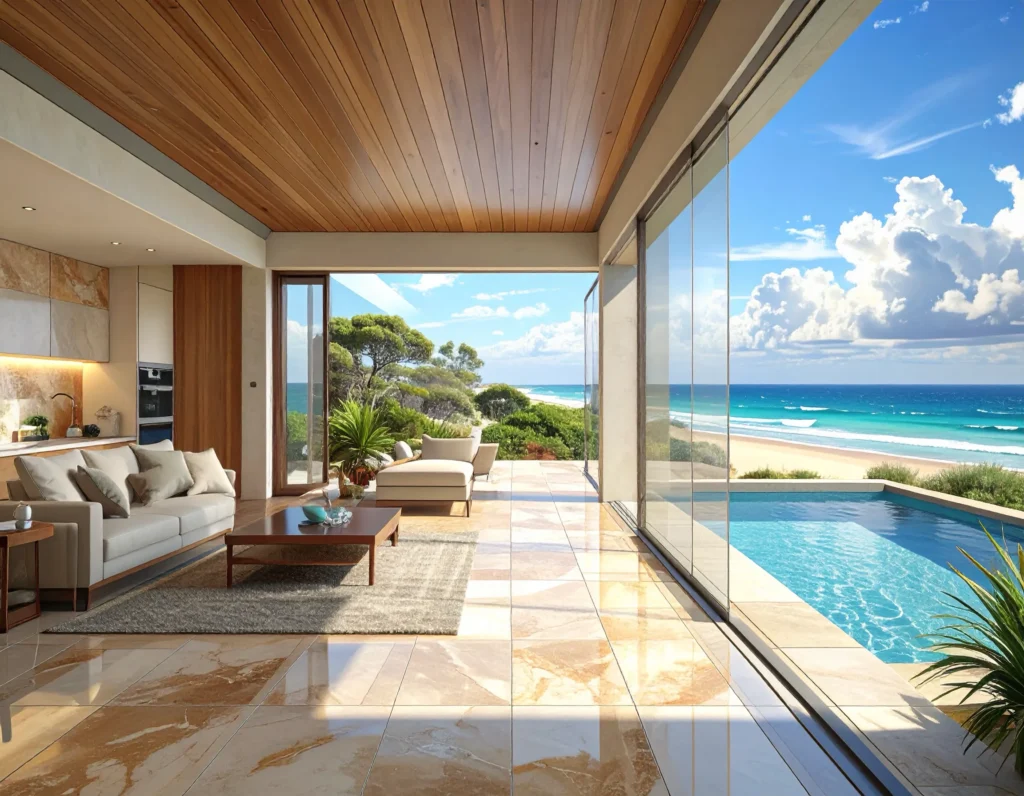
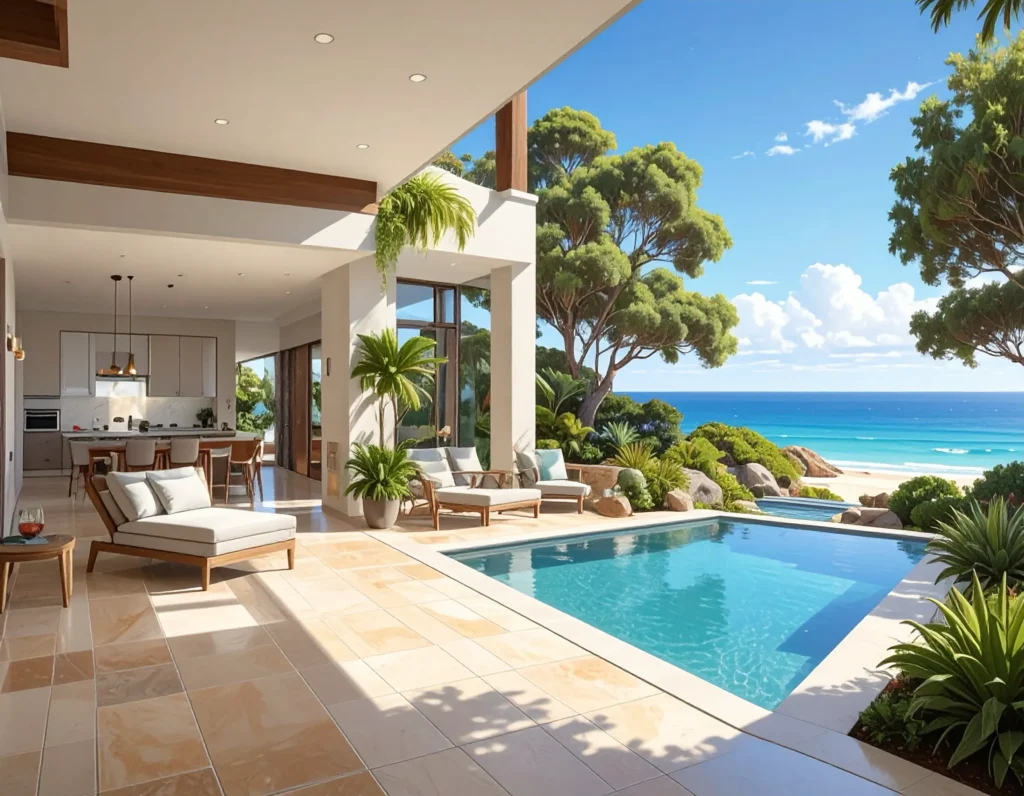
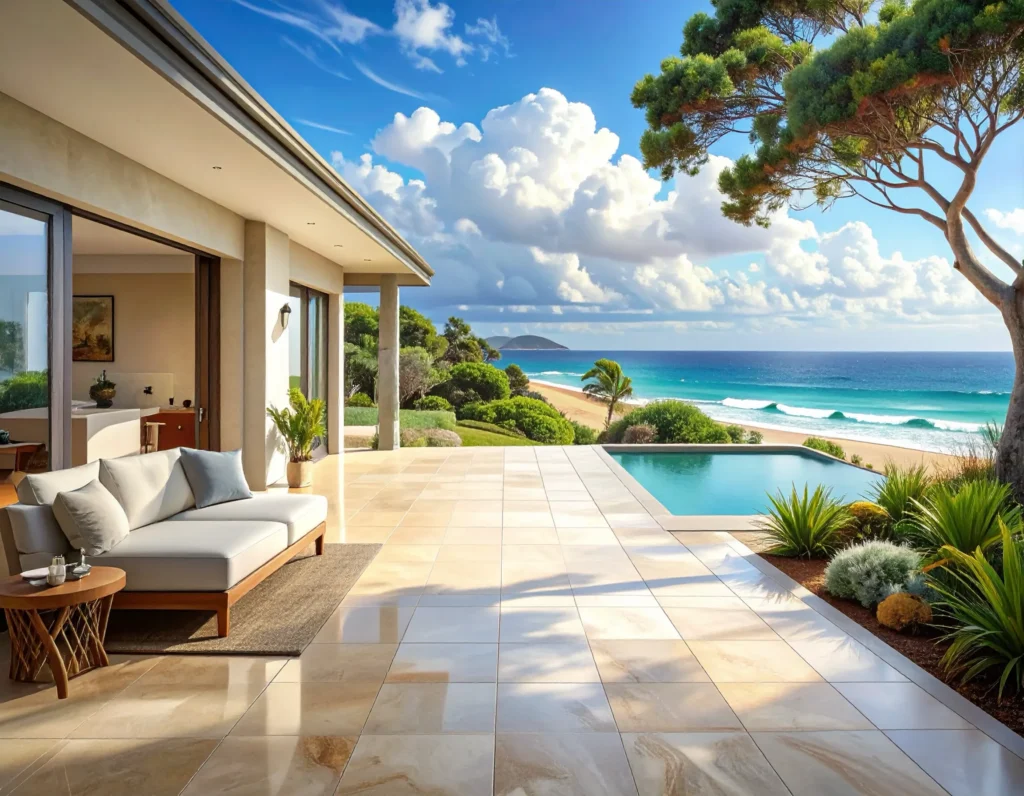
Australian Coastal Homes Priorities Indoor Outdoor Continuity
Australian coastal architecture centres on expansive living spaces that open fully to decks, patios, and ocean views, creating seamless flow between interior and exterior. Tiles must transition without visual breaks, using matching designs and finishes across thresholds, so surfaces feel continuous even as they move from protected rooms to exposed outdoor zones.
Heavy Uv Exposure Demands Colour Stable, Low Absorption Porcelain
Australian coastal sunlight is intense and prolonged, accelerating fading and surface degradation on unprotected materials. Colour stable porcelain tiles with low water absorption (typically <0.5%) resist UV induced chalking, discolouration, and breakdown better than ceramic, vinyl, or unsealed natural stone.
Slip Resistance Is Critical For Barefoot, Wet Zones
Barefoot living, pool surrounds, showers, and entrances get wet and sandy, creating high slip risk. Australian standards (AS 4586) specify P3–P5 pendulum ratings for wet area safety, with textured or grip finish porcelain tiles preferred to prevent falls without sacrificing clean aesthetics.
Tiles Commonly Used Or Best Suited
Dense porcelain tiles with low water absorption: Ideal for floors, walls, and exteriors due to salt and moisture resistance.
Stone look tiles replacing natural stone: Offer durability against abrasion and salt without the maintenance of real limestone or sandstone.
Large format outdoor tiles: 600x600mm and larger reduce grout lines, minimising water ingress and cleaning needs in patios and decks.
Why Muted, Sand Inspired Tones Outperform Bright Whites Over Time
Bright whites show sand tracks, dirt, and UV yellowing quickly, while muted sand, driftwood, and shell tones hide wear, resist fading, and blend naturally with Australia’s coastal landscape for a more enduring, low maintenance look.
Mediterranean Coastal Architecture: Where Tradition Meets Heat and Humidity
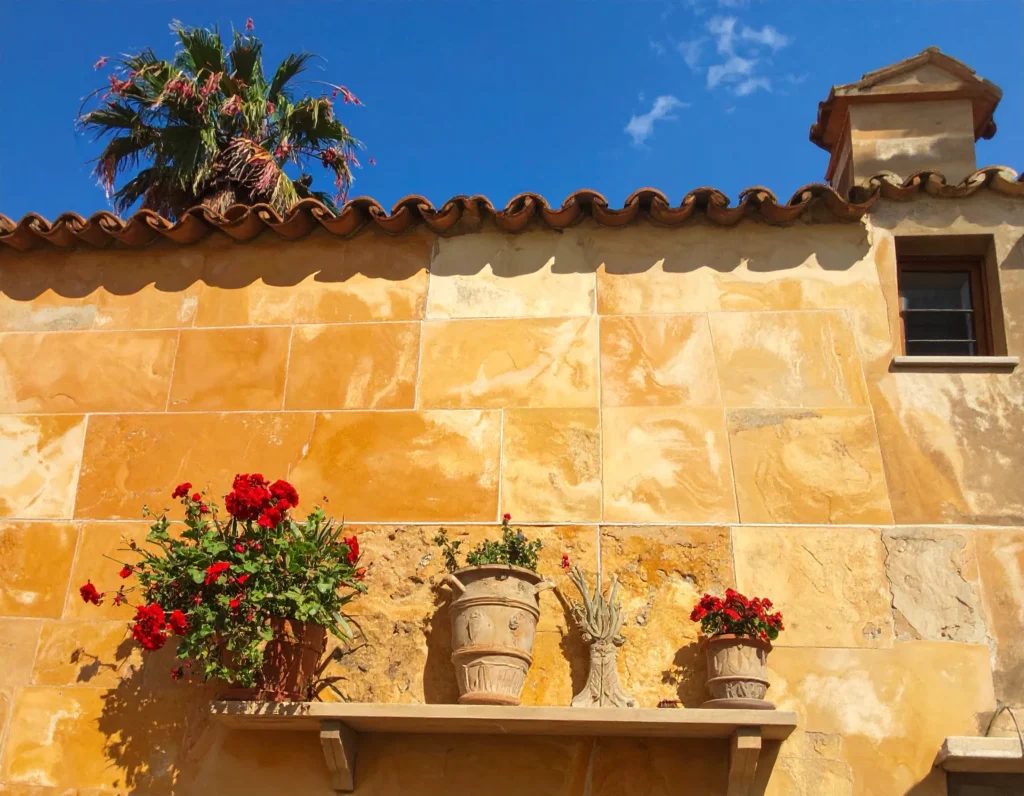
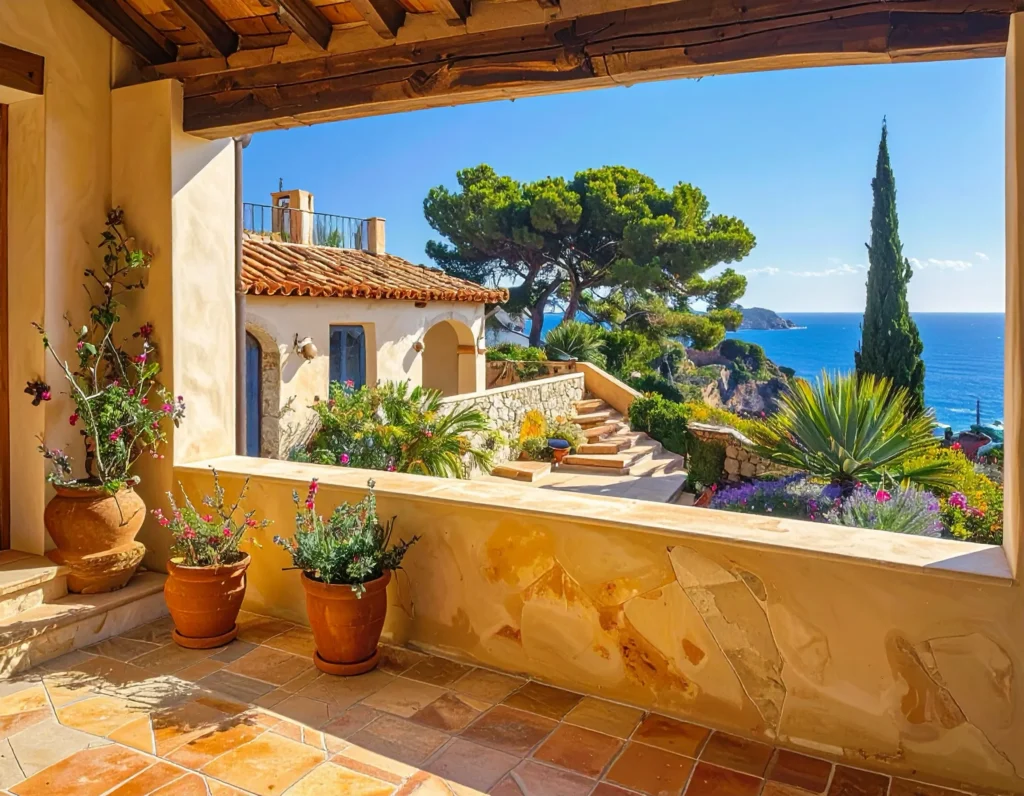
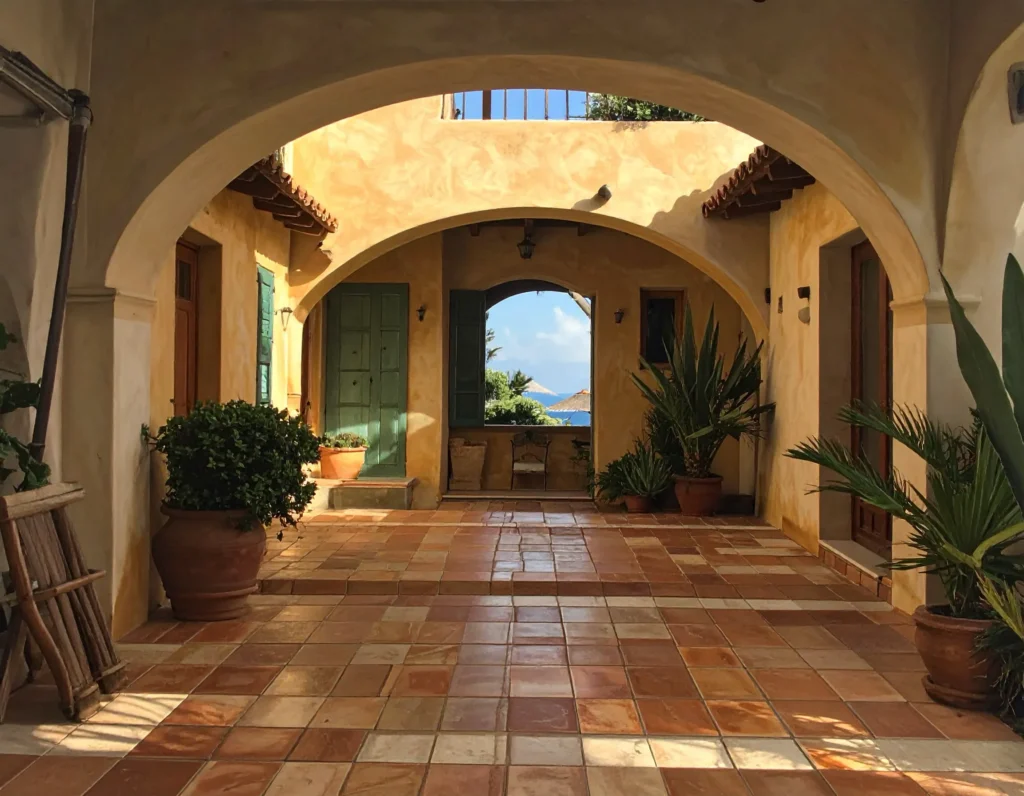
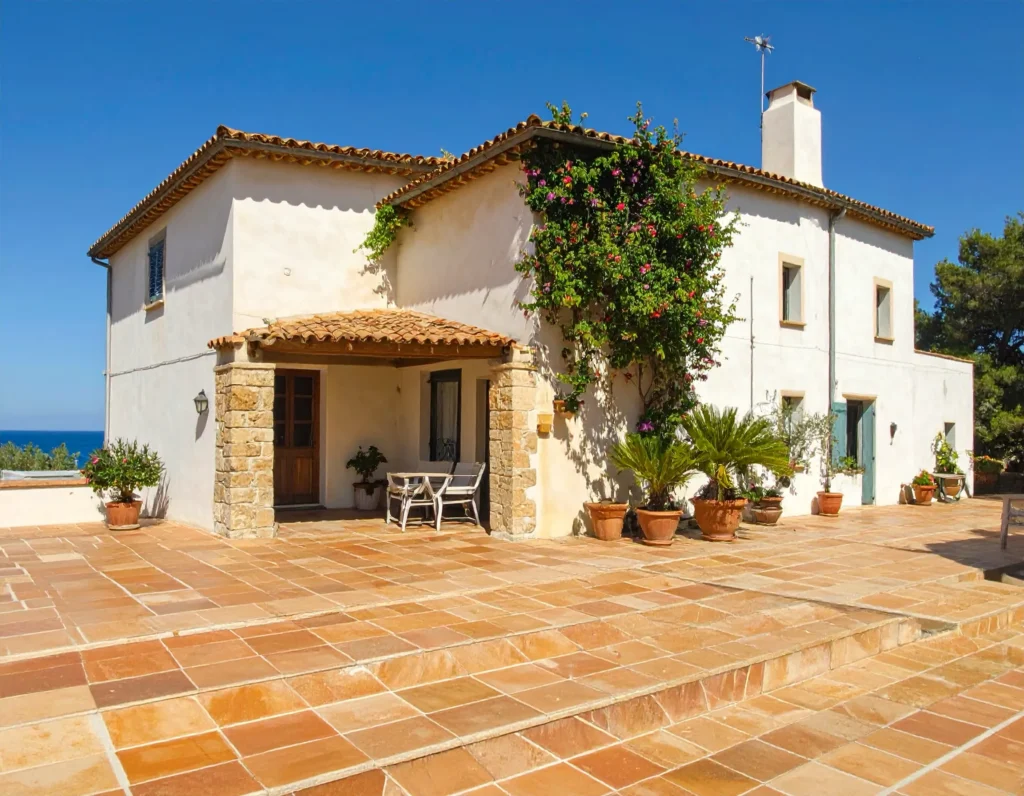
Use Of Terracotta Inspired, Lime Toned, Textured Tiles
These homes traditionally feature terracotta inspired tiles in warm ochre, sienna, and lime washed tones that absorb daytime heat slowly and release it at night, alongside textured surfaces that echo local stone and clay traditions.
Why Surface Texture Matters More Than Gloss In Mediterranean Climates
Textured tiles reduce glare from relentless sun, hide dust accumulation, and provide better grip on stairs and patios where humidity makes surfaces slick, unlike glossy finishes that amplify heat and show wear faster.
Modern Tile Evolution: Porcelain Replicating Traditional Materials
Contemporary porcelain tiles now replicate the look of historic terracotta, limestone, and handmade ceramics with greater precision and scale, offering consistent color and minimal expansion under temperature swings.
Improved Resistance To Salt Air Compared To Historic Materials
Unlike porous traditional clay or lime based tiles that absorb salt laden moisture and suffer efflorescence, modern low porosity porcelain (water absorption <0.5%) blocks salt penetration, preventing cracking and surface breakdown over decades.
Japanese Coastal Architecture: Minimalism Built for Moisture and Movement
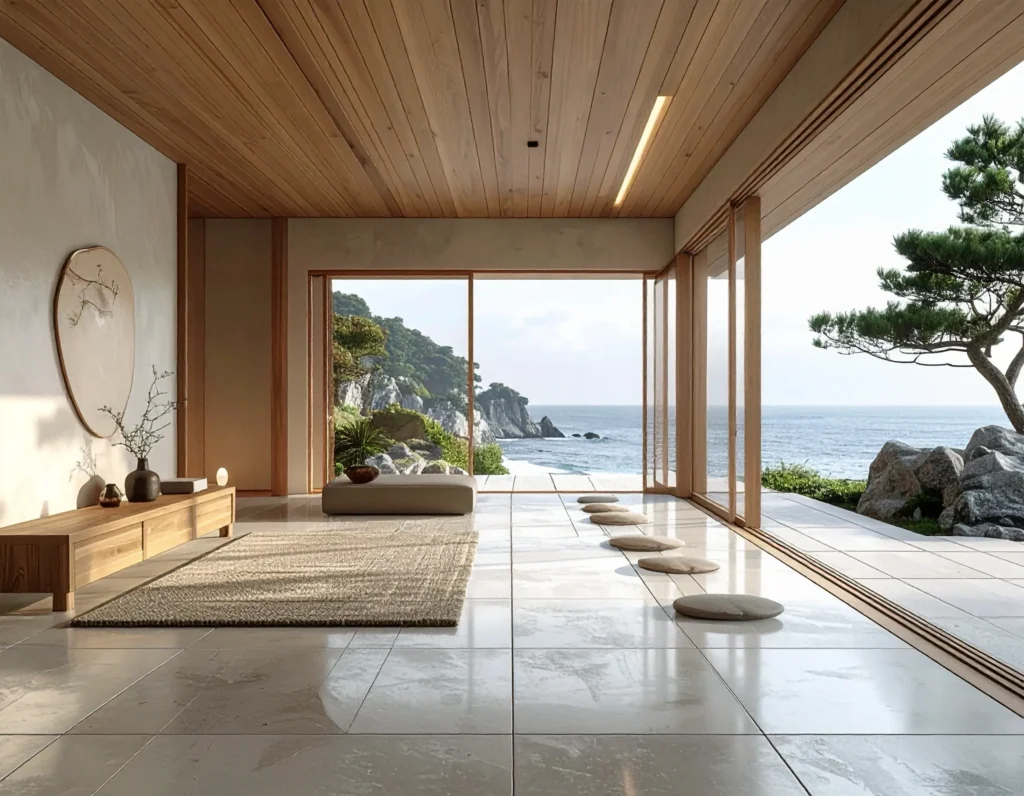
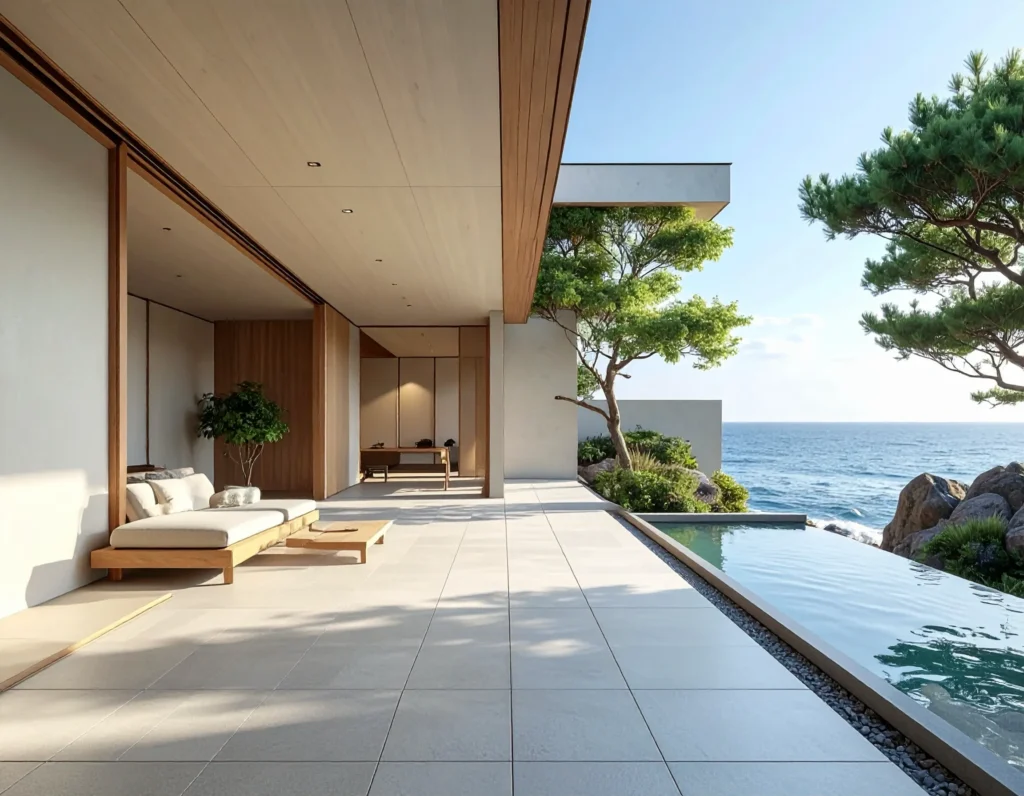
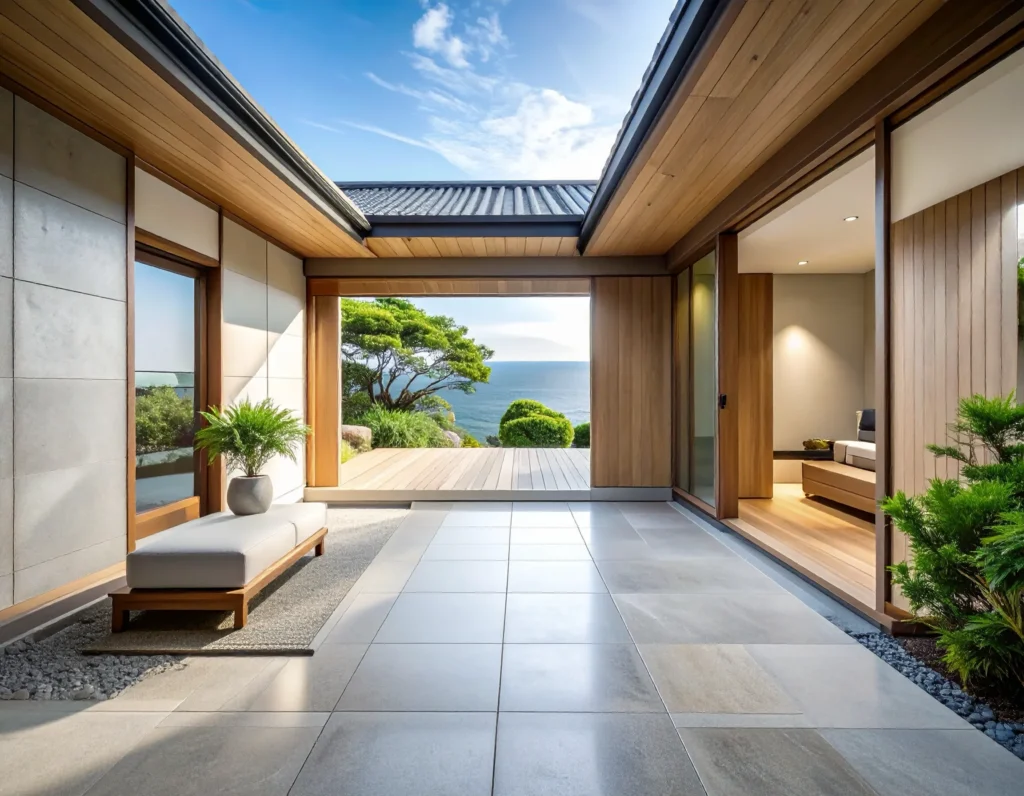
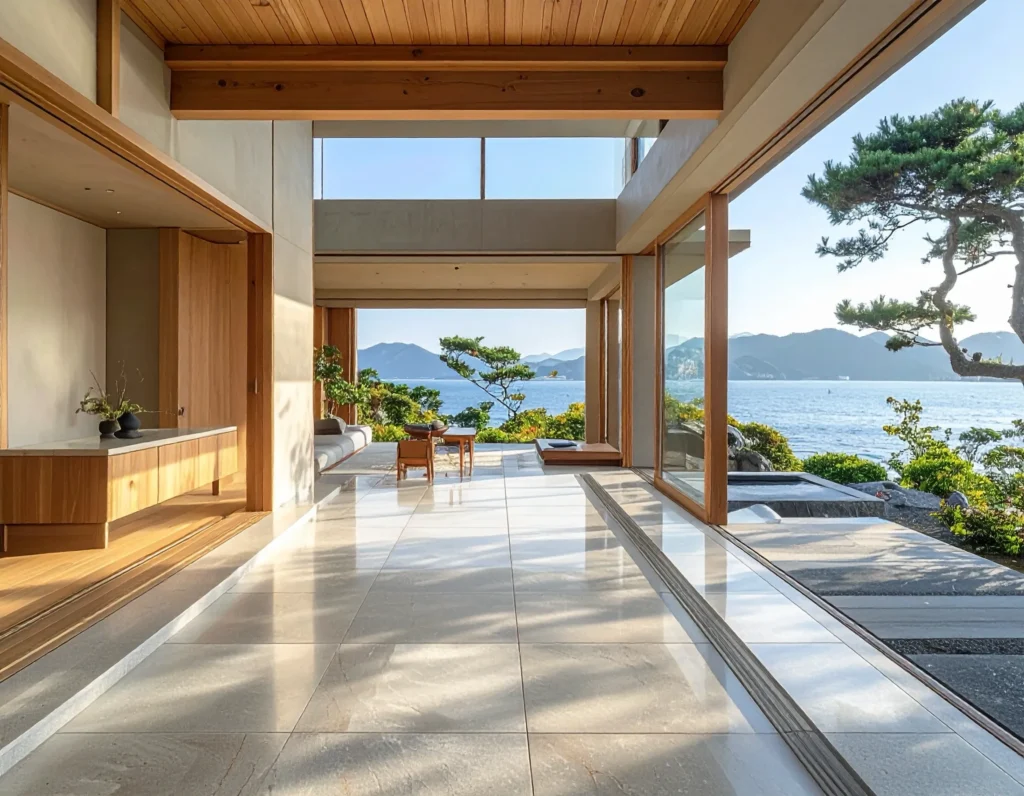
Preference For Minimal Grout Lines And Controlled Surfaces
Designers limit grout exposure with large format or full body tiles to reduce water traps and salt accumulation, ensuring clean lines that support the philosophy of controlled, uncluttered spaces.
Tiles Used Only Where Needed in Japanese Homes
Tiles appear only where function demands in wet zones, entryways, or terraces leaving wood, plaster, and stone to dominate living areas, aligning with wabi sabi principles of imperfection and restraint.
Tile Logic In Japanese Coastal Homes
Matte, neutral toned tiles: Greys, charcoals, and beiges in matte finishes absorb humidity without glare and blend with natural wood or stone elements.
Emphasis on easy drainage and clean transitions: Subtle slopes, integrated channels, and flush thresholds prevent pooling in rainy, humid conditions.
Why Minimalism Improves Long Term Maintenance In Coastal Japan
Fewer materials and joints mean less surface for mold, salt damage, or seismic stress to attack, creating homes that age gracefully with simple sweeping and occasional sealing.
African Coastal Architecture: Climate Honest Materials and Natural Cooling
Use Of Earth Tones And Textured Surfaces To Manage Heat
Earth tones in ochre, red, and beige reflect harsh sunlight while textured surfaces like coral rag or plaster create shadow play and grip, reducing glare and heat buildup on floors and walls.
Why Tiles Must Withstand Sand Abrasion And Intense Sun
Coastal winds carry abrasive sand that scours surfaces daily, and unrelenting equatorial sun causes rapid heating and UV fading, so tiles need low porosity bodies and UV stable glazes to avoid cracking, dulling, or delamination.
Best Tile Approach
Durable porcelain mimicking local stone: Low absorption (<0.5%) porcelain replicates coral limestone or laterite for authenticity with superior salt and moisture resistance.
Anti slip finishes for open courtyards and verandas: Textured or grip rated porcelain ensures safety on wet, sandy surfaces in high traffic outdoor living areas.
Avoiding high gloss surfaces in high dust coastal zones: Matte or satin finishes hide dust, sand scratches, and water spots better than gloss, which shows every imperfection.
Beach House Architecture vs. Coastal Residential Architecture
| Aspect | Beach House Architecture | Coastal Residential Architecture |
|---|---|---|
| Primary use | Seasonal or short term stays, holidays, rentals | Permanent, year round living |
| Design priority | Visual appeal, relaxed vacation atmosphere | Long term durability, comfort, and performance |
| Exposure duration | Intermittent exposure to salt, moisture, and sun | Continuous exposure to salt air, humidity, and UV |
| Tile selection approach | Often style led, decorative finishes acceptable | Performance led, climate appropriate materials required |
| Surface finish preference | Polished or decorative surfaces sometimes used | Matte or textured finishes preferred for safety and wear |
| Maintenance expectations | Higher maintenance often accepted | Low maintenance surfaces essential |
| Common design mistake | Copying resort aesthetics without climate logic | Over decorating instead of focusing on performance |
| Tile lifespan expectation | Shorter lifecycle acceptable | Long lifecycle essential to avoid frequent replacement |
The Tile Design Principles Coastal Architects Actually Follow
Texture > Polish In Coastal Flooring
Textured or grip finishes outperform polished surfaces by providing slip resistance in wet, sandy zones and hiding abrasion marks, while gloss amplifies glare, shows scratches, and becomes dangerously slick when wet.
Fewer Grout Joints = Longer Lifespan
Large format tiles (600x1200mm+) minimise grout lines that act as moisture traps and salt crystallisation points, reducing long term maintenance and failure risks in high exposure coastal environments.
Colour Stability Under Uv Exposure
UV stable glazes prevent fading, yellowing, or chalking from intense coastal sunlight, ensuring muted earth tones and neutrals retain their look for decades unlike unstable pigments that degrade quickly.
How Ramirro Ceramica Interprets Coastal Architecture – Not Just Designs for It
Ramirro Ceramica approaches coastal architecture through research and material performance, not surface aesthetics alone. Tile collections are developed with an understanding of how coastal environments affect materials over time, including moisture exposure, salt air, temperature variation, and daily wear in spaces.
Rather than focusing only on appearance, Ramirro Ceramica places emphasis on performance calibration; aligning tile density, surface finish, and technical properties with the demands of coastal conditions. This approach supports durability, safety, and long term usability in environments where standard tile solutions often fall short.
By studying global coastal regions, from sun intensive Australian shorelines to humid Asian and Mediterranean coasts, Ramirro Ceramica engineers tile solutions that respond to real environmental pressures. This allows architects and designers to specify tiles with confidence, knowing the materials are suited to the realities of coastal living rather than idealised design scenarios.
Choosing Coastal Architecture Tiles: What Homeowners Should Ask Before Buying
Is this tile suitable for high humidity?
Tiles used in coastal homes should have low water absorption and a dense body to resist moisture moving through floors and walls. This helps prevent staining, surface damage, and long term performance issues caused by constant damp air.
How does it perform under salt exposure?
Salt carried by sea air can slowly degrade weaker materials. Tiles that resist salt penetration and surface erosion are better suited for coastal environments, especially in outdoor areas and near open façades.
Is it safe for wet, barefoot movement?
Slip resistance is critical in coastal homes, where wet feet from pools, rain, or the sea are common. Matte or textured surfaces provide better grip and reduce the risk of slipping in daily use.
Will the colour age well in sun heavy environments?
Strong coastal sunlight accelerates fading. Tiles with stable pigments and UV resistant surfaces maintain their appearance longer, ensuring the home looks consistent even after years of exposure.
Coastal Home Design Ideas by Region
Coastal homes around the world offer valuable design lessons, but successful coastal architecture is never about direct imitation. What works along the Mediterranean may struggle in Australia, and materials suited to Japan’s humid coasts may fail in drier, sand heavy regions. Global coastal architecture provides insight, not instruction.
The most effective coastal home design ideas are those adapted to local climate conditions. Understanding humidity levels, sun intensity, wind exposure, and maintenance realities allows homeowners and designers to translate inspiration into practical, long lasting solutions rather than copying visual styles alone.
Good coastal design always respects the environment first. When materials and layouts respond to climate instead of resisting it, homes age more gracefully, perform better over time, and remain comfortable in demanding coastal conditions. In coastal architecture, thoughtful adaptation is what turns inspiration into enduring design.
Coastal Architecture That Lasts Is Quiet, Thoughtful, and Climate Aware
Coastal architecture that lasts is built through a thoughtful design process where materials are chosen to support durability, comfort, and long term performance in a demanding coastal climate. From traditional coastal house styles to coastal contemporary and modern luxury beach homes, today’s architecture and design increasingly balances modern aesthetics with environmental responsibility.
Ramirro Ceramica’s tile collections are developed to support this balance, fitting seamlessly into architectural house design, beach architecture, and contemporary architecture across custom homes, coastal residences, and large scale coastal projects. Whether you are shaping open floor plans for modern living, planning tropical modern design projects, or working within sensitive natural surroundings, our tiles are engineered for real world design and construction needs.
You can explore and purchase Ramirro Ceramica tiles both online and offline, making it easier to integrate performance driven materials in modern and creative design solutions into design homes that respect place, purpose, and longevity. For tailored guidance aligned with your architecture ideas and project goals, our team is always available to help you move forward with confidence.
Shop Now | Chat With Expert | View Catalogue

Here’s what you get out of our article. Our team have various Ceramic Experts with experience of more than 25 Years, researches on problems our customer faces in tiling industry.
Ramirro Ceramica, – One of The Leading Tiles Manufacturer and Supplier globally, helps you people gain knowledgeable insight before making your purchase decision for products related to the floor and wall tiles.
So, we have closely monitored all kinds of trends in the ceramic tiles manufacturing world, from the old days of clay and plain color to modern digital, realistic-looking designs printed on ceramics with high-depth effects.
Our tiling Experts have seen thousands of different tiles patterns, sizes, materials, pricing, and installation techniques throughout their career.
Their expertise shared with you in simplified and organised way, helps you choose and make better decision before purchasing any flooring option available in market.
Brief about Company:
Ramirro is one of the finest Tiles manufacturers in India manufacturing porcelain and ceramic tiles. Our products have a variety of sizes and types of tiles ranging from Ceramics, porcelain, Full body etc. This helps you choose the perfect fit for your project. Plus, our collection will help you get inspiration from the architect’s design.
Here’s some more helpful links that showcase our users trust on Ramirro Ceramica Brand:
– Growth in International Market
– Trusted and Licensed Exporter
– Manufacturing Plant in India
Here’s our social proof by LinkedIn competing with top known global tiling brands: